Eugen Jochum 尤根·约胡姆
尤根·约胡姆
E·Jochum / E·约胡姆地区德国
类型个人
职业指挥
艺人资料
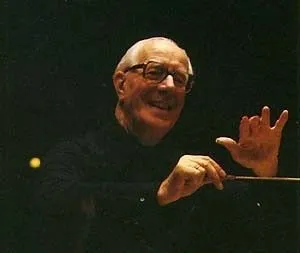
欧根·约胡姆(Eugen Jochum,1902年11月1日-1987年3月26日),台湾译为尤金·约胡姆,生于巴本豪森,巴伐利亚,逝于慕尼黑,是德国著名指挥家。
介绍
尤金.约胡姆(EugenJochum,1902—1987),他的父亲是一个优秀的管风琴家,还是当地的一个合唱团的团长。约胡姆兄弟几个都从小学习音乐,后来,除了他成为世界著名的指挥大师以外,他的哥哥奥托.约胡姆也成了一位具有世界影响的作曲家,而他的弟弟乔治.路德维希.约胡姆则当上了杜伊斯堡音乐学院的院长,并且也是一位很有成就的指挥家。尤金.约胡姆早年曾在奥格斯堡音乐学院中学习钢琴、管风琴和指挥,后又转到著名的慕尼黑音乐学院中学习作曲和指挥。1926年,约胡姆作为指挥家首次登台,指挥慕尼黑爱乐乐团举行了一场有意义的音乐会,这一年,他虽然仅有24岁,但却在音乐会上出色地指挥了难度很大的布鲁克纳《第七交响曲》,使当时的听众和舆论界都感到了极大的惊讶。从这以后,约胡姆便慢慢成为欧洲指挥界中崭露头角的人物,首先,他在全国的各个乐团和歌剧院中频繁地担任指挥,然后又逐渐地将艺术的触角伸到了国外,从1927年到1929年,他一直在基尔剧院中担任艺术指导和常任指挥,1930年,他又被杜伊斯堡歌剧院聘为指挥。1932年至1934年间,他担任了柏林广播乐团和国家歌剧院的指挥。1934年以后又转任汉堡爱乐乐团和汉堡国立歌剧院的指挥。1949年,约胡姆组织创建了巴伐利亚广播交响乐团,并亲自担任了这个乐团的音乐指导和常任指挥,1959年,任期满十年的约胡姆离开了这个与他朝夕共处的乐团,开始了他在世界范围内的指挥活动。1961年,59岁的约胡姆走马上任,成了荷兰阿姆斯特丹音乐厅管弦乐团的常任指挥,干了四年以后,他又回国转任了班贝克交响乐团的常任指挥,但在这一段相当长的时间里,他始终是英国伦敦爱乐乐团和伦敦交响乐团的客席指挥,经常往来于德国和英国之间,并在那里指挥定期的音乐会,为此,伦敦交响乐团还在1975年将“桂冠指挥家”的称号授予了他。
在指挥艺术史上,德国是一个指挥人才辈出的国家,抛开与它同风格的奥地利指挥家不谈,仅德国自己便在上个世纪末和本世纪初出现了一大批光照世界指挥史册的指挥大师,其中包括老一辈的伟大人物汉斯.冯.彪罗、理查.施特劳斯、克列姆佩勒、富尔特文格勒、克纳佩茨布什和约胡姆,在一大批中年人物中,也有着像桑德林、腾斯泰特和卡尔.里希特这样一些出色之辈。因此,德国的指挥艺术在世界上的确是值得骄做的。然而在以上所列出的大师中间,真正具有纯正的德奥风味及特点的人却仅局限在各别人身上,因为这些指挥大师们各自的经历、性格和爱好都有着很大的差别,故此都代表着带有明显倾向的个人风格,从这方面来说,约胡姆自然也是不会例外的,但他却是一位真正具有纯正德奥风格和深逢的精神内涵的指挥大师。
评价
约胡姆曾在自己指挥艺术最为成熟的时期里,广泛地参加了世界性的众多音乐活动,大约从50年代以后,他便经常活跃在国际音乐舞台上,他曾在许多著名的音乐节中担任指挥,也曾访问过美国和加拿大等美洲国家以及日本这样的亚洲国家,并和这些国家中的著名乐团一起举行了很多出色的音乐会。此外,他与伦敦爱乐乐团之间保持了多年良好的合作关系,作为客席指挥,他与这个乐团合作录制了很多极有价值的唱片。约胡姆是一位风格纯正,修养深邃的老指挥大师,这已是如今人们所一致公认的评价,他的朴实、端正和深奥的艺术风格,的确是一种具有持久生命力的艺术风格,当今天人们已经厌恶了那种靠一时激情和哗众取宠来取悦听众的浮浅风格后,反过来再回顾和领略一下约胡姆那货真价实的艺术风格,便更加觉得它是那样的精致、珍贵和具有永久意义了。
English Introduction
Eugen Jochum (German: [ˈɔʏ̯ɡeːn ˈjɔxʊm]; 1 November 1902 – 26 March 1987) was an eminent German conductor. Jochum was born to a Roman Catholic family in Babenhausen, near Augsburg, Germany; his father was an organist and conductor. Jochum studied the piano and organ in Augsburg, enrolling in its Academy of Music from 1914 to 1922.
He then studied at the Munich Conservatory, with his composition teacher being Hermann von Waltershausen; it was there that he changed his focus to conducting, his teacher being Siegmund von Hausegger, who conducted the first performance of the original version of the Ninth Symphony of Anton Bruckner and made the first recording of it. Jochum's first post was as a rehearsal pianist at Mönchen-Gladbach, and then in Kiel. He made his conducting debut with the Munich Philharmonic Orchestra in 1926 in a program which included Bruckner's Seventh Symphony.
In the same year he was appointed conductor at the Kiel Opera House, where he conducted seventeen operas in his first season, including The Flying Dutchman, Der Rosenkavalier and Turandot. After Kiel he went to Mannheim, where Wilhelm Furtwängler praised his conducting. He turned down an offer to conduct twelve concerts with the New York Philharmonic-Symphony Orchestra, believing that his repertory and experience were not yet equal to it. (He did not appear in America until 1958.)
His next appointment was as music director in Duisburg, from 1930 to 1932. In 1932 he became chief of the Berlin Radio Orchestra, also conducting 16 concerts a season with the Berlin Philharmonic, and at the Deutsche Oper. In 1934 Jochum succeeded Karl Böhm as musical director of the Hamburg State Opera and the Hamburg Philharmonic. Throughout the Nazi era, Hamburg remained, as Jochum put it, "reasonably liberal," and was even able to keep his post despite not joining the party. He performed music by composers such as Hindemith and Bartók elsewhere banned by the Nazis.
In 1944, Joseph Goebbels included Jochum in the Gottbegnadeten list. In the postwar denazification initiatives, however, British and American authorities had a "high-level disagreement" over Jochum that was "an exception" to the usual pattern of British authorities following the American lead: after "initially clearing" Jochum and selecting him to conduct the Munich Philharmonic in May 1945, the American authorities temporarily blacklisted him on grounds that he "had done exceptionally well" during the war and that his brothers had been "fanatical" Nazis; but British authorities "found no fault" with Jochum, arguing that he had never been a member of the Nazi party, SS or Sturmabteilung, had remained a "convinced Roman Catholic," and had "not compromised his artistic integrity." By 1948, the American authorities had determined that they could find no evidence of his joining any Nazi organizations.
Jochum continued to serve at Hamburg until 1949,; then left when the newly reconstituted Bayerischer Rundfunk appointed him the founding music director of its new orchestra, the Bavarian Radio Symphony Orchestra. To build the orchestra, Jochum "recruited highly qualified musicians," including the Koeckert Quartet as the "nucleus of the strings". Jochum remained music director of the orchestra until 1961; with it, he made numerous recordings, mostly for Deutsche Grammophon. Jochum was also a regular guest conductor of the Concertgebouw Orchestra, Amsterdam, and served as the orchestra's 'first conductor' (eerste dirigent) from 1941–1943, during the chief conductorship of Willem Mengelberg. From 1961 to 1963, Jochum was joint chief conductor of the Concertgebouw Orchestra alongside Bernard Haitink. He conducted frequently in London, with the London Philharmonic Orchestra and the London Symphony Orchestra. In 1975, the LSO appointed him conductor laureate, a position he held until 1978.
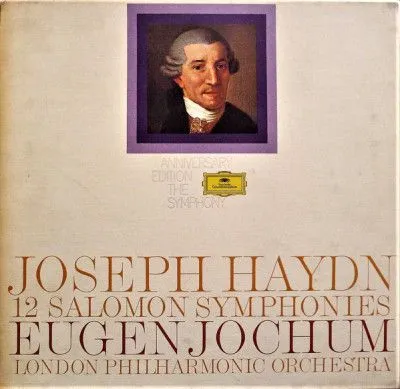
Jochum served as principal conductor of the Bamberg Symphony from 1969-1973. He later worked regularly with the Staatskapelle Dresden, with which he recorded the complete symphonies of Bruckner and "London" symphonies of Joseph Haydn (which latter he also recorded with the London Philharmonic).
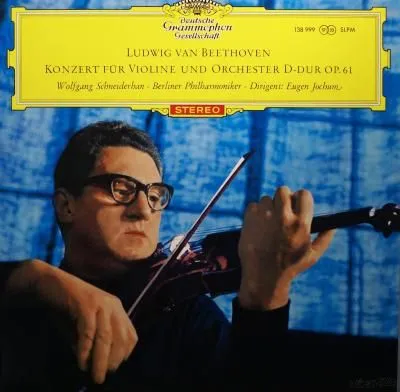
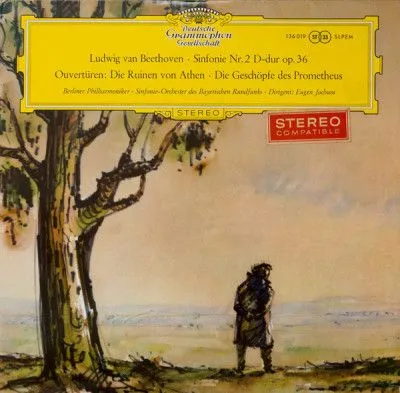
He appeared regularly at the Salzburg Festival. He also, in 1953–54 and 1971, conducted at the Bayreuth Festspielhaus; he made his debut conducting Tristan und Isolde. He led the world premieres of various works, including the Concerto for Strings by Boris Blacher, the Concerte per il principe Eugenio by Alberto Bruno Tedeschi, the Suite Française by Werner Egk, the Tanz-Rondo by Gottfried von Einem, and the Symphony No. 6 by Karl Amadeus Hartmann. He was a regular recording artist, from his first records in 1932. In the stereo LP era, he recorded mainly for Deutsche Grammophon. His DG cycle of the symphonies of Anton Bruckner, split between the Berlin Philharmonic and Bavarian Radio Symphony Orchestra, has remained in the record catalogs ever since its first issue in the 1960s.
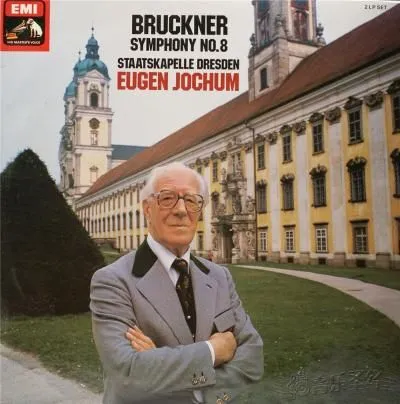
This cycle and a later Jochum Bruckner cycle, with the Staatskapelle Dresden for EMI, have been widely and frequently acclaimed and have caused his name to be especially associated with this composer. In addition, he was president of the International Bruckner Society from 1950, and wrote extensively about Bruckner interpretation. Still, according to his New York Times obituary, he said in a 1983 interview, "Today, everyone thinks of me as a specialist in Bruckner's symphonies. But I began with the music of Bach, Mozart and Beethoven.
And it is to their music that I still feel closest." His recordings of Bach's Mass in B Minor and St. John Passion are frequently counted among the finest of these works. His three complete recordings of the Beethoven symphonies have also been strongly praised: they were made with the Berlin Philharmonic and Bavarian Radio Symphony Orchestra in the 1950s for Deutsche Grammophon, with the Royal Concertgebouw Orchestra in the late 1960s for Philips, and with the London Symphony Orchestra in the 1970s for EMI. Jochum also made two complete recordings of the symphonies of Johannes Brahms, one with the Berlin Philharmonic in the mid-1950s, the other with the London Philharmonic in 1977.
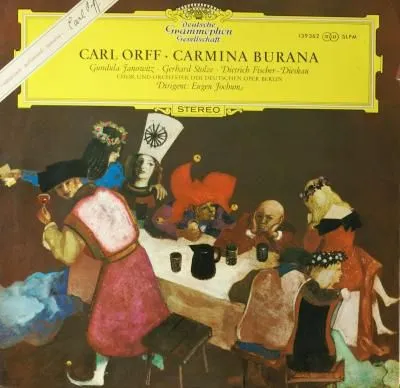
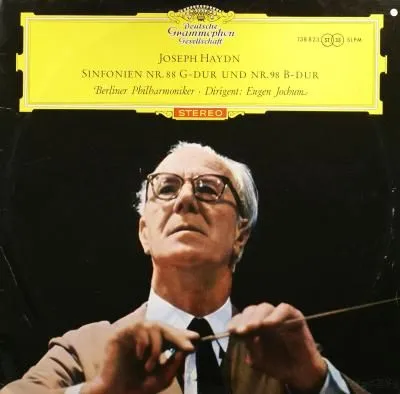
On the strengths of these sets, the conductor Kenneth Woods called him "the greatest Brahms conductor who ever lived." (Others would nominate Weingartner or Toscanini.) He also recorded the Brahms piano concertos with Emil Gilels, a recording that is often listed among the finest made of these works. His recordings of Mozart, Haydn, Schumann, Wagner and Carl Orff have also been highly praised. His 1967 recording of Carmina Burana is considered by Bill Alford to be an authoritative interpretation, as Orff himself was present during the recording and endorsed the finished product. Regarding his podium technique, Kenneth Woods blogs, "Look at his hands -- very small and focused motions but so powerful." Woods also states that "his sense of rubato, while still incredibly daring, is perhaps more un-erring than [that of] even Wilhelm Furtwängler." Jochum's older brother Otto Jochum (1898–1969) was a composer and choral conductor; his younger brother Georg Ludwig Jochum (1909–1970) was, like Jochum, an orchestral conductor. His daughter Veronica Jochum is a pianist on the faculty of the New England Conservatory of Music in Boston, Massachusetts.
Jochum died in Munich in 1987, at the age of 84. His wife Maria predeceased him, in 1985. Notable recordings Anton Bruckner, Eighth Symphony, Hamburg State Philharmonic Orchestra, 1949 (first commercial recording of the complete symphony) Anton Bruckner, Ninth Symphony, Bavarian Radio Symphony Orchestra, 1954 Carl Orff, Carmina Burana, Bavarian Radio Symphony Orchestra, 1953 (first recording) Ludwig Van Beethoven, Symphony No. 9 in D minor Op. 125 Choral, Netherlands Radio Chorus Concertgebouw Orchestra, Amsterdam, 1969 (Dr. J. Ward) Richard Wagner, Die Meistersinger von Nürnberg, Deutsche Oper Berlin, 1976 (with Dietrich Fischer-Dieskau, Plácido Domingo, and others) Johannes Brahms. Piano Concerto No. 1, Berlin Philharmonic Orchestra, with Emil Gilels, 1972