Franco Corelli 弗朗科·科雷利
弗朗科·科雷利
F·Corelli / F·科雷利地区意大利
类型个人
职业男高音
艺人资料
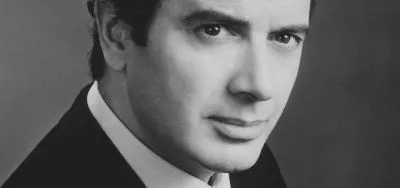
Franco Corelli(8 April 1921– 29 October 2003) was anItaliantenorwho had a major internationaloperacareer between 1951 and 1976. Associated in particular with thespintoand dramatic tenor roles of theItalian repertory, he was celebrated universally for his powerhouse voice, electrifying top notes, clear timbre, passionate singing and remarkable performances. Dubbed the "prince of tenors", Corelli possessed handsome features and a charismatic stage presence which endeared him to audiences. He had a long and fruitful partnership with theMetropolitan OperainNew York Citybetween 1961 and 1975. He also appeared on the stages of most of the major opera houses in Europe and with opera companies throughout North America.
Biography
Early life and education: 1921–1950
Corelli was born Dario Franco Corelli inAnconainto a family many have thought to have little or no musical background.While his parents were not particularly musical, his paternal grandfather Augusto had actually quit working at 35 to establish a successful career as an operatic tenor.His older brother Aldo subsequently quit school to become an operatic baritone, and two of his uncles sang in theTeatro delle Musechorus in Ancona.His father was a shipbuilder for theItalian navyand the family lived along theAdriatic Sea.Corelli loved the sea and initially decided to follow in the footsteps of his father by pursuing a degree innaval engineeringat theUniversity of Bologna. While studying there he entered a music competition under the dare of a friend who was an amateur singer. While he did not win the competition, he was encouraged by the judges to pursue a singing career and Corelli entered thePesaro Conservatory of Musicto study opera.
At the conservatory, Corelli studied underRita Pavoni, but was unhappy with the results, saying these lessons basically destroyed his upper register. After this Corelli decided to become his own teacher, and referred to voice teachers as "dangerous people" and a "plague to singers".Corelli stated that he learned part of his technique from a friend who was a student ofArturo Melocchi, the voice teacher who taughtMario Del Monaco, and who advocated a technique based on singing with thelarynxlowered.Corelli studied with Melocchi himself only "sometimes."Corelli modified the technique to avoid limitations that Corelli perceived in the ability of students of Melocchi to handle mezza-voce (moderate volume) andlegato(smooth) singing. He carefully studied the career of Del Monaco, who preceded Corelli into the first rank of Italian tenors using the lowered-larynx technique, and who was sometimes criticized for lacking subtlety in his singing. Corelli stated: "I ultimately modified the method so that my larynx 'floats'—I do not keep it lowered to the maximum at all times."Corelli also learned by imitating the style and vocal effects of the recordings of great tenors likeEnrico Caruso,Giacomo Lauri-Volpi,Aureliano Pertile, andBeniamino Gigli.Opera Newsstated that Corelli's lowered-larynx technique "resulted in [a] cavernous sound even in high-flying passages, where it gained brilliance. Regulating the breath pressure, the tenor was able to reduce this sound while retaining the core of the voice in adiminuendo, or even amorendoon a high B-flat, the effect requested by Verdi at the end of 'Celeste Aida'."
Early career: 1951–1960
In the summer of 1951, Corelli won theMaggio Musicale FiorentinoinFlorence, earning a debut atSpoletothe following fall. He was originally scheduled to sing Radames inVerdi'sAïdaand spent three months preparing the role with conductorGiuseppe Bertelli. However, Corelli eventually switched to Don José in Bizet'sCarmen, feeling that at this point he lacked the technical finesse and legato for the role of Radamès.In May 1952, he made his debut at theRome Operaas Maurizio inAdriana LecouvreuroppositeMaria Canigliaas Adriana.[6]The same year he appeared in operas with smaller opera houses throughout Italy and on the Italian radio. In 1953 he joined the Rome Opera's roster of principal tenors where he spent much of his time performing through 1958.[6]His first role with the company in 1953 was that of Romeo inZandonai's rarely heard operaGiulietta e Romeo.[2]Later that season he sang Pollione in Bellini'sNormaoppositeMaria Callasin the title role. It was the first time the two sang opposite one another and Callas immediately became an admirer of Corelli. The two performed frequently with each other over the next several years in a partnership that lasted to the end of Callas's career.
While singing at the Rome Opera, Corelli also made numerous appearances with other opera houses both in Italy and internationally. He made his first appearance atLa Scalain Milan in 1954, as Licinio inSpontini'sLa vestaleopposite Callas's Giulia for the opening of the 1954–1955 season. He returned several more times to that house over the next five years, singing opposite Callas in productions ofFedora(1956),Il pirata(1958) andPoliuto(1960).[1]He also notably portrayed the role of Dick Johnson in a highly celebrated performance ofLa fanciulla del Westat La Scala in 1956, oppositeGigliola FrazzoniandTito Gobbi, which was broadcast live on Italian radio.[1]Other important debuts for Corelli soon followed, including his first appearances at: theMaggio Musicale Fiorentinoin Florence and theArena di Verona Festivalin 1955; theVienna State Opera, asRadamès, and theRoyal Opera House,Covent Garden, in London, asCavaradossi, in 1957;[1]theTeatro Nacional de São Carlosin Lisbon, theLyric Opera of Chicagoand theSan Francisco Operain 1958; and theBerlin State Operain 1961. Among the many triumphs of the decade for Corelli were two highly celebrated performances at theTeatro di San CarloinNaples, a 1958 appearance as Don Alvaro inLa forza del destinooppositeRenata Tebaldias Leonora and a 1959 performance of Maurizio inAdriana LecouvreuroppositeMagda Oliveroin the title role.
During his early career, Corelli sang in a number of rare operas in which he triumphed including performances ofSpontini'sAgnes von
Hohenstaufenin its Italian version, Agnese di Hohenstaufen,Handel'sGiulio CesareandHercules, Prokofiev'sWar and Peace, and the world premiere ofGuido Guerrini'sEnea.[1]By 1960 his active repertory included some 30 roles including the title role inGiordano'sAndrea Chénier, Turiddu inMascagni'sCavalleria rusticana, Rodolfo in Puccini'sLa bohème, and the title roles in Verdi'sDon CarloandErnani.
In 1957 Corelli met soprano Loretta di Lelio when she came backstage after one of his performances at the Rome Opera House to get his autograph. They began seeing each other romantically and married in 1958. After their marriage, Loretta gave up her fledgling opera career to serve as her husband's business manager, secretary, public relations agent, cook, and English translator. Their marriage endured until Corelli's death forty-five years later.
The Metropolitan Opera years: 1961–1975
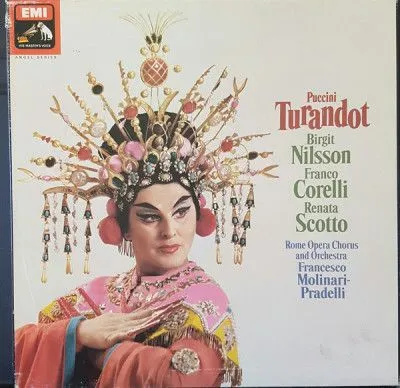
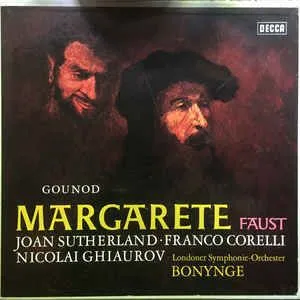
Corelli made his debut atNew York'sMetropolitan Operaon 27 January 1961 as Manrico inIl trovatore,opposite sopranoLeontyne Priceas Leonora who was also making her house debut at the Met that evening.[1]He would sing to great acclaim at the Met until 1974 in roles such asCalaf(withBirgit NilssonasTurandot),Cavaradossi,Maurizio,Ernani,RodolfoandEdgardo. He also undertook French parts in new productions ofRoméo et JulietteandWerther. He sang at a number of historic nights at the Met including: the closing gala at the old Met, the concert honoring SirRudolf Bing's retirement, and Callas's legendary comeback Tosca.[1]His last performance at the Met was on December 28, 1974 as Calàf withIngrid Bjoner, also singing her last performance at the Met, as Turandot. However, Corelli did tour extensively with the Metropolitan Opera in 1975, singing in performances in cities throughout the United States and in Japan.While singing at the Met, Corelli continued to be a presence on the international stage. In 1961 he made his debut with theDeutsche Oper Berlin. He returned to La Scala in 1962, for a revival ofMeyerbeer'sLes Huguenots, oppositeJoan Sutherland, and that same year appeared as Manrico in a lauded production ofIl trovatoreat theSalzburg FestivalunderHerbert von Karajanand opposite Leontyne Price,Giulietta Simionato, andEttore Bastianini.[1]Also in 1962 he made his first appearance with thePhiladelphia Lyric Opera Companyas Mario Cavaradossi. He returned to Philadelphia almost every year through 1971 portraying close to a dozen different roles.He made his debut at theParis Opérain 1964 opposite Callas in Tosca and Norma. He also earned high acclaim while collaborating with the Italian-American conductorAlfredo Antoniniin several gala concerts in New York during the mid 1960s.
In the early 1970s, Corelli's voice began to show some signs of wear after years of hard use in a demanding repertory. As a result, the resultant nerves surrounding performances became increasingly difficult to handle for the tenor. He made his last opera appearance as Rodolfo in 1976 inTorre del Lagoat the age of 55.[1]Corelli later said of the decision, "I felt that my voice was a little tired, a little opaque, less brilliant than before. The singer's life cost me a great deal. I was full of apprehension and mad at everyone. I was a bundle of nerves, I wasn't eating or sleeping."
Later life: 1976–2003
After retiring from the stage, Corelli became a popular voice teacher in New York City, somewhat ironic for a man who himself disdained voice teachers for much of his life.[1][11]He was briefly coaxed out of retirement for concerts in 1980 and 1981.[1]He died inMilanin 2003, aged 82, having suffered a stroke earlier that year. He was buried in Milan'sCimitero Monumentale.Critical reception
With a rich and ringingspinto tenorvoice and movie-star good looks, Corelli won a wide public following from early on his career. However, while the public was enthralled with the tenor, music critics were divided, with some complaining about what they perceived as self-indulgence of phrasing and expression. During the 1960s the anti-Corelli sentiment was epitomized byAlan RichofThe New York Herald Tribunein a 1966 article which, while acknowledged the vibrancy and white heat of his singing, considered Corelli a throwback. Rich said that, Corelli is "not employed by an opera, but employs it to serve purposes it was not meant to serve."Also, many critics did not look favourably on his performances in French opera, owing to the tenor’s exotic French diction and style.However, Corelli also had his admirers among several highly respected and notable critics, includingHarold C. SchonbergofThe New York Times, who once defended the expressive liberties taken by Corelli, saying that his performance possessed "its own kind of logic".
from:http://www.wikizero.biz/index.php?q=aHR0cHM6Ly9lbi53aWtpcGVkaWEub3JnL3dpa2kvRnJhbmNvX0NvcmVsbGk