Sylvius Leopold Weiss 西尔维厄斯·利奥波德·魏斯
西尔维厄斯·利奥波德·魏斯
S·L·Weiss / S·L·魏斯地区德国
类型个人
职业作曲
艺人资料
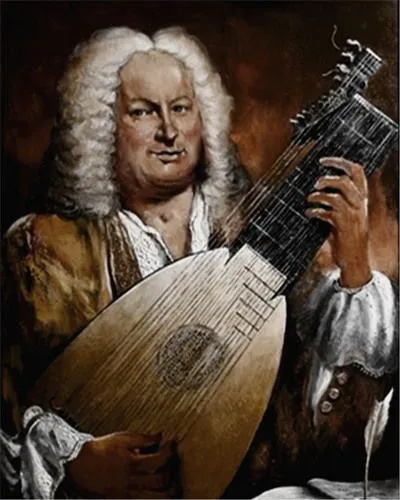
西尔维厄斯·利奥波德·魏斯(Sylvius Leopold Weiss,1687年10月12日 – 1750年10月16),是一位德国作曲家和琉特琴家。
德国作曲家、鲁特琴家。是鲁特琴历史上一名最重要和最多产的作曲家,并且也是当时最知名和以琴技著称的鲁特琴家之一。出生于格罗德库夫。父亲也是鲁特琴家。他和W.F.巴赫是好友,并且在W.F.巴赫的引荐下见到了巴赫。据说,巴赫和他进行了即兴创作比赛,约翰·弗里德里希·雷查德记述:“任何人都懂得在鲁特琴上演奏和弦和对位是有多么困难,可是此时我正在目睹着伟大的鲁特琴家魏斯用鲁特琴演奏幻想曲与赋格,向伟大的大键琴和管风琴家巴赫挑战。”
Sylvius Leopold Weiss (12 October 1687– 16 October 1750) was a German composer and lutenist.
Born in Grottkau near Breslau, the son of Johann Jacob Weiss, also a lutenist, he served at courts in Breslau, Rome, and Dresden, where he died. Until recently, he was thought to have been born in 1686, but recent evidence suggests that he was in fact born the following year.
Weiss was one of the most important and most prolific composers of lute music in history and one of the best-known and most technically accomplished lutenists of his day. He was a teacher to Philip Hyacinth, 4th Prince Lobkowicz, and the prince's second wife Anna Wilhelmina Althan.
In later life, Weiss became a friend of Wilhelm Friedemann Bach and met J.S. Bach through him. Bach and Weiss were said to have competed in improvisation, as the following account by Johann Friedrich Reichardt describes:
"Anyone who knows how difficult it is to play harmonic modulations and good counterpoint on the lute will be surprised and full of disbelief to hear from eyewitnesses that Weiss, the great lutenist, challenged J. S. Bach, the great harpsichordist and organist, at playing fantasies and fugues."
Sylvius Weiss' son Johann Adolph Faustinus Weiss succeeded him as a Saxon court lutenist.
Weiss probably wrote more than 1000 pieces for lute, from which about 850 attributed pieces survived, most of them grouped into 'sonatas' (not to be confused with the later classical sonata, based on sonata form) or suites, which consist mostly of baroque dance pieces. Weiss also wrote chamber pieces and concertos, but only the solo parts have survived for most of them.