Régine Crespin 雷吉纳•克莱斯宾
雷吉纳•克莱斯宾
Crespin / 雷吉纳•克莱斯宾地区法国
类型个人
职业女高音
艺人资料
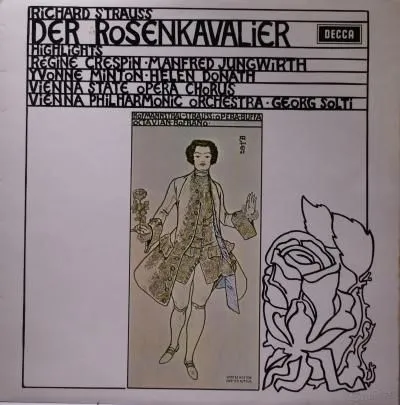
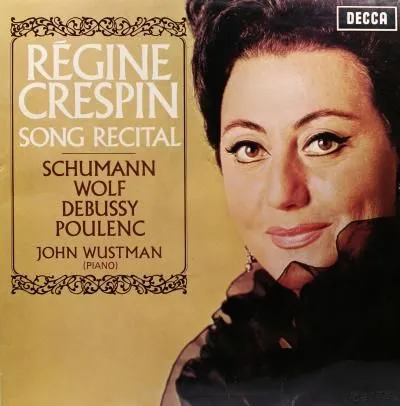
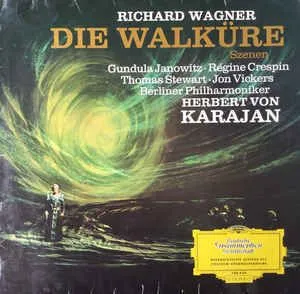
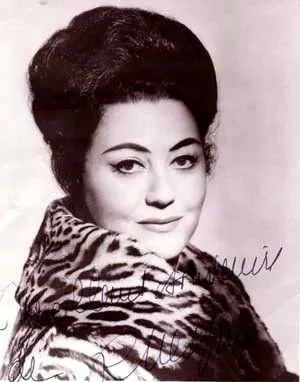
雷吉纳•克莱斯宾(Régine Crespin,1927-2007),法国女高音歌唱家,1927年2月23日出生于法国马赛,2007年7月5日因肝癌卒于巴黎,享年80岁。 克莱斯宾是世界著名的戏剧女高音,尤以法语和德语剧目见长,16岁开始接受声音训练,之后就读于巴黎音乐学院,1950年作为《Lohengrin》中的Elsa一角在Mulhouse做了歌剧首演,同年登台巴黎歌剧院,在小范围内首获成功,1958年在拜罗伊特节日上出演《Parsifal》中的孔德里(Kundry)获得突破性进展,尽管演唱的不是德语瓦格纳,随后前往德国师从德国文学教授Lou Bruder(后来成为她的丈夫)学习德语,之后出演的剧目角色有柏辽兹《Les Troyens》中的Cassandre和Didon,Carmen,Fauré的Pénélope,Gluck的《Iphigénie en Tauride》,Massenet《Werther》中的Charlotte,Offenbach的《La Grande-Duchesse de Gérolstein》,Poulenc《Dialogues des Carmélites》中的Madame Lidoine和Madame de Croissy,Tosca,Tchaikovsky《The Queen of Spades》中的Countess,瓦格纳《Parsifal》中的Kundry,以及《Die Walküre》中的Sieglinde和Brünnhilde,自己最得意的角色当属施特劳斯《Der Rosenkavalier》中的Marschallin,1989年退休后从事教学。
Régine Crespin (23 February 1927 – 5 July 2007) was a French singer who had a major international career in opera and on the concert stage between 1950 and 1989. She started her career singing roles in the dramatic soprano and spinto soprano repertoire, drawing particular acclaim singing Wagner and Strauss heroines. She went on to sing a wider repertoire that embraced Italian, French, German, and Russian opera from a variety of musical periods. In the early 1970s Crespin began experiencing vocal difficulties for the first time and ultimately began performing roles from the mezzo-soprano repertoire. Throughout her career she was widely admired for the elegance, warmth and subtlety of her singing, especially in the French and German operatic repertories. Crespin began her career in France, earning her first critical successes in the French provinces during the early 1950s and then becoming a fixture at the Opéra National de Paris in the mid-1950s. Her international career was launched in 1958 with a critically acclaimed performance of Kundry in Richard Wagner's Parsifal at the Bayreuth Festival. She soon appeared at most of the major opera houses in the United States and Europe and made a number of appearances in South America as well. She had a long and fruitful association with the Metropolitan Opera in New York City, making over 125 appearances at that house between 1962 and 1987. Crespin retired from the stage in 1989, after which she taught singing for many years at her alma mater, the Conservatoire de Paris, and gave numerous acclaimed master classes at conservatories and universities internationally. In recognition of Crespin's artistry as a singer, the Marguerite Long–Jacques Thibaud Competition, which had been restricted to pianists and violinists, was expanded in 2011 to include singers, and renamed the Long-Thibaud-Crespin Competition. Crespin was born in Marseille in 1927. She moved to Nîmes with her family at the age of five and her parents opened a large shoe store in that city which they ran for many years. Crespin's childhood was not an easy one, being affected both by growing up during World War II and her mother's alcoholism. She initially intended to be a pharmacist but was prevented in pursuing this path after failing to pass her Baccalauréat at the age of 16. Up to this point her father had not allowed her to study singing. However, as her career path was limited by the exam results he finally allowed her to start taking lessons for purely pragmatic reasons. She went on to win first prize in a singing competition a few years later, and, at the age of nineteen, she went to Paris to study at the Conservatoire de Paris in the classes of Suzanne Cesbon-Viseur and Georges Jouatte. Four years later, in 1950, she was awarded first prize in the school's onstage competitions for opera and opéra comique and second prize in the school's singing competition. Traditionally past winners of Conservatoire's competitions were offered performance contracts with the Opéra National de Paris, but Crespin was for some unknown reason not offered one. This created a somewhat tenuous relationship between Crespin and her country's musical establishment which extended into the early portion of her career.