劳里茨·梅尔基奥尔 (Lauritz Melchior)
劳里茨·梅尔基奥尔
L·Melchior / L·梅尔基奥尔地区美国
类型个人
职业男高音
艺人资料
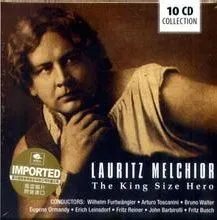
Lauritz Melchior (20 March 1890 – 19 March 1973) was a Danish and later American opera singer. He was the pre-eminent Wagneriantenor of the 1920s, 1930s, and 1940s and has since come to be considered the quintessence of his voice type. Late in his career, Melchior appeared in movie musicals and on radio and television. He also made numerous recordings.Born Lauritz Lebrecht Hommel Melchior in Copenhagen, Denmark, the young Melchior was a boy soprano and amateur singer before starting his first operatic vocal studies under Paul Bang at the Royal Opera School in Copenhagen at the age of 18 in 1908. In 1913, Melchior made his debut in the baritone role of Silvio in Ruggero Leoncavallo's Pagliacci at the Royal Theatre (Det Kongelige Teater) in Copenhagen. He sang mostly secondary baritone and bass roles for the Royal Danish Opera and provincial Scandianavian opera companies for the next few years. One night, while on tour, Melchior helped an ailing soprano performing in Il trovatore by singing a high C in the Act IV Leonora-di Luna duet. The Azucena of that performance, the American contralto Mme Charles Cahier, was impressed by the tone she had heard and gave her young colleague sound advice: he was no baritone, but a tenor "with the lid on." She even wrote to the Royal Opera pleading that Melchior be given a sabbatical and a stipend to restudy his voice. This he did between 1917 and 1918, taking lessons from the noted Danish tenor Vilhelm Herold (1865–1937) who had sung Wagnerian roles in Covent Garden, Chicago and elsewhere from 1900 to 1915. This proved to be a turning point in Melchior's career. His high baritone voice was recast into that of a low tenor, but with a strong high extension. His second debut was on 8 October 1918 in the title role of Tannhäuser, also at the Royal Opera in Copenhagen. In 1920, Melchior visited England to sing in an experimental radio broadcast to the Scandinavian capital cities from the Marconistation in Chelmsford. From 1920, Melchior was a frequent performer in London, appearing at Sir Henry J. Wood's Prom Concerts inQueen's Hall. In September 1920, when he was singing the Steersman's Song, from Wagner's The Flying Dutchman at a Prom Concert, he met the popular novelist and passionate Wagnerite Hugh Walpole and the two quickly became firm friends, travelling together and staying in each other's houses. On a visit to Walpole's cottage in PolperroMelchior "caused a sensation by singing at a concert in the village", and later on a visit to Helston he and Walpole both took part in the Floral Dance. In December 1921 on a visit with Walpole to his (Walpole's) parents in Edinburgh, Melchior gave a concert in the Usher Hall. Walpole provided the fledglingHeldentenor with financial aid in February 1922, paying in advance two-thirds of the fees for his studies under Victor Beigel. In 1923, Walpole gave Melchior a further £800, enabling him to continue his studies with Ernst Grenzebach and the legendary dramatic soprano of the Vienna Court Opera, Anna Bahr von Mildenburg.