Jacob Obrecht 奥布雷赫特
奥布雷赫特
J·Obrecht / J·奥布雷赫特地区比利时
类型个人
职业作曲
艺人资料
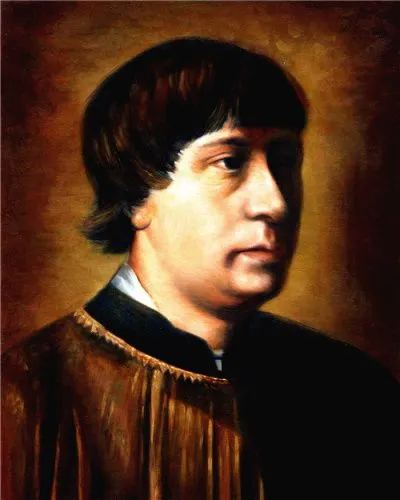
文艺复兴时期的尼德兰作曲家,15世纪末杰出的弥撒作曲家。出生于根特,父亲是一个小号手。早年可能跟随父亲学习小号,并可能认识并学习勃艮第乐派的安托万·比努瓦,因为奥布雷希特早期的弥撒作品表现出显著的比努瓦的风格。他曾先后在康布雷,布鲁日,安特卫普,费拉拉等地任职,著名的人文主义思想家和神学家伊拉斯谟曾在奥布雷希特的合唱团里做歌手。奥布雷希特曾2次出访意大利,一次在1487年,另一次在1504年,均为应费拉拉的埃斯特家族之邀,1505年欧洲瘟疫爆发,奥布雷希特不幸染病去世。他虽然也写世俗歌曲,但是作品主要以宗教作品为主,代表了15世纪末尼德兰复调音乐发展的高峰。由于他的下一代又开始转而崇尚简单直接的风格,所以虽然他在世时非常有名,但是他死后作品便立刻不再流行,而其复杂的复调风格并没有给他的下一代们带来什么影响。
Jacob Obrecht(also Hobrecht; 1457/8– late July 1505) was a Flemish-Dutch, Low Countries (greater Netherlands) composer. He was the most famous composer ofmassesin Europe in the late 15th century, being eclipsed by onlyJosquin des Prezafter his death.
Life
What little is known of Obrecht's origins and early childhood comes mostly from his motetMille quingentis.He was the only son[4]ofGhentcity trumpeter Willem Obrecht and Lijsbette Gheeraerts.[5]His mother died in 1460 at the age of 20,[6]and his father in 1488 in Ghent.[7]
Details of his early education are sparse,[8]but he probably learned to play thetrumpet, like his father, and in so doing learnedcounterpointand how to improvise over acantus firmus.[9]He is likely to have knownAntoine Busnoisat the Burgundian court, and certainly knew his music, since Obrecht's earliest mass shows close stylistic parallels with the elder composer.[10]
Scholar, composer and clergyman,[11]Obrecht seems to have had a succession of short appointments, two of which ended in less than ideal circumstances.[12]There is a record of his compensating for a shortfall in his accounts by donating choirbooks he had copied.[13]Throughout the period he was held in the highest esteem both by his patrons and by his fellow composers.[14]Tinctoris, writing inNaples, singles him out in a shortlist of contemporary master composers[15]—all the more significant because he was only 25 when Tinctoris created his list, and on the other side of Europe.[16]Erasmusserved as one of Obrecht's choirboys around 1476.[17]
While most of Obrecht's appointments were inFlandersin the Low Countries, he made at least two trips to Italy, once in 1487 at the invitation of DukeErcole d'Este Iof Ferrara,[18]and again in 1504.[19]Ercole had heard Obrecht's music, which is known to have circulated in Italy between 1484 and 1487,[20]and said that he appreciated it above the music of all other contemporary composers;[21]consequently he invited Obrecht to Ferrara for six months in 1487.[22]In 1504 Obrecht returned to Ferrara,[23]but on the death of the Duke at the beginning of the next year he became unemployed.[24]In what capacity he stayed in Ferrara is unknown, but he died in the outbreak of plague there just before 1 August 1505.[25]
Works
Obrecht wrote mainly sacred music—massesandmotets[26]—and he also wrote somechansons.
Combining modern and archaic elements, Obrecht's style is multi-dimensional.[28]Perhaps more than those of the mature Josquin, the masses of Obrecht display a profound debt to the music ofJohannes Ockeghemin the wide-arching melodies and long musical phrases that typify the latter's music. Obrecht's style is an example of thecontrapuntalextravagance of the late 15th century.[29]He often used acantus firmustechnique for his masses:[30]sometimes he divided his source material up into short phrases;[31]at other times he usedretrogradeversions of complete melodies or melodic fragments.[32]He once even extracted the component notes and ordered them by note value, long to short, constructing new melodic material from the reordered sequences of notes.[33]Clearly to Obrecht there could not be too much variety,[34]particularly during the musically exploratory period of his early twenties.[35]He began to break free from conformity toformes fixes, especially in his chansons. Of theformes fixes, therondeauretained its popularity longest.[36]However, he much preferred composing Masses, where he found greater freedom.[37]Furthermore, his motets reveal a wide variety of moods and techniques.
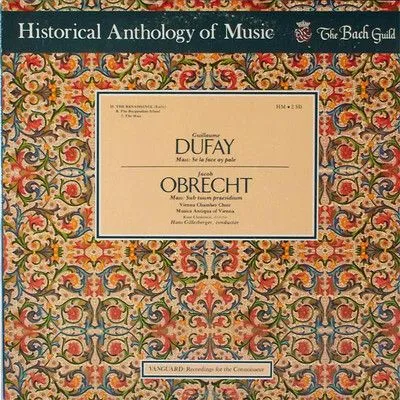
In hisMissa Sub tuum presidium, the number of voice parts in the five movements increases from three in theKyrie, to four in theGloria, and so on up to seven in theAgnus Dei.[38]The title chant is clearly heard in the top voice throughout the work, and five additional Marian chants are found in movements other than theKyrie.[39]His late four-voice mass,Missa Maria zart(tender Maria), tentatively dated to around 1504, is based on a devotional song popular in theTyrol, which he probably heard as he went through the region around 1503 to 1504.[40]Requiring more than an hour to perform, it is one of the longest polyphonic settings of the Mass Ordinary ever written[41]and is considered among his finest works.[42]
Despite working at the same period, Obrecht and Ockeghem (Obrecht's senior by some 30 years) differ significantly in musical style.[43]Obrecht does not share Ockeghem's fanciful treatment of the cantus firmus but chooses to quote it verbatim.[44]Whereas the phrases in Ockeghem's music are ambiguously defined, those of Obrecht's music can easily be distinguished, though both composers favor wide-arching melodic structure.[45]Furthermore, Obrecht splices the cantus firmus melody with the intent of audibly reorganizing the motives; Ockeghem, on the other hand, does this far less.[46]
Obrecht's procedures contrast sharply with the works of the next generation, who favored an increasing simplicity of approach (prefigured by some works of his contemporaryJosquin).[47]Although he was renowned in his time, Obrecht appears to have had little influence on subsequent composers; most probably, he simply went out of fashion along with the other contrapuntal masters of his generation.[48]