弗兰基·莱恩 (Frankie Laine)
弗兰基·莱恩
F·Laine / F·莱恩类型个人
职业作曲
艺人资料
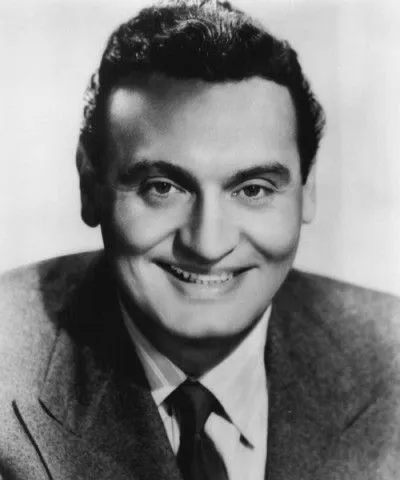
Frankie Laine (born Francesco Paolo LoVecchio; March 30, 1913 – February 6, 2007) was an Italian American singer, songwriter, and actor whose career spanned 75 years, from his first concerts in 1930 with a marathon dance company to his final performance of "That's My Desire" in 2005. Often billed as "America's Number One Song Stylist", his other nicknames include "Mr. Rhythm", "Old Leather Lungs", and "Mr. Steel Tonsils". His hits included "That's My Desire", "That Lucky Old Sun", "Mule Train", "Jezebel", "High Noon", "I Believe", "Hey Joe!", "The Kid's Last Fight", "Cool Water", "Rawhide", and "Lord, You Gave Me a Mountain".
He sang well-known theme songs for many movie Western soundtracks, including 3:10 To Yuma, Gunfight at the O.K. Corral, and Blazing Saddles, although his recordings were not charted as a country & western. Laine sang an eclectic variety of song styles and genres, stretching from big band crooning to pop, western-themed songs, gospel, rock, folk, jazz, and blues. He did not sing the soundtrack song for High Noon, which was sung by Tex Ritter, but his own version (with somewhat altered lyrics, omitting the name of the antagonist, Frank Miller) was the one that became a bigger hit, nor did he sing the theme to another show he is commonly associated with—Champion the Wonder Horse (sung by Mike Stewart)—but released his own, subsequently more popular, version.
Laine's enduring popularity was illustrated in June 2011, when a TV-advertised compilation called Hits reached No. 16 on the British chart. The accomplishment was achieved nearly 60 years after his debut on the UK chart, 64 years after his first major U.S. hit and four years after his death.
A clarion-voiced singer with lots of style, able to fill halls without a microphone, and one of the biggest hit-makers of late 1940s/early 1950s, Laine had more than 70 charted records, 21 gold records, and worldwide sales of over 100 million records.Originally a rhythm and blues influenced jazz singer, Laine excelled at virtually every music style, eventually expanding to such varied genres as popular standards, gospel, folk, country, western/Americana, rock 'n' roll, and the occasional novelty number. He was also known as Mr. Rhythm for his driving jazzy style.
Laine was the first and biggest of a new breed of singers who rose to prominence in the post–World War II era. This new, raw, emotionally charged style seemed at the time to signal the end of the previous era's singing styles and was, indeed, a harbinger of the rock 'n' roll music that was to come. As music historian Jonny Whiteside wrote:
In the Hollywood clubs, a new breed of performers laid down a baffling hip array of new sounds…Most important of all these, though, was Frankie Laine, a big lad with 'steel tonsils' who belted out torch blues while stomping his size twelve foot in joints like Billy Berg's, Club Hangover and the Bandbox…Laine's intense vocal style owed nothing to Crosby, Sinatra, or Dick Haymes. Instead he drew from Billy Eckstine, Big Joe Turner, Jimmy Rushing, and with it Laine had sown the seeds from which an entire new perception and audience would grow…Frank Sinatra represented perhaps the highest flowering of a quarter century tradition of crooning but suddenly found himself an anachronism. First Frankie Laine, then Tony Bennett, and now Johnnie (Ray), dubbed 'the Belters' and 'the Exciters,' came along with a brash vibrancy and vulgar beat that made the old bandstand routine which Frank meticulously perfected seem almost invalid.
In the words of Jazz critic Richard Grudens:
Frank's style was very innovative, which was why he had such difficulty with early acceptance. He would bend notes and sing about the chordal context of a note rather than to sing the note directly, and he stressed each rhythmic downbeat, which was different from the smooth balladeer of his time.
His 1946 recording of "That's My Desire" remains a landmark record signaling the end of both the dominance of the big bands and the crooning styles favored by contemporary Dick Haymes and others. Often called the first of the blue-eyed soul singers, Laine's style cleared the way for many artists who arose in the late 1940s and early 1950s, including Kay Starr, Tony Bennett, and Johnnie Ray.
I think that Frank probably was one of the forerunner of…blues, of…rock 'n' roll. A lot of singers who sing with a passionate demeanor—Frank was and is definitely that. I always used to love to mimic him with 'That's…my…desire.' And then later Johnnie Ray came along that made all of those kind of movements, but Frank had already done them. – Patti Page
Throughout the 1950s, Laine enjoyed a second career singing the title songs over the opening credits of Hollywood films and television shows, including Gunfight at the O.K. Corral, 3:10 to Yuma, Bullwhip, and Rawhide. His rendition of the title song for Mel Brooks's 1974 hit movie Blazing Saddles won an Oscar nomination for Best Song, and on television, Laine's featured recording of "Rawhide" for the series of the same name became a popular theme song.
You can't categorize him. He's one of those singers that's not in one track. And yet and still I think that his records had more excitement and life into it. And I think that was his big selling point, that he was so full of energy. You know when you hear his records it was dynamite energy. — Herb Jeffries
Frankie Laine was born Francesco Paolo LoVecchio on March 30, 1913, to Giovanni and Cresenzia LoVecchio (née Salerno) [His actual Cook County, Ill, birth Certificate, No. 14436, was already Americanized at the time of his birth, with his name written as "Frank Lovecchio," his mother as "Anna Salerno," and his father as "John Lovecchio," with the "V" lower case in each instance, except in the "Reported by" section with "John Lo Vecchio " written in.]. His parents had emigrated from Monreale, Sicily, to Chicago's Near West Side, in "Little Italy," where his father worked at one time as the personal barber for gangster Al Capone. Laine's family appears to have had several organized crime connections, and young Francesco was living with his grandfather when the latter was killed by rival gangsters.
The eldest of eight children, Laine grew up in the Old Town neighborhood (first at 1446 N. North Park Avenue and later at 331 W. Schiller Street) and got his first taste of singing as a member of the choir in the Church of the Immaculate Conception's elementary school across the street from the North Park Avenue home. He later attended Lane Technical High School, where he helped to develop his lung power and breath control by joining the track and field and basketball teams. He realized he wanted to be a singer when he missed time in school to see Al Jolson's current talking picture, The Singing Fool. Jolson would later visit Laine when both were filming pictures in 1949, and at about this time, Jolson remarked that Laine was going to put all the other singers out of business.
Even in the 1920s, his vocal abilities were enough to get him noticed by a slightly older "in crowd" at his school, who began inviting him to parties and to local dance clubs, including Chicago's Merry Garden Ballroom. At 17, he sang before a crowd of 5,000 at The Merry Garden Ballroom to such applause that he ended up performing five encores on his first night. Laine was giving dance lessons for a charity ball at the Merry Garden when he was called to the bandstand to sing:
Soon I found myself on the main bandstand before this enormous crowd, Laine recalled. I was really nervous, but I started singing 'Beside an Open Fireplace,' a popular song of the day. It was a sentimental tune and the lyrics choked me up. When I got done, the tears were streaming down my cheeks and the ballroom became quiet. I was very nearsighted and couldn't see the audience. I thought that the people didn't like me.
Some of his other early influences during this period included Enrico Caruso, Carlo Buti, and especially Bessie Smith—a record of whose somehow wound up in his parents' collection:
I can still close my eyes and visualize its blue and purple label. It was a Bessie Smith recording of 'The Bleeding Hearted Blues,' with 'Midnight Blues' on the other side. The first time I laid the needle down on that record I felt cold chills and an indescribable excitement. It was my first exposure to jazz and the blues, although I had no idea at the time what to call those magical sounds. I just knew I had to hear more of them! — Frankie Laine
Another singer who influenced him at this time was falsetto crooner, Gene Austin. Laine worked after school at a drugstore that was situated across the street from a record store that continually played hit records by Gene Austin over their loudspeakers. He would swab down the windows in time to Austin's songs. Many years later, Laine related the story to Austin when both were guests on the popular television variety show Shower of Stars. He would also co-star in a film, Rainbow 'Round My Shoulder, with Austin's daughter, Charlotte.
Shortly after graduating high school, Laine signed on as a member of The Merry Garden's marathon dance company and toured with them, working dance marathons during the Great Depression (setting the world record of 3,501 hours with partner Ruthie Smith at Atlantic City's Million Dollar Pier in 1932). Still billed as Frank LoVecchio, he would entertain the spectators during the fifteen-minute breaks the dancers were given each hour. During his marathon days, he worked with several up-and-coming entertainers, including Rose Marie, Red Skelton, and a 14-year-old Anita O'Day, for whom he served as a mentor (as noted by Laine in a 1998 interview by David Miller).
Other artists whose styles began to influence Laine at this time were Bing Crosby, Louis Armstrong (as a trumpet player), Billie Holiday, Mildred Bailey, and, later, Nat "King" Cole. Laine befriended Cole in Los Angeles, when the latter's career was just beginning to gain momentum. Cole recorded a song, "It Only Happens Once", that fledgling songwriter Laine had composed. They remained close friends throughout the remainder of Cole's life, and Laine was one of the pall bearers at Cole's funeral.
His next big break came when he replaced Perry Como in the Freddy Carlone band in Cleveland in 1937; Como made a call to Carlone about Laine. Como was another lifelong friend of Laine's, who once lent Laine the money to travel to a possible gig.
Laine's rhythmic style was ill-suited to the sweet sounds of the Carlone band, and the two soon parted company. Success continued to elude Laine, and he spent the next 10 years "scuffling"; alternating between singing at small jazz clubs on both coasts and a series of jobs, including those of a bouncer, dance instructor, used car salesman, agent, synthetic leather factory worker, and machinist at a defense plant. It was while working at the defense plant during the Second World War that he first began writing songs ("It Only Happens Once" was written at the plant). Often homeless during his "scuffling" phases, he hit the lowest point of his career, when he was sleeping on a bench in Central Park.
I would sneak into hotel rooms and sleep on the floor. In fact, I was bodily thrown out of 11 different New York hotels. I stayed in YMCAs and with anyone who would let me flop. Eventually I was down to my last four cents, and my bed became a roughened wooden bench in Central Park. I used my four pennies to buy four tiny Baby Ruth candy bars and rationed myself to one a day. — Frankie Laine[
He changed his professional name to Frankie Laine in 1938, upon receiving a job singing for the New York City radio station WINS. The program director, Jack Coombs, thought that "LoVecchio" was "too foreign sounding, and too much of a mouthful for the studio announcers," so he Americanized it to "Lane." Frankie added the "i" to avoid confusion with a girl singer at the station who went by the name of Frances Lane. It was at this time that Laine got unknown songbird Helen O'Connell her job with the Jimmy Dorsey band. WINS, deciding that they no longer needed a jazz singer, dropped him. With the help of bandleader Jean Goldkette, he got a job with a sustainer (nonsponsored) radio show at NBC. As he was about to start, Germany attacked Poland and all sustainer broadcasts were pulled off the air in deference to the needs of the military.
Laine next found employment in a munitions plant, at a salary of $150.00 a week. He quit singing for what was perhaps the fifth or sixth time of his already long career. While working at the plant, he met a trio of girl singers, and became engaged to the lead singer. The group had been noticed by Johnny Mercer's Capitol Records, and convinced Laine to head out to Hollywood with them as their agent.
In 1943, he moved to California where he sang in the background of several films, including The Harvey Girls, and dubbed the singing voice for an actor in the Danny Kaye comedy The Kid from Brooklyn. It was in Los Angeles in 1944 that he met and befriended disc jockey Al Jarvis and composer/pianist Carl T. Fischer, the latter of whom was to be his songwriting partner, musical director, and piano accompanist until his death in 1954. Their songwriting collaborations included "I'd Give My Life," "Baby, Just For Me," "What Could Be Sweeter?," "Forever More," and the jazz standard "We'll Be Together Again."
When the war ended, Laine soon found himself "scuffling" again, and was eventually given a place to stay by Jarvis. Jarvis also did his best to help promote the struggling singer's career, and Laine soon had a small, regional following. In the meantime, Laine would make the rounds of the bigger jazz clubs, hoping that the featured band would call him up to perform a number with them. In late 1946, Hoagy Carmichael heard him singing at Billy Berg's club in Los Angeles, and this was when success finally arrived. Not knowing that Carmichael was in the audience, Laine sang the Carmichael-penned standard "Rockin' Chair" when Slim Gaillard called him up to the stage to sing. This eventually led to a contract with the newly established Mercury records. Laine and Carmichael would later collaborate on a song, "Put Yourself in My Place, Baby".
Laine cut his first record in 1944, for a fledgling company called "Beltone Records." The sides were called "In the Wee Small Hours of the Morning", (an uptempo number not to be confused with the Frank Sinatra recording of the same name) and a wartime propaganda tune entitled "Brother, That's Liberty", though the records failed to make much of an impression. The label soon folded, and Laine was picked up by Atlas Records, a "race label" that initially hired him to imitate his friend Nat "King" Cole. Cole would occasionally "moonlight" for other labels, under pseudonyms, while under contract to "Capitol", and as he had previously recorded some sides for Atlas, they reasoned that fans would assume that "Frankie Laine" was yet another pseudonym for "Cole".[citation needed]
Laine cut his first two numbers for Atlas in the King mode, backed by R&B artist Johnny Moore's group, The Three Blazers which featured Charles Brown and Cole's guitarist (from "The King Cole Trio"), Oscar Moore. The ruse worked and the record sold moderately well, although limited to the "race" market. Laine cut the remainder of his songs for Atlas in his own style, including standards such as "Roses of Picardy" and "Moonlight in Vermont".
It was also at this time that he recorded a single for Mercury Records: "Pickle in the Middle with the Mustard on Top" and "I May Be Wrong (But I Think You're Wonderful)." He appears only as a character actor on the first side, which features the comedic singing of Artie Auerbach (a.k.a., "Mr. Kitzel") who was a featured player on the Jack Benny radio show. In it, Laine plays a peanut vendor at a ball game and can be heard shouting out lines like "It's a munchy, crunchy bag of lunchy!" The flip side features Laine, and is a jazzy version of an old standard done as a rhythm number. It was played by Laine's friend, disc jockey Al Jarvis, and gained the singer a small West Coast following.
Even after his discovery by Carmichael, Laine still was considered only an intermission act at Billy Berg's. His next big break came when he dusted off a fifteen-year-old song that few people remembered in 1946, "That's My Desire". Laine had picked up the song from songstress June Hart a half a dozen years earlier, when he sang at the College Inn in Cleveland. He introduced "Desire" as a "new" song—meaning new to his repertoire at Berg's—but the audience mistook it for a new song that had just been written. He ended up singing it five times that night. After that, Laine quickly became the star attraction at Berg's, and record company executives took note.
Laine soon had patrons lining up to hear him sing "Desire"; among them was R&B artist Hadda Brooks, known for her boogie woogie piano playing. She listened to him every night, and eventually cut her own version of the song, which became a hit on the "harlem" charts. "I liked the way he did it" Brooks recalled; "he sings with soul, he sings the way he feels."[
He was soon recording for the fledgling Mercury label, and "That's My Desire" was one of the songs cut in his first recording session there. It quickly took the No. 3 spot on the R&B charts, and listeners initially thought Laine was black. It also made it to the No. 4 spot on the Mainstream charts. Although it was quickly covered by many other artists, including Sammy Kaye who took it to the No. 2 spot, it was Laine's version that became the standard.
"Desire" became Laine's first Gold Record, and established him as a force in the music world. He had been over $7,000 in debt, on the day before he recorded this song." His first paycheck for royalties was over five times this amount. Laine paid off all of his debts except one—fellow singer Perry Como refused to let Laine pay him back, and would kid him about the money owed for years to come. The loan to Laine during the time when both men were still struggling singers was one of the few secrets Como kept from his wife, Roselle, who learned of it many years later.A series of hit singles quickly followed, including "Black and Blue", "Mam'selle", "Two Loves Have I", "Shine", "On the Sunny Side of the Street", "Monday Again", and many others.
Laine was a jazz singer in the late 1940s.[20] Accompanied by Carl Fischer and some of the best jazz men in the business, he was singing standards like "By the River Sainte Marie", "Black and Blue", "Rockin' Chair", "West End Blues", "At the End of the Road", "Ain't That Just Like a Woman", "That Ain't Right", "Exactly Like You", "Shine" and "Sleepy Ol' River" on the Mercury label.
He enjoyed his greatest success after impresario Mitch Miller, who became the A&R man at Mercury in 1948, recognized a universal quality in his voice that led to a succession of chart-topping popular songs, often with a folk or western flavor. Laine and Miller became a formidable hit-making team whose first collaboration, "That Lucky Old Sun", became the number one song in the country three weeks after its release. It was also Laine's fifth Gold record. "That Lucky Old Sun" was something new to the musical scene in 1949: a folk spiritual which, as interpreted by Laine, became both an affirmation of faith and a working man's wish to bring his earthly sufferings to an end.
The song was knocked down to the number two position by Laine and Miller's second collaboration, "Mule Train", which proved an even bigger hit, making Laine the first artist to hold the Number One and Two positions simultaneously. "Mule Train", with its whip cracks and echo, has been cited as the first song to use an "aural texture" that "set the pattern for virtually the entire first decade of rock."
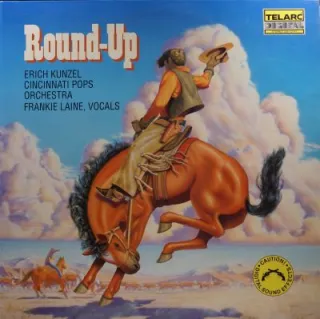
"Mule Train" represents a second direction in which Laine's music would be simultaneously heading under the guidance of Mitch Miller: as the voice of the great outdoors and the American West. "Mule Train" is a slice of life in the mid-19th century West in which the contents of the packages being delivered by the mule train provide a snapshot into frontier life: "There's some cotton, thread and needles for the folks a-way up yonder/A shovel for a miner who left his home to wander/Some rheumatism pills for the settlers in the hills."
The collaboration producing a run of top forty hits that lasted into the early years of the rock and roll era. Other hits included "Dream a Little Dream of Me", "Stars and Stripes Forever", "The Cry of the Wild Goose", "Swamp Girl", "Satan Wears a Satin Gown", and "Music, Maestro Please".
"Shine", written in 1910 by Cecil Mack (R.C. McPherson), a ground-breaking African-American songwriter and publisher, was believed to be based on a real-life friend of vaudevillian George Walker, who was with him during the New York City race riots of 1900. The song takes what was then an ethnic slur, "shine", and turns it into what is essentially a badge of honor. It had been a hit for Laine's idol Louis Armstrong, who would cover several of Laine's hits as well.
"Satan Wears a Satin Gown" is the prototype of another recurring motif in Laine's oeuvre, the "Lorelei" or "Jezebel" song (both of which would be the titles of later Laine records). The song, which has a loosely structured melody that switches in tone and rhythm throughout, was pitched to Laine by a young song plugger, Tony Benedetto, who would later go on to achieve success as Tony Bennett. Laine recognized the younger singer's talent, and gave him encouragement.
"Swamp Girl" is another entry with the "Lorelei"/"Jezebel" motif in the Laine songbook. In this decidedly gothic tale of a ghostly female spirit who inhabits a metaphorical "swamp", the femme fatale attempts to lure the singer to his death, calling "Come to the deep where your sleep is without a dream." The swamp girl is voiced (in an obligato) by coloratura Loolie Jean Norman, who would later go on to provide a similar vocal for the theme song of the television series Star Trek. The coloratura contrasts well with Laine's rough, masculine voice, and disembodied female voices would continue to appear in the background of many of his records, to great effect.
"Cry of the Wild Goose" would be Laine's last number one hit on the American charts. It was written by folksinger Terry Gilkyson, of The Easy Riders fame. Gilkyson would write many more songs for Laine over the next decade, and he and The Easy Riders would back him on the hit single, "Love Is a Golden Ring". "Cry of the Wild Goose" falls into the "voice of the great outdoors" category of Laine songs, with the opening line of its chorus, "My heart knows what the wild goose knows", becoming a part of the American lexicon.
Laine's influence on today's music can be clearly evidenced in his rendition of the Hoagy Carmichael standard, "Georgia on My Mind." Laine's slow, soulful version was a model for the iconic remake by Ray Charles a decade later. Charles would follow up "Georgia" with remakes of other Frankie Laine hits, including "Your Cheatin' Heart", and "That Lucky Old Sun." (Elvis Presley also remade several of Laine's hits, and his early influence on The Beatles has been well documented.)
In an interview, Mitch Miller described the basis of Laine's appeal:
He was my kind of guy. He was very dramatic in his singing…and you must remember that in those days there were no videos so you had to depend on the image that the record made in the listener's ears. And that's why many fine artists were not good record sellers. For instance, Lena Horne. Fabulous artist but she never sold many records till that last album of hers. But she would always sell out the house no matter where she was. And there were others who sold a lot of records but couldn't get to first base in personal appearances, but Frankie had it both. — Mitch Miller
But the biggest label of all was Columbia Records, and in 1950 Mitch Miller left Mercury to embark upon his phenomenally successful career as the A&R man there. Laine's contract at Mercury would be up for renewal the following year, and Miller soon brought Laine to Columbia as well. Laine's contract with Columbia was the most lucrative in the industry until RCA bought Elvis Presley's contract five years later.