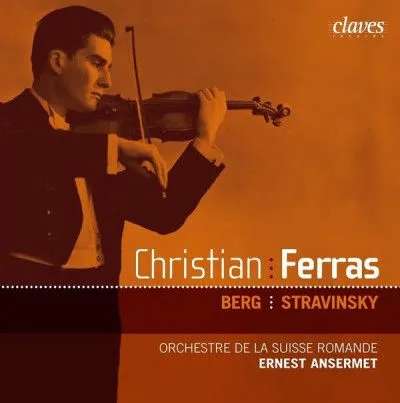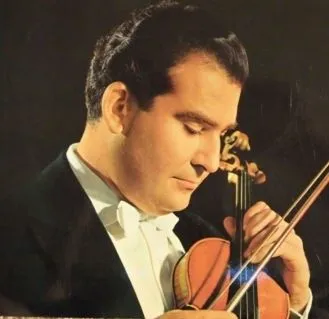
Christian Ferras 克里斯蒂安·费拉斯
克里斯蒂安·费拉斯
C·Ferras / C·费拉斯地区法国
类型个人
职业小提琴
艺人资料
法国小提琴家,先后在尼斯音乐学院和巴黎音乐学院从比斯德西(Bistesi)和卡威(Calvet)学习,曾获小提琴演奏和室内乐演奏奖。后又从埃乃斯库学习,17岁参加蒂博国际小提琴比赛获第一名,尔后开始巡回演奏。其音色壮丽多采,卡拉扬与其合作的协奏曲,尤其好评如潮。
简介
从古至今,法国学派在小提琴演奏史中一直占有著非常重要的地位,尤其是巴黎这个城市,更是许多影响二十世纪不同学派的始祖门所“必学之地”,例如影响俄国学派的韦尼奥夫斯基,美国新学派的创始人葛拉米安,二十世纪最伟大的教育家弗莱什及至今仍令乐迷怀念的的克莱斯勒,蒂博及埃涅斯柯(Enesco)等大人物,都曾受过这个城市的“洗礼”。
1935年,年仅16岁的奴娃在第一界波兰韦尼奥夫斯基大赛中打败群雄,勇夺金牌后,更再次确立法国学派在全世界乐坛的地位,可惜这样的盛世却在几年后出现了前所未有的危机,1949年奴娃因为飞机失事的意外而身亡,不到四年的时间(1953年)他的老师蒂博也遭遇同样的命运,这样连续的噩耗对具有数百年优良传统的法国学派来说,实在是非常严重的打击,还好这样的困境在一位青年才俊的出出现,终于又再度重见光明,这位让法国学派得以延续下去的小提琴大师就是--克里斯蒂安·费拉斯(Christian Ferras)。
人物生平
1933年的6月17日费拉斯诞生在法国南部的图葛市(LeTouguet),父亲除了经营旅馆的生意外,本身也是一位拉琴拉得还不错的音乐爱好者,所以儿子的小提琴教育自然而然就由父亲启蒙,不过费拉斯天赋过人,不到几个月父亲已无法给他上课,便开始帮他找老师,首先他先和夏依耶(MarcelChailley)学习,1941年考进尼斯(Nizza)音乐学院,师事比斯泰西(C.Bistesi),隔年在尼斯当地乐团的伴奏下举行个人首演,1944年以最优异成绩毕业,紧接著当时只有十一岁的费拉斯马上远赴巴黎再度深造,并考入法过音乐院中的首选-巴黎音乐学院,由贝内替第(R.Benedetti)收为门徒,并和伊萨依(Ysaye)的学生卡尔维特(Calvet)学习室内音。
1946年,费拉斯以十三岁的年纪及超凡人的特殊表现,取得小提琴演奏及室内乐的“第一奖”,并取得毕业文凭,这位令许多学子及师长所刮目相看的少年在毕业后,马上在巴黎当地Pasdeloup乐团的伴奏下合演贝多芬小提琴协凑曲,由于首演精湛,立刻在当地乐坛造成轰动,第二年获邀到伦敦为英国Decca唱片公司录制西班牙作曲家艾利察而德(F.Elizalde)的小提琴协奏曲(已发行成CD,详阅下集),为费拉斯个人生平的首次录音,不过演奏事业蒸蒸日上的盛况并无法满足自我要求甚严的费拉斯,为了再次提升自己的演奏水准,他继续拜小提琴大师埃涅斯柯为师,不过拜师的过程一开始并不顺利,原因并不是在费拉斯本身的能力,而是当时慕名而来找大师学习的莘莘学子不计其数,加上他年事已高(已超过六十五岁),所以起初的意愿并不高,后来在恩师卡尔维特的极力推荐之下,费拉斯终于完成心愿,成为大师的最后一位关门弟子。
经由埃涅斯柯的倾囊相授,使得原本已技术完备的费拉斯得以在音乐的造诣上更上一曾楼,费拉斯自己就曾经回忆说:虽然我的技巧养成教育是来自别的老师,但我仍将埃涅斯柯视为是我学习过程中最重要的老师。由此便可看出师徒二人紧密的关系,1948年费拉斯获得法国Scheveningen的小提琴比赛的首奖(当时他的师兄曼纽因是评审委员之一),隔年他参加著名的隆-蒂博大赛,获得首奖重缺的“银牌奖”,这一战使得费拉斯的名声正式跃上国际舞台,同时在这次大赛的另一样意外收获则是认识钢琴家巴比采特(P.Barbizet,1922-1990,当界钢琴组的第五名),两人年纪虽相差十一岁,但却一拍即合,在往后的岁月中,除了协奏曲的音乐会之外,巴比采特成为费拉斯唯一的伴奏,两人合作的时间长达二十年之久,其惺惺相惜的友谊,在琴坛中并不多见。
成就
1950年后费拉斯继奴娃后成为法国最具代表性的小提琴家,除了先后成为Decca及EMI旗下的音乐家之外,同是开始他全球的演奏生涯,1951年以《贝多芬小提琴协奏曲》在柏林首次登台(指挥是贝姆,已发行CD),美国首演则是在1957年与名指挥家孟许(C.Munch)合作演出《布拉姆斯小提琴协奏曲》,费拉斯的演奏足迹除了欧美国家之外,更远至南美洲及亚洲的日本,1959年EMI为他及师兄曼纽因(兼指挥)二人,共同录制《巴哈d小调双小提琴协奏曲》,两位埃涅斯柯的爱徒唯一的一次合作,是非常具有历史意义的录音。
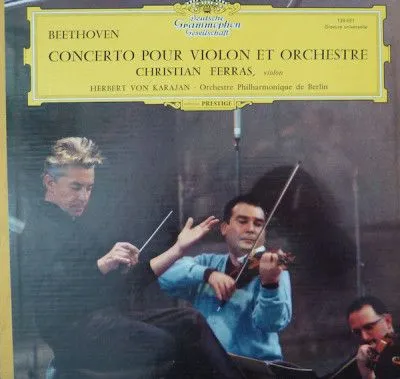
费拉斯在世界乐坛杰出的表现,也在这个时候受到指挥大师卡拉扬的注意,1960年开始费拉斯成为卡拉扬最喜爱的小提琴家并成为柏林爱乐人气指数最高的音乐家,为费拉斯一生演奏事业的另一个颠峰期,在卡拉扬的推荐之下,德过著名的DG唱片公司也为费拉斯灌录不少张的唱片,除了和卡拉扬与柏林爱乐合作的几首协奏曲之外,他与巴比采特这组最佳拍档也留下不少优秀的录音。
1968年年底在完成数十首小品集的录音后,费拉斯就渐退出演奏舞台,七O年代开始因受身体不适的影响,其录音及演出活动已无法与昔日相提并论,1975年被母校(巴黎音乐学院)聘任为小提琴教授,三年后(1978)录制生平最后一次的录音,曲目则是他从未录制过的巴哈六首无伴奏奏鸣曲(可惜至今没见CD发行),1982年的9月14日,就在他最后一场音乐会的后三个星期后,突然传来大师猝死的噩耗,消息传来,无不令乐迷们感到错愕及不舍,因为当时费拉斯的年纪只有49岁而已,二十世纪的琴坛在此时又折损了一名才华洋溢的世界级大师。
摘自:https://baike.baidu.com/item/%E8%B4%B9%E6%8B%89%E6%96%AF/4200017
English Introduction
Christian Ferras(17 June 1933 – 14 September 1982) was a Frenchviolinist.
Ferras was born at Le Touquet in 1933. He began studying the violin with his father. He entered the Conservatoire de Nice as a student of Charles Bistesi in 1941, and in 1943 obtained the First Prize. In 1944 he went to the Conservatoire de Paris. In 1946 he won the First Prize in both disciplines (violin and chamber music), and started his performing career with the Pasdeloup Orchestra under Albert Wolff, and later Paul Paray. He worked with Romanian violinist and composer George Enescu, who also acted as an instructor.
The Violin Concerto by Federico Elizalde was premiered by Ginette Neveu in Paris in 1944, but Christian Ferras gave its London premiere under the direction of Gaston Poulet, in the presence of the composer, and made the world premiere recording on 7 November 1947, at the age of 14. In 1948 Ferras won First Prize at the international Scheveningen Festival; Yehudi Menuhin was among the judges. He premiered Arthur Honegger's Sonata for Solo Violin in the Salle Gaveau on 16 November 1948. The next year, he won the second prize (the first prize was not awarded) in the international Marguerite Long-Jacques Thibaud Competition. It was there that he met Pierre Barbizet, with whom he formed one of the most famous partnerships in the history of piano-violin collaboration. In 1950 he, along with Jean-Pierre Rampal and George Enescu, recorded various works by J.S. Bach. It was at this point that his career took off when he was invited by Karl Böhm to play with the Vienna Philharmonic in 1951. He subsequently gave a series of concerts in, amongst other places, Japan and South America.
In 1952, he premiered both Claude Pascal's violin sonata, and (with Pierre Barbizet), he premiered Double Concerto by Ivan Semenoff. In 1954, he recorded Brahms's Violin Concerto with Carl Schuricht. 1959 was a year in which Ferras rose to real prominence: he began his career in the United States by playing Brahms's concerto under Charles Munch; recorded Bach's Double Concerto with Yehudi Menuhin; played at the Prades Festival with Pablo Casals and Wilhelm Kempff; and premiered Gyula Bando's Violin Concerto.[citation needed]
In 1960 he premiered Serge Nigg's Concerto, which the composer is said to have written "for the violin and not without the violin". In 1965 he enjoyed a much acclaimed tour through Southern Africa with accompanist Jean-Clause Ambrosini.
Ferras made many recordings with EMI, including
Beethoven's sonatas for piano and violin with Pierre Barbizet (1958)
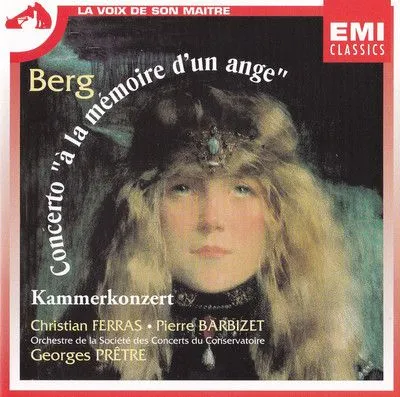
Berg's chamber concerto and his Violin Concerto 'To the Memory of an Angel'.
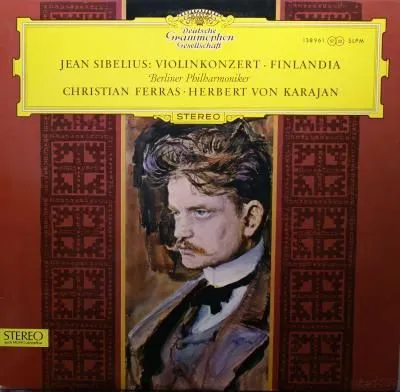
He went on in 1964 to record the Brahms Concerto with Herbert von Karajan for the Deutsche Grammophon label, and then the concertos of Sibelius, Tchaikovsky, Beethoven and Bach, which are the recordings for which he is most admired. He continued to make recordings with Deutsche Grammophon: with Barbizet, the violin sonatas of Brahms, Schumann, Franck and Lekeu.
In 1975, he was awarded recognition by the Conservatoire de Paris for his works, and retired from regular public performance for health reasons. He returned to playing in Paris on 9 March 1982 with Alain Lefèvre and then on 6 May with Pierre Barbizet. He gave his last concert in Vichy on 25 August 1982.
Christian Ferras struggled with severe lifelong depression. He committed suicide in Paris on 14 September 1982, aged 49.