Charles Mackerras 查尔斯·麦克拉斯
查尔斯·麦克拉斯
C·Mackerras / C·麦克拉斯地区澳大利亚
类型个人
职业指挥
艺人资料
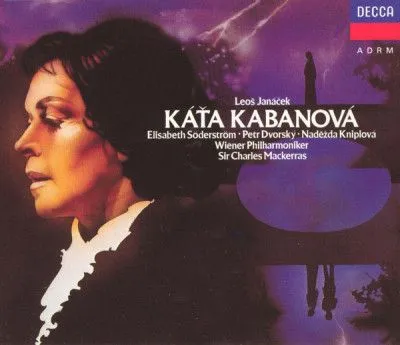
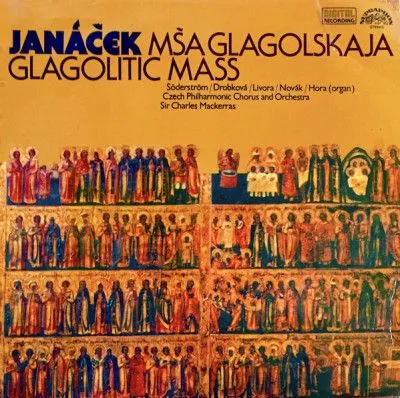
Sir Alan Charles Maclaurin Mackerras (17 November 1925 – 14 July 2010)was an Australian conductor. He was an authority on the operas of Janáček and Mozart, and the comic operas of Gilbert and Sullivan. He was long associated with the English National Opera (and its predecessor) and Welsh National Opera and was the first Australian chief conductor of the Sydney Symphony Orchestra. Mackerras was born in Schenectady, New York, to Australian parents, Alan Mackerras and Catherine MacLaurin. His father was an electrical engineer and aQuaker. In 1928, when Charles was aged two, the family returned to Sydney, Australia. They initially lived in the suburb of Vaucluse, and in 1933 they moved to the then semi-rural suburb of Turramurra. Mackerras was the eldest of seven children. His siblings were Alastair (1929–99), Neil, Joan (b. 1934), Elisabeth (b. 1937) and twins Malcolm and Colin. They are descendants of the pioneer Australian musician Isaac Nathan. Mackerras studied violin at the age of seven and later the flute. He was setting poems to music at eight and wrote a piano concerto when he was 12. Mackerras initially attended his father's alma mater, Sydney Grammar School, and also St Aloysius College in Sydney. While at Sydney Grammar, he showed a precocious talent by composing operas and conducting student performances in his early teens, but his non-musical studies suffered. At all-male St Aloysius, he participated in the school's Gilbert and Sullivan productions, playing the roles of Kate in The Pirates of Penzance, Leila in Iolanthe and Ko-Ko in The Mikado. Unconvinced that music was a viable profession, his parents removed the young Mackerras from temptation by sending him to board at The King's School. The school's focus on sport and discipline led the young artist to run away several times, and he was eventually expelled. At age 16, Mackerras studied oboe, piano and composition at the NSW State Conservatorium of Music. He earned additional income from writing orchestral scores from recordings. By 1941, while still at the conservatory, Mackerras began to get professional performing jobs in Sydney, partly because he was too young to join the military, while older musicians had been called up to go to the war. From 1941 to 1942, Mackerras played the oboe for the J. C. Williamson Company during one of their Gilbert and Sullivan seasons, and he was a rehearsal pianist for the Kirsova ballet company. In 1943, Mackerras joined the ABC Sydney Orchestra, under Malcolm Sargent, as second oboist and at age 19, became principal oboist.On 6 February 1947, Mackerras sailed for England on the RMS Rangitiki intending to pursue conducting. He joined Sadler's Wells Theatre as an orchestral oboist and cor anglais player. He later won a British Council Scholarship, enabling him to study conducting with Václav Talich at the Prague Academy of Music. While there, he formed a strong friendship with Jiří Tancibudek, Principal Oboe of the Czech Philharmonic, who introduced him to the operas of Leoš Janáček, thus commencing Mackerras's lifelong passion for that composer's music. In August 1947, shortly before the couple set off for Prague, Mackerras married Judy Wilkins, a clarinettist at Sadlers' Wells. They had two daughters, Fiona and Catherine. Fiona died of cancer in September 2006. He was also the uncle of the Australian conductor Alexander Briger and the British-born American conductor Drostan Hall, Music Director of Camerata Chicago. Returning to England from Prague in 1948, Mackerras rejoined Sadler's Wells as an assistant conductor and began his lifelong association with the Sadler's Wells Opera, now English National Opera, conducting, among others, Janáček, Handel, Gluck, Bach, and Donizetti. In the 1950s, well before the "authenticity" movement had come to general notice, Mackerras focused on the study and practical realization of period performance techniques, culminating in his landmark 1959 recording of Handel's Music for the Royal Fireworks using the original wind band instrumentation. In his 1965 performance of The Marriage of Figaro, he added the ornamentation in a historically informed style. Mackerras also strongly championed the music of Janáček outside Czechoslovakia, where Mackerras himself judged his work with Janáček as his single most important legacy to music. In 1951, he conducted the British premiere of Káťa Kabanová. He was also a noted authority on Mozart's operas and those of SirArthur Sullivan. His ballet with John Cranko, Pineapple Poll, is an arrangement of Sullivan music with a story based on one of W. S. Gilbert's Bab Ballads. The piece premiered in 1951, soon after the expiration of copyright on Sullivan's music, and continues to be a popular light music favourite in English speaking countries. Mackerras later arranged music by Giuseppe Verdi for the ballet The Lady and the Fool. He also arranged a suite from John Ireland's score for the 1946 film The Overlanders, after Ireland's death in 1962. He became principal conductor of the BBC Concert Orchestra from 1954 to 1956. In 1963, he made his debut at London's Covent Garden conducting Shostakovich'sKaterina Izmailova. He directed the Hamburg State Opera from 1965 to 1969 and the English National Opera from 1970 to 1977. In 1972, he made his Metropolitan Opera debut in New York conducting Gluck's Orfeo ed Euridice. Mackerras worked closely with Benjamin Britten for a time until 1958, when, during rehearsals for Britten's opera Noye's Fludde, he made comments about Britten liking prepubescent boys' company and Britten subsequently stopped speaking to him.The events are described in John Bridcut's Britten's Children. He conducted the Sydney Symphony Orchestra and Birgit Nilsson in the opening concert of the Concert Hall of the Sydney Opera House, in the presence of Queen Elizabeth II, in 1973.