Malcolm John Rebennack 马尔科姆·约翰·瑞本纳克
马尔科姆·约翰·瑞本纳克
M·J·Rebennack / M·J·瑞本纳克地区美国
类型个人
职业作曲
艺人资料
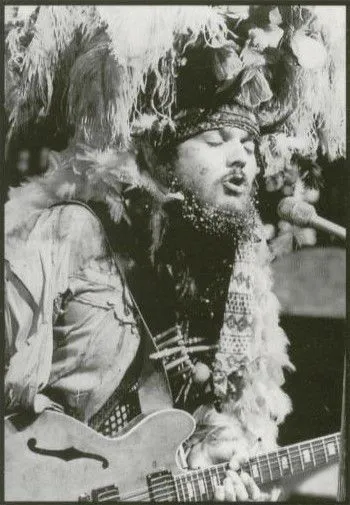
Malcolm John Rebennack(born November 21, 1940), better known by his stage nameDr. John, is an American singer andsongwriter. His music combinesblues,pop,jazz,boogie woogieandrock and roll.
Active as a session musician since the late 1950s, he gained a cult following in the late 1960s following the release of his album Gris-Gris and his appearance at the Bath Festival of Blues and Progressive Music. He performed a wildly theatrical stage show inspired by medicine shows, Mardi Gras costumes and voodoo ceremonies. Rebennack has recorded more than 20 albums and in 1973 scored a top-10 hit with "Right Place, Wrong Time".
The winner of six Grammy Awards, Rebennack was inducted into the Rock and Roll Hall of Fame by singer John Legend on March 14, 2011. In May 2013, Rebennack was the recipient of an honorary doctorate of fine arts from Tulane University.
Born in New Orleans in 1940, Dr. John has said that his French lineage took root there some time in the early 1800s. Growing up in the Third Ward, he found early musical inspiration in the minstrel tunes sung by his grandfather and a number of aunts, uncles, sister and cousins who played piano. He did not take music lessons before his teens and endured only a short stint in choir before getting kicked out.[4] His father, the owner of an appliance store and record shop, exposed him as a young boy to prominent jazz musicians like King Oliver and Louis Armstrong, who inspired his 2014 release, Ske-Dat-De-Dat: The Spirit of Satch. Throughout his adolescence his father's connections enabled him access to the recording rooms of burgeoning rock artists such as Little Richard and Guitar Slim. From these exposures he advanced into clubs and onto the stage with varying local artists, most notably, Professor Longhair.
When he was about 13 or 14 years old, Rebennack met Professor Longhair, which started a period in his life that would mark rapid growth as a musician and the beginnings of his entry into professional music. He describes his initial impression of Professor Longhair noting not only his musical prowess, but his style: "I was also fascinated that he was sitting out there in a turtleneck shirt with a beautiful gold chain with a watch hangin' on it, and an Army fatigue cap on his head. And I thought, Wow, I never seen nobody dressed like this guy. Just everything about the man was totally hip. And he had gloves on him, too, beautiful silk gloves. I'll never forget this."
At age 16 he was hired by Johnny Vincent as a producer at Ace Records. There, he worked with artists like James Booker and Earl King, his musical experience expanding notably. He struggled through intermittent years of high school. While a student at Jesuit High School, he was already playing in night clubs, something the Jesuit fathers disapproved of. They told him to either stop playing in clubs or leave the school. He chose the latter. According to lore, this was the seed of his classic, "Right Place, Wrong Time." Eventually he focused entirely on music. Thereafter an entry into heavy narcotics use would fuel his desire to get out of New Orleans and move to California where his character, Dr. John, was born.
In late 1950s New Orleans, Rebennack originally concentrated on guitar and he gigged with local bands including Mac Rebennack and the Skyliners, (Paul Staele/Dennis "Bootsie" Cuquet, drums; Earl Stanley, bass; Charlie Miller, trumpet; Charlie Maduell, sax; Roland "Stone" LeBlanc, vocals), Frankie Ford and the Thunderbirds, and Jerry Byrne and the Loafers. He had a regional hit with a Bo Diddley-influenced instrumental called "Storm Warning" on Rex Records in 1959. During these days he was an A&R man producing, with Charlie Miller, monophonic singles on 45s for Johnny Vincent and Joe Corona for such local labels as Ace, Ron, Ric and others. For these sessions he oversaw A&R and the rhythm section while Miller wrote the horn arrangements and headed up the horns. It was a productive team until Miller decided to move to New York and to study music formally.
Rebennack's career as a guitarist was stunted circa 1960, when his left ring finger was injured by a gunshot while he was defending singer/keyboardist Ronnie Barron, his bandmate, Jesuit High School classmate, and longtime friend, at a Jackson, Mississippi gig. After the injury, Rebennack concentrated on bass guitar before making piano his main instrument; pianist Professor Longhair was an important influence on Rebennack's piano-playing style.
Dr. John grew up with full exposure to the realities of New Orleans. Prostitutes, pimps, thieves and addicts all participated in the same nightlife scene that contributed to his development as a musician. During the 1950s, he sold narcotics and even ran a brothel. He was arrested on drug charges and sentenced to two years in a federal prison at Fort Worth, Texas. His sentence ended in 1965 and he left for Los Angeles.
He moved to Los Angeles in 1965 where he became a "first call" session musician in the booming Los Angeles studio scene in the 1960s and 1970s and was part of the so-called "Wrecking Crew" stable of studio musicians. He provided backing for Sonny & Cher (and some of the incidental music for Cher's first film, Chastity), for Canned Heat on their albums Living the Blues (1968) and Future Blues (1970), and for Frank Zappa and the Mothers of Invention on Freak Out! (1966), as well as for many other acts.