Volker David Kirchner 沃尔克·戴维·柯克纳
沃尔克·戴维·柯克纳
V·D·Kirchner / V·D·柯克纳地区德国
类型个人
职业作曲、中提琴
艺人资料
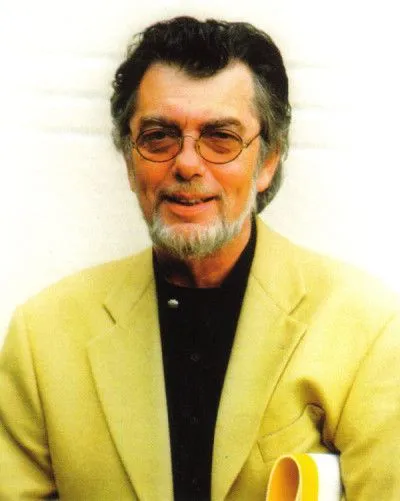
Volker David Kirchner (born 25 June 1942) is a German composer and violist. After studies of violin and composition at the Peter Cornelius Conservatory, the Hochschule für Musik Köln and the Hochschule für Musik Detmold, he worked for decades as a violist in the hr-Sinfonieorchester in Frankfurt, and for two years as a composer of incidental music at the Hessisches Staatstheater Wiesbaden. He is known for his operas which have been commissioned by major German opera houses, but has also composed symphonies, concertos, chamber music and keyboard music. His operas often focus on historic personalities such as Savonarola and Gutenberg.
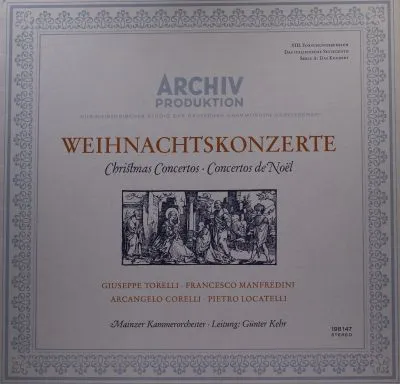
Born in Mainz, Kirchner took his first violin lessons with his grandfather. He studied at the Peter Cornelius Conservatory in Mainz from 1956 to 1969, violin with Günter Kehr (de) and composition with Günter Raphael. On a recommendation by Kehr, he then studied at the Hochschule für Musik Köln from 1959 to 1963, where he was influenced by composers Bernd Alois Zimmermann, Karlheinz Stockhausen and Pierre Boulez. Kirchner completed his studies with Tibor Varga at the Hochschule für Musik Detmold from 1964 to 1965.[2] Kirchner played in jazz ensembles in Cologne, and was violist in the chamber orchestra Rheinisches Kammerorchester Köln. He was violist of the the hr-Sinfonieorchester in Frankfurt from 1966 to 1988.As a chamber musician, he co-founded in 1970 the Ensemble 70 in Wiesbaden. He played viola in the Kehr-Trio, with his teacher as the violinist and cellist Bernhard Braunholz, touring in South America, North Africa and the Near East. From 1972 to 1974, he was also a composer for the Hessisches Staatstheater Wiesbaden from 1972 to 1974, writing incidental music.[2] It prepared his composition for the stage, with a focus on the text, which became decicive for his own operas.
He became known when his first opera was premiered in 1975, Die Trauung (The Wedding), after Witold Gombrowicz's The Marriage. It was played on 27 April 1975 at the Hessisches Staatstheater Wiesbaden, conducted by Siegfried Köhler. Kirchner was then commissioned to write more stage works. During the 1980s, Generalmusikdirektor Siegfried Köhler promoted his operas in Wiesbaden, conducting in 1981 Das kalte Herz (The cold heart) after a fairy-tale by Wilhelm Hauff, revised in 1987 for a performance on 27 October 1988 at the Staatstheater am Gärtnerplatz in Munich. Kirchner's Die fünf Minuten des Isaak Babel (The five minutes of Isaac Babel), subtitled A Scenic Requiem, premiered on 19 April 1980 at the Opernhaus Wuppertal, conducted by Hanns-Martin Schneidt and staged by Friedrich Meyer-Oertel. Belshazar premiered in 1985 at the Bavarian State Opera, and Gilgamesch, premiered at the Expo 2000 in Hanover. His Violin Concerto was first performed in the Berliner Philharmonie in 1984, and his Requiem Messa di pace received its first performance in Moscow 1990 for the opening of a festival. Musicians such as violinists Ulf Hoelscher and Christian Tetzlaff, violist Tabea Zimmermann, cellists Yo Yo Ma, Wolfgang Boettcher (de) and Martin Ostertag (de), and pianists Lars Vogt and Nina Tichmann (de) played his music, in collaboration with conductors such as Gerd Albrecht, Leif Segerstam and Eliahu Inbal.
Kirchner moved to Mainz and became a freelance composer in 1988. Invited by Walter Fink, he was the third composer featured in the annual Komponistenporträt of the Rheingau Musik Festival in 1992.In 1997, the Kleines Haus of the Staatstheater Mainz opened with his Labyrinthos.In 2010, he was one of five living composers whose music celebrated the 80th birthday of Walter Fink in a concert of the Rheingau Musik Festival, writing Nachlese for piano.
His compositions have included solo pieces, string quartets, symphonies and solo concertos, culminating in works for the stage.His operas have often a political background. Isaak Babel, a 1980 work, shows a personality facing the Russian Revolution, Savonarola, a 2011 opera, deals with the short reign of a religious fanatic, Gutenberg, written in 2012, shows the genius from Mainz who had difficulties introducing his invention. Kirchner composed the mass Missa Moguntina in 1993 especially for the Mainz Cathedral, reflecting his roots. The text is the Latin mass expanded by Psalm 130, "De profundis", and Kirchner studied the acoustics of the cathedral.