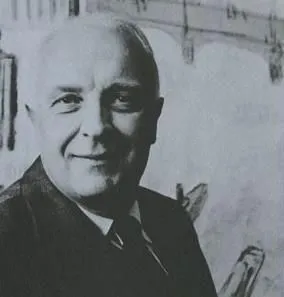
Robert Casadesus 罗伯特·卡扎德絮
罗伯特·卡扎德絮
R·Casadesus / R·卡扎德絮地区法国
类型个人
职业钢琴
艺人资料
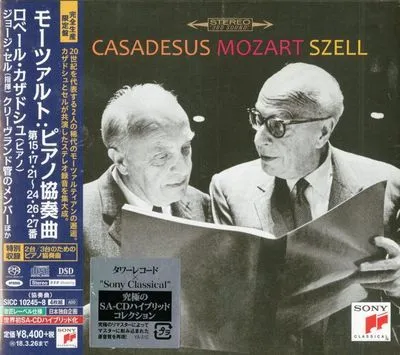
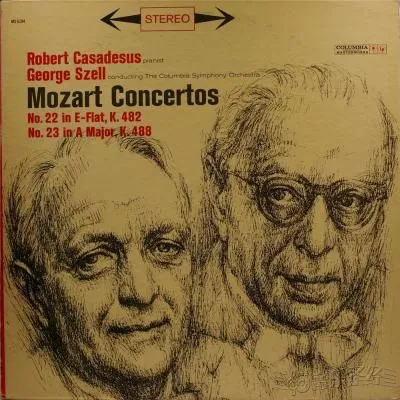
Robert Casadesus (7 April 1899 – 19 September 1972) was a renowned 20th-century French pianist and composer. He was the most prominent member of a famous musical family, being the nephew of Henri Casadesus and Marius Casadesus, husband of Gaby Casadesus, and father of Jean Casadesus. The preferred pronunciation of his last name is "Kah-zah-deh-su" with a silent final "s." Robert Casadesus was born and died in Paris, and studied there at the Conservatoire with Louis Diémer, taking a Premier Prix(First Prize) in 1913 and the Prix Diémer in 1920. Robert then entered the class of Lucien Capet, who had exceptional influence. Capet had founded a famous quartet that bore his name (Capet Quartet) and in which two of Robert's uncles played: Henri and Marcel. The Quartet often rehearsed in the Casadesus home, and so it was that Robert was initiated into chamber music. The Beethoven Quartets held no secret for him—he knew them backwards and forwards without ever having played them. Beginning in 1922, Casadesus collaborated with the composer Maurice Ravel on a project to create piano rolls of a number of his works. Casadesus and Ravel also shared the concert platform in France, Spain and England. Casadesus toured widely as a piano soloist and often performed with his wife, the pianist Gaby (L'Hôte) Casadesus, whom he married in 1921. From 1935 Casadesus taught at the American Conservatory at Fontainebleau. He and his family spent the Second World War years in the United States and had a home inPrinceton, New Jersey. (Among his Princeton neighbors was Albert Einstein, an amateur violinist; the two played Mozart together privately on occasion. ) After the Battle of France Fall of France in 1940, Robert and Gaby established the Fontainebleau School at Newport, Rhode Island. In 1942 the Fontainebleau School was moved to Great Barrington, Massachusetts, in the Berkshires. In 1943, he performed as part of a series of New York concerts meant to raise money for the Coordinating Council of the French Relief Societies. After the war, in 1946, Robert Casadesus, now Director of the American Conservatory oversaw its return to Fontainebleau. His pupils included Claude Helffer, Grant Johannesen, Monique Haas, Mary Louise Boehm, Carol Lems-Dworkin, and William Eves, who appeared on the Bell Telephone Hour fine arts documentary TV series and was a longtime piano instructor at Bowdoin College. He continued recording and composing; his last composition, the Symphony no. 7, "Israel," was a tribute to the people of Israel and was dedicated to his frequent collaborator George Szell ; Szell died in the year the work was completed, 1970, and it was not premiered until shortly after Casadesus's 1972 death, by an ensemble led by conductor Frederic Waldmann at Alice Tully Hall in New York City,. Robert and Gaby Casadesus had three children, Jean, Guy and Therese. Casadesus died in Paris, 19 September 1972, after a brief illness and only a few months after the death of his son Jean in an automobile accident. Gaby Casadesus died in Paris on 12 November 1999. In her later years she edited the works of Ravel for G. Schirmer, Inc.