U2
类型乐队
职业作曲
艺人资料
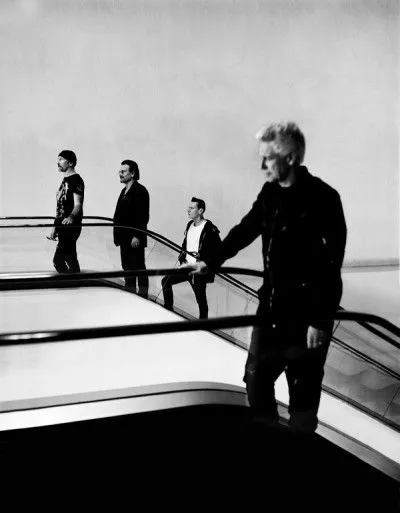
U2are an Irishrockband from Dublin formed in 1976. The group consists ofBono(lead vocals and rhythm guitar),the Edge(lead guitar, keyboards, and backing vocals),Adam Clayton(bass guitar), andLarry Mullen Jr.(drums and percussion). Initially rooted inpost-punk, U2's musical style evolved throughout their career, yet has maintained an anthemic sound built on Bono's expressive vocals and the Edge'seffects-based guitartextures. Their lyrics, often embellished with spiritual imagery, focus on personal and sociopolitical themes. Popular for their live performances, the group have staged several ambitious and elaborate tours over their career.
The band formed at Mount Temple Comprehensive School in 1976 when the members were teenagers with limited musical proficiency. Within four years, they signed with Island Records and released their debut album, Boy (1980). Subsequent work such as their first UK number-one album, War (1983), and the singles "Sunday Bloody Sunday" and "Pride (In the Name of Love)" helped establish U2's reputation as a politically and socially conscious group. By the mid-1980s, they had become renowned globally for their live act, highlighted by their performance at Live Aid in 1985. The group's fifth album, The Joshua Tree(1987), made them international superstars and was their greatest critical and commercial success. Topping music charts around the world, it produced their only number-one singles in the US, "With or Without You" and "I Still Haven't Found What I'm Looking For".
Facing creative stagnation and a backlash following their documentary/double album, Rattle and Hum(1988), U2 reinvented themselves in the 1990s through a new musical direction and public image. Beginning with their acclaimed seventh album, Achtung Baby (1991), and the multimedia-intensive Zoo TV Tour, the band integrated influences from alternative rock, electronic dance music, and industrial musicinto their sound, and embraced a more ironic, flippant image. This experimentation continued through their ninth album, Pop (1997), and the PopMart Tour, which were mixed successes. U2 regained critical and commercial favour with the records All That You Can't Leave Behind (2000) and How to Dismantle an Atomic Bomb (2004), which established a more conventional, mainstream sound for the group. Their U2 360° Tour of 2009–2011 is the highest-attended and highest-grossing concert tour in history. The group's thirteenth album, Songs of Innocence (2014), was released at no cost through the iTunes Store, but received criticism for its automatic placement in users' music libraries.
U2 have released 14 studio albums and are one of the world's best-selling music artists in history, having sold more than 170 million records worldwide. They have won 22 Grammy Awards, more than any other band, and in 2005, they were inducted into the Rock and Roll Hall of Fame in their first year of eligibility. Rolling Stone ranked U2 at number 22 on its list of the "100 Greatest Artists of All Time".[2] Throughout their career, as a band and as individuals, they have campaigned for human rights and social justice causes, including Amnesty International, Jubilee 2000, the ONE/DATA campaigns, Product Red, War Child, and Music Rising.
The band formed in Dublin on 25 September 1976. Larry Mullen Jr., then a 14-year-old student at Mount Temple Comprehensive School, posted a note on the school's notice board in search of musicians for a new band—six people responded. Setting up in his kitchen, Mullen was on drums, with Paul Hewson ("Bono") on lead vocals; David Evans ("the Edge") and his older brother Dik Evans on guitar; Adam Clayton, a friend of the Evans brothers on bass guitar; and initially Ivan McCormick and Peter Martin, two other friends of Mullen. Mullen later described it as "'The Larry Mullen Band' for about ten minutes, then Bono walked in and blew any chance I had of being in charge."Martin, who had brought his guitar and amplifier to the first practice but could not play, did not remain with the group, and McCormick was dropped within a few weeks. The group settled on the name "Feedback" because it was one of the few technical terms they knew. Most of their initial material consisted of cover songs, which the band admitted was not their forte. Some of the earliest influences on the band were emerging punk rock acts, such as the Jam, the Clash, Buzzcocks, and Sex Pistols. The popularity of punk rock convinced the group that musical proficiency was not a prerequisite to success.
—The Edge, on winning the talent contest in Limerick
In April 1977, Feedback played their first gig for a paying audience at St. Fintan's High School. Shortly after, the band changed their name to "The Hype". Dik Evans, who was older and by this time at college, was becoming the odd man out. The rest of the band was leaning towards the idea of a four-piece ensemble.In March 1978, the group changed their name to "U2". Steve Averill, a punk rock musician (with the Radiators) and family friend of Clayton's, had suggested six potential names from which the band chose "U2" for its ambiguity and open-ended interpretations, and because it was the name that they disliked the least. That same month, U2, as a four-piece, won a talent contest in Limerick sponsored by Harp Lager and the Evening Press. The prize consisted of £500 and studio time to record a demo which would be heard by CBS Ireland, a record label. The win was an important milestone and affirmation for the fledgling band.Within a few days, Dik Evans was officially phased out of the band with a farewell concert at the Presbyterian Church Hall in Howth. During the show, which featured the group playing cover songs as the Hype, Dik ceremonially walked offstage. The remaining four band members returned later in the concert to play original material as U2. As part of their contest prize, the group recorded their first demo tape at Keystone Studios in Dublin in April 1978, but the results were largely unsuccessful due to their nervousness.
Irish magazine Hot Press was influential in shaping U2's future; in addition to being one of their earliest allies, the publication's journalist Bill Grahamintroduced the band to Paul McGuinness, who agreed to be their manager in mid-1978. With the connections he was making within the music industry, McGuinness booked demo sessions for the group and sought to garner them a record deal. U2 continued to build their fanbase with performances across Ireland, the most famous of which were a series of Saturday afternoon shows at Dublin's Dandelion Market in the summer of 1979. In August, U2 recorded a three-song demo with producer Chas de Whalley at Windmill Lane Studios, marking the first of what would be many recordings there by the band during their career. The following month, the songs were released by CBS as the Ireland-only EP U2-3. It was the group's first chart success, selling all 1,000 copies of its limited edition 12-inch vinyl almost immediately. In December 1979, the band performed in London for their first shows outside Ireland, although they were unable to gain much attention from audiences or critics. On 26 February 1980, their second single, "Another Day", was released on the CBS label, but again only for the Irish market. The same day, at the end of an Irish tour, U2 played a show in the 2,000-seat National Stadium in Dublin. Although they took a significant risk in booking a show at a venue of that size, it paid off;Bill Stewart, an A&R representative for Island Records, was in attendance and subsequently signed the group to the label.
From:<a href="<a href=" https:="" en.wikipedia.org="" wiki="" '="">https://en.wikipedia.org/wiki/'>https://en.wikipedia.org/wiki/U2