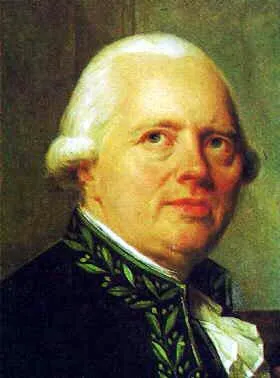
François-Joseph Gossec 弗朗索瓦·约瑟夫·戈塞克
弗朗索瓦·约瑟夫·戈塞克
Gossec / 戈塞克地区比利时
类型个人
职业作曲
艺人资料
比利时作曲家。出生于比利时的农村,是一个贫农的儿子。他在教堂接受到初步的音乐训练。17岁时定居巴黎,在巴黎富有的资产阶级和贵族音乐爱好者的乐队供职,他成为了拉莫的助手并担任了一个私人乐团的指挥,同时他开始创作室内乐、交响曲和小型歌剧等。60年代,他的喜歌剧开始在意大利喜剧院上演。1769年,戈塞克创建并领导了业余爱好者音乐会,公开举办了一系列音乐会。1784年组织创办了皇家歌唱学校,之后他又成为了巴黎音乐学院的学监之一。法国大革命时戈塞克已经55岁,他把自己作为作曲家、音乐教员和组织者的经验贡献给了革命。1792年,他同一个歌唱家小组被派往他的故乡比利时,在那里进行“宣传自由、平等”的演出。1795年,他被选为法兰西学院院士,并被任命为音乐学院五位督察员的主席;1816年,当音乐学院在复辟时期按照拥护君主主义的观点被改组的时候,戈塞克被逐出音乐学院。之后到他去世为止,他一直居于乡间,虽为朋友和学生们所尊敬,但却受到君主主义政府的排斥,终年95岁。
François-Joseph Gossec (17 January 1734 – 16 February 1829) was a French composer of operas, string quartets, symphonies, and choral works.
The son of a small farmer, Gossec was born at the village of Vergnies, then a French exclave in the Austrian Netherlands, now in Belgium. Showing an early taste for music, he became a choir-boy in Antwerp. He went to Paris in 1751 and was taken on by the composer Jean-Philippe Rameau. He followed Rameau as the conductor of a private orchestra kept by the fermier général Le Riche de La Poupelinière, a wealthy amateur and patron of music. Gradually he became determined to do something to revive the study of instrumental music in France.
Gossec's own first symphony was performed in 1754, and as conductor to the Prince de Condé's orchestra he produced several operas and other compositions of his own. He imposed his influence on French music with remarkable success.His Requiem premiered in 1760, a ninety-minute piece which made him famous overnight. Years later, in 1778, Mozart visited Gossec during a trip to Paris, and described him in a letter to his father as "a very good friend and a very dry man".
Gossec founded the Concert des Amateurs in 1769 and in 1773 he reorganised the Concert Spirituel together with Simon Leduc and Pierre Gaviniès. In this concert series he conducted his own symphonies as well as those by his contemporaries, particularly works by Joseph Haydn, whose music had become increasingly popular in Paris, finally even superseding Gossec's symphonic work.
In the 1780s Gossec's symphonic output decreased as he began concentrating on operas. He organized the École de Chant in 1784, together with Etienne Méhul, was conductor of the band of the Garde Nationale of the French Revolution, and was appointed (with Méhul and Luigi Cherubini) inspector of the Conservatoire de Musique at its creation in 1795. He was an original member of the Institut and a chevalier of the Legion of Honour.In 1815, after the defeat of Napoleon at Waterloo, the Conservatoire was closed for some time by Louis XVIII, and the eighty-one-year-old Gossec had to retire. Until 1817 he worked on his last compositions, including a third Te Deum, and was supported by a pension granted by the Conservatoire.
He died in the Parisian suburb of Passy. The funeral service was attended by former colleagues, including Cherubini, at Père Lachaise Cemetery in Paris. His grave is near those of Méhul and Grétry.
Some of his techniques anticipated the innovations of the Romantic era: he scored his Te Deum for 1200 singers and 300 wind instruments, and several oratorios require the physical separation of multiple choirs, including invisible ones behind the stage. He wrote several works in honor of the French revolution, including Le Triomphe de la République, and L'Offrande à la Liberté.
While most people would have difficulty recognizing Gossec's Gavotte by its title, the melody itself remains familiar in the United States and elsewhere because Carl Stalling used an arrangement of it in several Warner Brothers cartoons.
He was little known outside France, and his own numerous compositions, sacred and secular, were overshadowed by those of more famous composers; but he was an inspiration to many, and powerfully stimulated the revival of instrumental music.
摘自:https://en.wikipedia.org/wiki/Fran%C3%A7ois-Joseph_Gossec