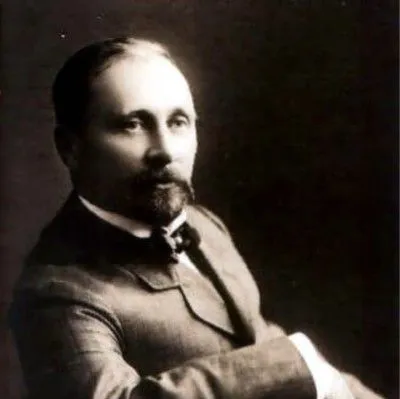
Georgy Catoire 乔治·卡托瓦
乔治·卡托瓦
G.Catoire / G.卡托瓦地区俄罗斯
类型个人
职业作曲
艺人资料
中文简介:
法裔俄罗斯作曲家,音乐教育家。出生于莫斯科。年轻时曾在柏林学习并以瓦格纳为偶像。1879年加入瓦格纳协会。1884年从莫斯科大学以数学专业毕业。后来结识柴可夫斯基,柴可夫斯基鼓励他从事音乐创作。经过在柏林的学习后,1887年他返回莫斯科,并继续前往圣彼得堡求学于里姆斯基-科萨科夫与利亚多夫。不过他的家人并不支持他走作曲的道路,1889年他放弃了作曲学习并返回乡下,不过2年后他还是回归作曲。1919年起任莫斯科音乐学院教授。1926年在莫斯科去世。卡托瓦是俄罗斯作曲家中少有的瓦格纳主义者,但却不以写作管弦乐和歌剧见长。其作品一般有复杂的形式和丰富的和声色彩。
英文简介:
(bMoscow,27 April 1861;dMoscow,21 May 1926).Russiancomposerandmusicologistof French descent. He was taught the piano by Klindworth, who encouraged him to study the works of Wagner; he joined the Wagner Society in 1879 and attended a festival at Bayreuth in 1885. In 1884 he graduated from the mathematics department of Moscow University, but afterwards devoted himself entirely to music. The next year he went to Berlin, where he continued his studies with Klindworth and took composition lessons with Tirsch, later with Rüfer. After a disappointing period of study with Rimsky-Korsakov and Lyadov, he returned to Moscow, where he taught himself and consulted with Arensky and Sergey Taneyev. In 1916 he was appointed professor of composition at the Moscow Conservatory, a post he held until his death; Bely, Kabalevsky, Polovinkin and Fere were among his pupils.
During his professorship Catoire began to study questions of music theory, and he was the first Russian theorist to adopt Riemann's approach for pedagogical use. InTeoreticheskiy kurs garmonii(‘Theoretical course in harmony’, Moscow, 1924–5) he based his conclusions on works from the late 19th century, discussing tonality and chord structure in broader perspective. In the incomplete and posthumously publishedMuzïkal'naya forma(‘Musical form’, Moscow, 1934–6) he challenged and expanded some of the arbitrary aspects of Riemann's rhythmic theories, and pointed to the existence of mixed and transitional types of forms. These works laid the foundation for the development of music theory in the USSR. As a composer he belonged on the whole to the ‘Moscow school’ and his work takes Tchaikovsky as its point of departure. The influence of Wagner is also apparent, though enhanced by a sensitivity to the styles of Chopin, Franck and later even Debussy.