Egon Wellesz 埃贡·维雷茨
埃贡·维雷茨
E·Wellesz / E·维雷茨地区奥地利
类型个人
职业作曲
艺人资料
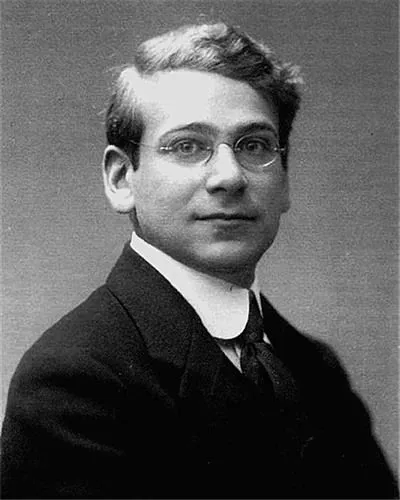
奥地利作曲家,音乐家,音乐教育家,被誉为拜占庭音乐的权威。出生于维也纳,威勒茨的父亲是一位纺织品商人,精通琴艺的母亲很早就让威勒茨接受艺术熏陶,在威勒茨很小的时候便送他接受系统的钢琴教育。在父亲的规划中,威勒茨应该成长为一名律师,但当他13岁生日那天在剧场亲历了马勒指挥韦伯的歌剧“自由射手”之后坚定了成为音乐家的信念。威勒茨早年师从勋伯格学习和声、对位等作曲理论,后来考入维也纳大学随同圭多·阿德勒系统学习音乐理论,在1908年获得了学位。由于学术成果显著,1913年他得到了维也纳大学音乐史讲师这一职位。他早期致力于巴洛克歌剧研究,任教以后则开始研究东西方圣咏中的共通因素,提出叙利亚是东西方文化的共同发源地的论断。他研究成果中最有价值的是题为“拜占庭帝国的教会音乐”和“拜占庭乐谱破译”的两篇论文,分别于1916年和1918年刊载于“东方基督教”杂志上。威勒茨阅读了大量前人撰写的关于拜占庭音乐理论的文献,去伪存真,并且对比分析了大量乐谱手稿,最终总结出一套破译中期拜占庭乐谱的方法。威勒茨和蒂吕阿德的理论的诞生,使困扰了几代学者的乐谱破译理想最终变成现实。在此理论基础上,学者们陆续翻译了大量乐谱,从而使拜占庭音乐研究向更深层的领域迈进。他的作品呈现出前后两种截然不同的风格,早期作品有着以调性为基础的浪漫主义风格,后期的作品使用序列技法创作,模糊了调性的元素。
Egon Joseph Wellesz (21 October 1885 – 9 November 1974) was an Austrian, later British composer, teacher and musicologist, notable particularly in the field of Byzantine music.
Although both parents of Wellesz's were Hungarian Christians, they both had Jewish ancestry. He received a Protestant upbringing, but later converted to Catholicism. Wellesz studied in Vienna under Arnold Schoenberg – purportedly his first private pupil – as well as Guido Adler, who founded the musicological institute in Vienna and was a leading editor of the Austrian Denkmaler. These dual influences shaped much of his musical and scholarly thought. In 1913, Wellesz embarked upon what would become a lifelong interest in the musical achievements of Byzantium.
Wellesz left Austria for England in the wake of the Anschluss – more specifically, Wellesz was in Amsterdam at the time by good fortune, to hear his orchestral piece Prosperos Beschwörungen conducted by Bruno Walter on that day.[1] In England he was interned as an enemy alien, ultimately in Hutchinson Camp in the Isle of Man, but he gained his release in 1943 thanks to the intercession of H. C. Colles, the long-standing chief music critic of The Times.[2] Altogether he wrote nine symphonies and an equal number of string quartets, the former starting, in 1945,[3] only with his arrival in England and the latter series of works spread throughout his life. Other compositions by him include operas, one of which (Die Bakchantinnen) was revived and recorded a few years ago; an octet with the same instrumentation as Schubert's; piano and violin concertos (one of each); and a suite for violin and orchestra. Stylistically his earliest music, somewhat like that of Ernst Krenek, is in a harsh but recognisably tonal style; there is a definite second period of sorts around the time of the first two symphonies (1940s) in which his music has a somewhat Brucknerian sound – in the symphonies sometimes an equal breadth,[3] though still with something of a 20th-century feel and harmonies – but after his fourth symphony (the Austriaca) his music is more tonally vague in character, with serial techniques used. This idiom is consistent with hints of tonality, such as can be found in his eighth string quartet.
Despite his composing, Wellesz remains best known for his extensive scholarly contributions to the study of Byzantine music. These contributions brought for him an honorary doctorate from Oxford (where he later taught) in 1932.
A portrait was made of Wellesz by Jean Cooke, who had been commissioned for the work by Lincoln College, University of Oxford.
摘自:https://en.wikipedia.org/wiki/'>https://en.wikipedia.org/wiki/Egon Wellesz