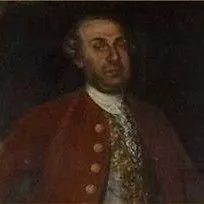
Gennaro Manna 根纳罗·曼纳
根纳罗·曼纳
G..Manna / G..曼纳地区意大利
类型个人
职业作曲
艺人资料
英文简介
Gennaro Manna (12 December 1715 - 28 December 1779) was an Italian composer based in Naples. His compositional output includes 13 operas and more than 150 sacred works, including several oratorios.
(bNaples,12 Dec 1715;dNaples,28 Dec 1779).Composer, son of Giuseppe Manna and Caterina Feo (sister of the composer Francesco Feo), and cousin of (1) Cristoforo Manna. He studied at the Neapolitan Conservatorio di S Onofrio a Capuana where his uncle Francesco Feo wasprimo maestroand Ignazio Protasecondo maestro. His firstopera seria,Tito Manlio, was performed on 21 January 1742 in Rome. Its immediate success led to a commission from the Teatro S Giovanni Grisostomo in Venice for the carnival season 1743, for which he wroteSiroe re di Persia. After his return to Naples he collaborated with Nicola Logroscino in composing afesta teatrale. An outbreak of the plague caused the festivities planned for July 1743 to be cancelled, and the work was never performed. Manna then revised Leonardo Vinci'sArtaserse, and in 1744 succeeded Domenico Sarro asmaestro di cappellato the city of Naples. In January 1745 Manna presented a new work of his own at the Teatro S Carlo, theopera seria Achille in Sciro. Its enthusiastic public reception instantly made him the most sought-after composer in Naples, resulting in commissions from the French ambassador, the Saxon court, the Teatro S Carlo and theatres in other Italian cities. On 1 October 1755, after the death of Francesco Durante, theprimo maestroof the Conservatorio di S Maria di Loreto, Manna was appointed interim teacher to assist thesecondo maestroPietro-Antonio Gallo. From 13 February 1756 he served with Gallo as co-maestro, and then also with the aging Nicola Porpora. Manna's last theatrical works wereEnea in Cuma, a serenata written for a fête given by the ambassador of the Maltese Knights on 4 September 1760, and (according to some sources) theopera seria Temistocle. He then retired from the operatic scene and composed only sacred music. After the death of Francesco Feo in January 1761, he succeeded him asmaestroof the SS Annunziata church, and on 9 May of the same year resigned from the Loreto conservatory citing his many duties, which included that ofmaestroof the cathedral of S Gennaro. On his nameday, 19 September 1762, Gennaro Manna was celebrated with the performance of a cantata written in his honour by Vincenzo Bidognietti (scoreGB-Lbl). He remained active and revered as a composer of sacred music, and during the last decade of his life produced his major oratorios.
Unlike Jommelli, Latilla, Abos and other Neapolitan opera composers of his generation, Manna never ventured into the field ofcommedia per musica, but concentrated exclusively onopera seria. Although his contributions to opera belong primarily to the first 12 years of his career, they established his contemporary fame as one of the most important composers of his time. He expanded thegalantstylistic tendencies of Francesco Feo and solidified pre-Classical characteristics. Many of his arias are guided by the sonata principle and exhibit diversified textures, crescendo patterns, discriminate scoring for wind instruments, and forceful drives to cadences with strong confirmations. Arias in major keys often expressively articulate the beginning of the secondary tonal area with contrasting phrases in the minor key. Contemporaries praised the suavity, vivaciousness and delicate beauty of his arias: Burney, who heard one of Manna's sacred works performed under the composer's direction in Naples (October 1770), noted the ingenious instrumental accompaniment of the vocal solos, and lauded the music for its ‘fancy and contrivance’.
Gennaro’s older brother Giacinto (bNaples, 13 Sept 1706;dNaples, 11 March 1768) was a harpsichordist at the Neapolitan opera houses S Bartolomeo and Fiorentini as well as S Carlo (1761–5). His sister Teresa married the composer Giuseppe de Majo in 1728; their gifted son Gian Francesco de Majo received some of his musical training from Gennaro.