维克多·费尔德曼 Victor Feldman
维克多·费尔德曼
V·Feldman / V·费尔德曼TypeSolo
ProfessionORGANIST
Artist Profile
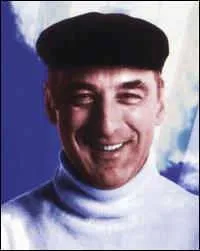
Victor Stanley Feldman (7 April 1934– 12 May 1987) was an English jazz musician, best known as a pianist and percussionist.
He began performing professionally during childhood, eventually earning acclaim in the UK jazz scene as an adult. Feldman immigrated to the United States in the mid-1950s, where he continued working in jazz and also as a session musician with a variety of pop and rock performers.
Feldman caused a sensation as a musical prodigy when he was "discovered", aged seven. His family were all musical and his father founded the Feldman Swing Club in London in 1942 to showcase his talented sons. Feldman's first professional appearance was playing drums at No. 1 Rhythm Club as a member of the Feldman Trio with brothers Robert on clarinet and Monty on piano accordion. He featured in the films King Arthur Was a Gentleman (1942) and Theatre Royal (1943). In 1944 he was featured at a concert with Glenn Miller's AAAF band, as "Kid Krupa" (in reference to drummer Gene Krupa). His drums teacher Carlo Krahmer encouraged Feldman to play the vibraphone which he did first in the Ralph Sharon Sextet and later in the Roy Fox band. He worked in India in 1952 and 1953 in a band led by pianist Eddie Carroll. His vibraphone and conga drum playing were notable, but it was as a pianist that he became best known.[citation needed]
Before leaving the UK in 1955 to work in the US, Feldman recorded with Ronnie Scott's orchestra and quintet from 1954 to 1955, which also featured other important British jazz musicians such as Phil Seamen and Hank Shaw. It was Scott who recommended that Feldman emigrate to the US, which he did in 1957. Once there, his first steady work was with the Woody Herman Herd. From there he went on to join Buddy DeFranco. In 1958, he had his own working band on the west coast, which included the innovative bassist Scott LaFaro. His 1958 Album The Arrival of Victor Feldman includes LaFaro and Stan Levey on drums. He recorded with many jazz artists, including Benny Goodman, George Shearing, Cannonball Adderley and Miles Davis, most notably on Davis' 1963 album Seven Steps to Heaven, the title tune being his own composition. Davis invited Feldman to join his group full-time, but Feldman declined, preferring the stability of studio work to the career of a touring musician. The 5-CD Shelly Manne Black Hawk set, originally released on LP in September 1959, is a good representation of Feldman's unmistakable driving "comping" behind the soloists, helping to define the session as a valuable hard bop genre element.
In 1957 Feldman settled in Los Angeles permanently and then specialised in lucrative session work for the US film and recording industry. He also branched out to work with a variety of musicians outside of jazz, working with artists such as Frank Zappa in 1967, Steely Dan and Joni Mitchell in the 1970s and Tom Waits and Joe Walsh in the 1980s. Feldman died at his home, aged 53, following a heart attack. In 2009, he was inducted in the Musicians Hall of Fame and Museum in Nashville.
It is Victor Feldman's percussion work on Steely Dan's song "Do It Again" that gives the song its Latin groove.
With Pepper Adams
With Cannonball Adderley
With Nat Adderley
With Curtis Amy
With James Clay
With Bob Cooper
With Miles Davis
With The Doobie Brothers
With The Free Movement
With Woody Herman
With Paul Horn
With Milt Jackson
With J. J. Johnson
With Plas Johnson
With Quincy Jones
With Sam Jones
With Stan Kenton
With Barney Kessel
With John Klemmer
With Shelly Manne
With Carmen McRae
With Blue Mitchell
With Oliver Nelson
With Art Pepper and Zoot Sims
With Lalo Schifrin
With Bud Shank
With Boz Scaggs
With Steely Dan
With Joni Mitchell
With James Taylor
With Gino Vannelli
With Harold Vick
With Leroy Vinnegar
With Tom Waits
With Gerald Wilson
<a href="<a href=" https:="" en.wikipedia.org="" wiki="" '="">https://en.wikipedia.org/wiki/'>https://en.wikipedia.org/wiki/Victor Feldman