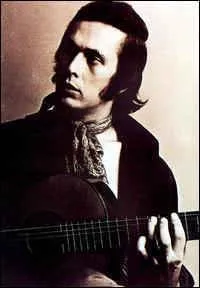
Paco de Lucía (帕科·德·卢西亚)
帕科·德·卢西亚
P·D·Lucía / P·D·卢西亚RegionSpain
TypeSolo
ProfessionComposer, Guitarist
Artist Profile
Francisco Gustavo Sánchez Gómez(21 December 1947–25 February 2014), known asPaco de Lucía[ˈpä.ko̞ ð̞e̞ lu.ˈθi.ä], was a Spanishvirtuosoflamencoguitarist, composer and producer. A leading proponent of thenew flamencostyle, he helped legitimize flamenco among the establishment in Spain, and was one of the first flamenco guitarists to cross over successfully into other genres of music such as classical and jazz. Richard Chapman andEric Clapton, authors ofGuitar: Music, History, Players, describe de Lucía as a "titanic figure in the world of flamenco guitar",and Dennis Koster, author ofGuitar Atlas, Flamenco, has referred to de Lucía as "one of history's greatest guitarists".
De Lucía was noted for his fast and fluent picados (fingerstyle runs). A master of contrast, he often juxtaposed picados and rasgueados (flamenco strumming) with more sensitive playing and was known for adding abstract chords and scale tones to his compositions with jazz influences. These innovations saw him play a key role in the development of traditional flamenco and the evolution of new flamenco and Latin jazzfusion from the 1970s. He received acclaim for his recordings with flamenco singer Camarón de la Isla in the 1970s, recording ten albums which are considered some of the most important and influential in flamenco history.
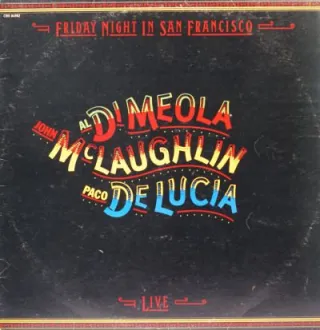
Some of de Lucía's best known recordings include Río Ancho (later fused with Al Di Meola's Mediterranean Sundance), Entre dos aguas, La Barrosa, Ímpetu, Cepa Andaluza and Gloria al Niño Ricardo. His collaborations with guitarists John McLaughlin, Al Di Meola and Larry Coryell in the late 1970s saw him gain wider popularity outside his native Spain. De Lucía formed the Paco de Lucía Sextet in 1981 with his brothers, singer Pepe de Lucía and guitarist Ramón de Algeciras, and collaborated with jazz pianist Chick Corea on their 1990 album, Zyryab. In 1992, he performed live at Expo '92 in Seville and a year later on the Plaza Mayor in Madrid. After 2004 he greatly reduced his public performances, retiring from full touring, and typically only gave several concerts a year, usually in Spain and Germany and at European festivals during the summer months.
De Lucía was widely considered to be the world's premier flamenco guitarist and by many to be Spain's greatest musical export. He had a revolutionary influence on flamenco music both as a composer and otherwise. His influence on flamenco guitar has been compared with that of Andrés Segovia's on classical guitar. His album Fuente y Caudal (Fountain and Flow) has been cited by many to have changed the world of flamenco guitar beyond traditional flamenco culture. Along with Enrique Morente and Camarón de la Isla, de Lucía was the first artist to break away from traditional flamenco and form what is now known as nuevo flamenco. As a composer, de Lucía was the first Spanish artist to mix jazz with Andalusian music in a more or less systematic way. This includes, but is not limited to, his collaborations with Di Meola, McLaughlin, and Pedro Iturralde.
De Lucía was influenced primarily by Niño Ricardo, a leading figure in the history of flamenco guitar, and Sabicas, regarded as one of the most influential musicians involved in the development and refinement of the flamenco guitar as a concert instrument at a time when the guitar was considered an instrument meant to merely accompany a singer. Sabicas was a mentor to Paco in developing his flamenco guitar technique, as well in honing Paco's skills as a composer, characterized by melodic structure, rhythmic and harmonic, perfectly consistent from beginning to end, and non-lyrical phrased guitar falsetas when the singer stops singing.[90] Esteban de Sanlúcar and Mario Escudero were also major influences on him and sources of inspiration. According to biographer Pohren, de Lucía was "fascinated with jazz" and held a deep respect for high-tech jazz musicians, regarding Di Meola, McLaughlin, Coryell and Corea as highly as musicians as he did his flamenco mentors.Despite these influences, according to the Jazz Times, "Most flamenco fans can trace the music's history to either Before Paco or After Paco." In 2004 interview with El País he said "I have always found that the more technique you have the easier it is to express yourself. If you lack technique you lose the freedom to create." Like many other flamenco guitarists he often played a Hermanos Conde guitar and had his own signature model, but had a range of guitars in his collection.
Richard Chapman and Eric Clapton describe de Lucía as a "titanic figure in the world of flamenco guitar", highlighting his "astounding technique and inventiveness" and his broad range of musical ideas from other styles, such as Brazilian music and jazz. He is noted for his innovation and colour in harmony and his remarkable dexterity, technique, strength and fluidity in his right hand, capable of executing extremely fast and fluent picados. A master of contrast, he often juxtaposes picados with rasgueados and other techniques and often adds abstract chords and scale tones to his compositions with jazz influences. Bill Milkowski of Down Beat described him as "the portrait of studied concentration and pristine perfection: stiff backed and stern faced, with a distinguished air about him that some might misread as haughtiness. He's proud and majestic, like a regal Arabian steed prancing with grace and elegance, yet able to reveal great power." Craig Harris of AllMusic noted his "deeply personal melodic statements and modern instrumentation." Atlanta magazine said, "The guitar, when used properly, can be one of the most haunting and beautiful instruments to create sound ... when he brushes his fingers across the strings, can create some of the most incredible music. It's almost like a lullaby." José Luis Acosta, president of the Spanish Artists and Editors Society stated that "Paco was and will be a universal artist, who took the guitar and flamenco sentiment to the heart of the whole world." In 2015, Billboard magazine named de Lucía as one of The 30 Most Influential Latin Artists of All Time, an editor writes: "The virtuoso intrumentalist popularized flamenco worldwide, and brought the Spanish sound to the forefront of avant-garde jazz.". In the same year, he was posthumously inducted into the Latin Songwriters Hall of Fame for his contributions to flamenco music. On December 21, 2016, Google commemorated the anniversary of de Lucia's birth with a Google Doodle shown in Spain, Mexico, and several South American nations.
Another of Paco de Lucía's contributions was the inclusion of the cajón, an Afro-Peruvian instrument Caitro Soto exposed to him during his visit to Peru in the late 1970s. He understood this instrument, which he saw as a permanent solution to the need for percussion in flamenco. Along with Rubem Dantas, he added its percussive elements and it became an essential tool of contemporary flamenco and later, other international musical trends.