亚历山大·齐尔品 Alexander Tcherepnin
亚历山大·齐尔品
A·Tcherepnin / A·齐尔品RegionRussia
TypeSolo
ProfessionComposer, Pianist
Artist Profile
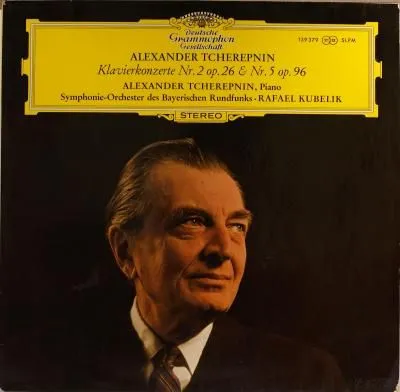
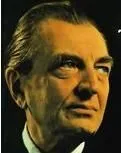
Alexander Tcherepnin (Russian: Алекса́ндр Черепни́н; 21 January 1899 – 29 September 1977) was a Russian-born composer and pianist. His father, Nikolai Tcherepnin (pupil of Nikolai Rimsky-Korsakov) was also a composer, as were his sons, Serge Tcherepnin and Ivan Tcherepnin and two of his grandsons (sons of Ivan), Sergei and Stefan. His son Serge was involved in the roots of electronic music and instruments. His mother was a member of the artistic Benois family, a niece of Alexandre Benois. He was born in Saint Petersburg, Russia, and played the piano and composed prolifically from a very early age. He was stimulated in this activity by the atmosphere at home, which—thanks to his family's Benois-Diaghilev connection—was a meeting place for many well-known musicians and artists of the day. By the time he began formal theory and composition studies in his late teens, he had already composed hundreds of pieces, including more than a dozen piano sonatas. Among his teachers in Russia were composer Victor Belyayev (pupil of Anatoly Lyadov and Alexander Glazunov), who prepared Tcherepnin for St. Petersburg Conservatory; Leocadia Kashperova (renowned pianist, protégée of Anton Rubinstein); and his professor at the Conservatory Nikolay Sokolov (pupil of Nikolai Rimsky-Korsakov). Notably at that time Tcherepnin’s mentor was famous musicologist Alexander Ossovsky, who also was a friend of his father. His works were influenced by composer Alexander Spendiarov. After the 1917 Russian Revolution, the family fled St. Petersburg and settled for some time in Tbilisi, Georgia. In young Tcherepnin's luggage were some two hundred short piano pieces, quite a number of which eventually reached print (notably in his Bagatelles, Op. 5). In Tbilisi he continued his studies at the conservatory, gave concerts as both pianist and conductor and wrote music for the Kamerny Theater (Palmer 1980, 18:637; Korabelnikova 2008, pp. 16–40). Because of the political environment in Tbilisi after Georgia was sovietized, the Tcherepnins chose to leave Russia permanently in 1921. They settled in Paris, where Alexander completed his studies with Vidal and Isidor Philipp, who was the head of the piano department at the Paris Conservatory, and became associated with a group of composers that included Bohuslav Martinů, Marcel Mihalovici and Conrad Beck. Philipp secured the publication of several groups of short piano pieces that Tcherepnin had composed in Russia. From Paris Tcherepnin launched an international career as a pianist and composer. In 1925 he won the Schott Prize with his Concerto da Camera, Op. 33. He began yearly visits to the United States in 1926 and later went to the Far East, making several extended visits to China and Japan between 1934 and 1937. He promoted composers in Japan (Akira Ifukube, Fumio Hayasaka, Bunya Koh, and others) and China (He Lüting and others), even founding his own publishing house in Tokyo for the purpose. While in China, he met the young Chinese pianist Lee Hsien Ming (1915-1991), and the two later married in Europe. They had three sons together: Peter, Serge and Ivan. During World War II, he lived in France. The war virtually stopped his musical activities. The immediate postwar period, however, brought a resurgence of creative energies; the result was a number of important works, beginning with Symphony No. 2 (composed 1947, not orchestrated until 1951). In 1948, he went to the United States, settling in Chicago in 1950 and in 1958 acquiring United States citizenship. He and his wife taught at DePaul University in Chicago, where the Chicago Symphony Orchestra premiered his second symphony with Rafael Kubelík conducting. His students there included Phillip Ramey, Robert Muczynski, Gloria Coates, andJohn Downey. In 1957, he completed two major American orchestral commissions: the Divertimento, Op. 90 (for Fritz Reiner and the Chicago Symphony Orchestra) and his Symphony No. 4, Op. 91 (for Charles Munch and the Boston Symphony Orchestra). In 1964 he moved to New York and subsequently divided his time between the United States and Europe. He died in Paris in 1977 (Palmer, 18:637). The Singapore Symphony Orchestra has recorded his first-ever complete symphony cycle, conducted by Lan Shui. In 2008, these recordings were reissued together with Singapore Symphony performances of his six piano concertos (Noriko Ogawa, pianist), along with the Symphonic Prayer, Op. 93, Magna Mater, Op. 41 and other orchestral works. His Ten Bagatelles have also been orchestrated for full symphonic orchestra by Nathan Kelly and are frequently performed. He was a National Patron of Delta Omicron, an international professional music fraternity. His early works were fairly original and some of his pieces have enduring popularity. His output includes three operas, four symphonies, a divertimento (which is a symphony in all but name), six piano concertos, works for ballet, choral music, alto saxophone solo, and a large amount of solo piano music. His Symphony No. 1 (1927) is remarkable for including the first symphonic movement ever written completely for unpitched percussion; this preceded by four years Edgard Varèse'sIonisation of 1931 (Benjamin Folkman, cited in Wender 1999, 6). One of two symphonies left incomplete at his death would have been for percussion alone (Arias 2001). Tcherepnin invented his own harmonic languages. The most famous of his synthetic scales, derived by combining minor and major hexachords, has nine notes and consists of three conjunct semitone-tone-semitone tetrachords. This came to be known as the "Tcherepnin scale" (Slonimsky 1968, 19–20), and may be classified with Messiaen's modes of limited transposition. He also worked with pentatonic scales, old Russian modal tunes, Georgian harmonies, and a nine-note "chromatic perfect" scale built upon half-step and step-and-a-half intervals. Tcherepnin discussed these techniques in his monograph "Basic Elements of My Musical Language" (Korabelnikova, Appendix 2, pp. 191–209, see also external links).
<a href="<a href=" https:="" en.wikipedia.org="" wiki="" '="">https://en.wikipedia.org/wiki/'>https://en.wikipedia.org/wiki/Alexander Tcherepnin
齐尔品(1899-1977),原名亚历山大·车列浦宁(Alexander Tcherepnin),杰出的美籍俄裔作曲家、钢琴家、指挥家。“齐尔品”这个名字是他在中国期间,拜认著名的国学大师、戏剧理论家齐如山所取的一个中国名字。1917年入圣·彼得堡音乐学院学作曲。1920年以后,齐尔品开始了对俄国音乐及俄国人在世界音乐发展中的责任的思索,并提出俄罗斯音乐是“欧亚合璧”的音乐理论。1934年初,他为了突破自己现有的创作语言、创作技巧以及对“欧亚合璧”的理论所怀有的希望,开始了他的远东之行一对中国和日本的访问、演出活动。1934-1937年在中国居住,从事钢琴演奏和创作,并应聘在上海国立音乐专科学校任教。1934年首度访日演奏后,爱上东方风格,经常往返两国,主动关心中日乐坛的发展,特别提携作曲人才,鼓励民族特色,呼吁“欧亚合璧”。1934年在上海音乐专科学校举行了自己作品的钢琴演奏会,随后便出资征求中国风格钢琴作品的创作甄选活动,贺绿汀著名的《牧童短笛》即是当时脱颖而出的作品。齐尔品利用自己在国际音乐界的声望和影响,将《牧童短笛》等作品推向国际乐坛,亲自演奏并组织出版。这种征集并出版中国音乐作品的活动对于当时处于起步阶段的中国钢琴音乐创作和中圉音乐的世界化进程起到了一定的推动作用。 齐尔品于1934-1936年间创作了《五首中国风格音乐会练习曲》,这套作品是最早的中国风格的钢琴练习曲,是为中国钢琴家李献敏而作的,里面包含的技巧都是李献敏所擅长的。作品的独特之处及艺术性集中在使用了地道的中国风格旋律以及模仿了中国民间乐器的演奏。
这五首作品分别是:
一、《皮影戏》( Shadow Play);
二、《琵琶》(TheLute);
三、《向中国致敬》(Homage to China);
四、《庞奇和朱蒂》(Punch and Judy);
五、《颂歌》(Cantique)。
齐尔品在作品中充分运用了中国传统音乐的素材和创作技法,“真切的反映了中国音乐的风格和特点,堪称是用中国语法作成的作品”。
https://movie.douban.com/subject/2279772/discussion/27165848/