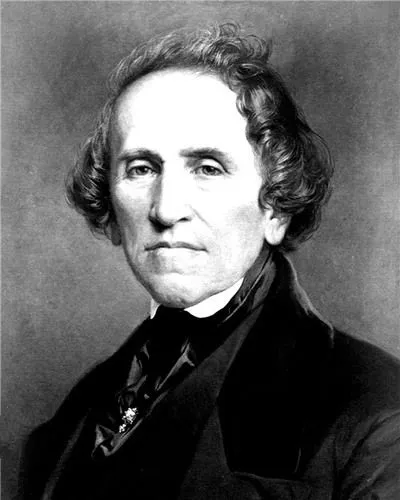
贾科莫·梅耶贝尔 Giacomo Meyerbeer
贾科莫·梅耶贝尔
G·Meyerbeer / G·梅耶贝尔RegionGermany
TypeSolo
ProfessionComposer
Artist Profile
贾科莫·梅耶贝尔(1791-1864年),德国作曲家。梅耶贝尔虽然出生于德国的柏林,但却是19世纪法国式大歌剧的创建人和主要代表人物。梅耶贝尔从小学习钢琴,后师从克雷门蒂学习作曲。1813年前后,梅耶贝尔开始涉足歌剧领域。德国作曲家。虽然出生于德国的柏林,但却是19世纪法国式大歌剧的创建人和主要代表人物。梅耶贝尔从小学习钢琴,后师从克莱门蒂学习作曲。1813年前后,梅耶贝尔开始涉足歌剧领域。他早期写作的是德国式歌剧,由于未受到欢迎和认可,梅耶贝尔曾想放弃歌剧创作,改为钢琴演奏。但在友人的鼓励下,他于1815年到意大利威尼斯研究学习歌剧创作。此间,他以罗西尼为楷模,创作了一批意大利式的歌剧。这些歌剧上演后,迅速流传到各国,为梅耶贝尔奠定了发展的基础。虽然这些作品亦受到欢迎,但后来他听从韦伯的劝告放弃了这一样式。1826年来到巴黎生活后,梅耶贝尔才明白新生的资产阶级社会对歌剧的要求是什么。经过苦心钻研,他把意大利的优美、德国的严谨、法国的精巧熔于一炉,创造了以宏大场面为特征的法国大歌剧形式。1842年的歌剧“先知”使其声名达到了顶点。1864年,梅耶贝尔在监督他最后一部歌剧的作品排练时,因积劳成疾最终在巴黎逝世。
Giacomo Meyerbeer(bornJacob Liebmann Beer; 5 September 1791 – 2 May 1864) was a GermanoperacomposerofJewishbirth who has been described as perhaps the most successful stage composer of the nineteenth century.With his 1831 operaRobert le diableand its successors, he gave the genre ofgrand opera'decisive character'.Meyerbeer's grand opera style was achieved by his merging of German orchestra style with Italian vocal tradition. These were employed in the context of sensational and melodramaticlibretticreated byEugène Scribeand were enhanced by the up-to-date theatre technology of theParis Opéra. They set a standard which helped to maintain Paris as the opera capital of the nineteenth century.
Born to a very wealthy Berlin family, Meyerbeer began his musical career as a pianist but soon decided to devote himself to opera, spending several years in Italy studying and composing. His 1824 opera Il crociato in Egitto was the first to bring him Europe-wide reputation, but it was Robert le diable (1831) which raised his status to great celebrity. His public career, lasting from then until his death, during which he remained a dominating figure in the world of opera, was summarized by his contemporary Hector Berlioz, who claimed that he 'has not only the luck to be talented, but the talent to be lucky.' He was at his peak with his operas Les Huguenots (1836) and Le prophète (1849); his last opera (L'Africaine) was performed posthumously. His operas made him the most frequently performed composer at the world's leading opera houses in the nineteenth century.
At the same time as his successes in Paris, Meyerbeer, as a Prussian Court Kapellmeister (Director of Music) from 1832, and from 1843 as Prussian General Music Director, was also influential in opera in Berlin and throughout Germany. He was an early supporter of Richard Wagner, enabling the first production of the latter's opera, Rienzi. He was commissioned to write the patriotic opera Ein Feldlager in Schlesien to celebrate the reopening of the Berlin Royal Opera House in 1844 and wrote music for certain Prussian state occasions.
Apart from around 50 songs, Meyerbeer wrote little except for the stage. The critical assaults of Wagner and his supporters, especially after his death, led to a decline in the popularity of his works; his operas were suppressed by the Nazi regime in Germany, and were neglected by opera houses through most of the twentieth century. In the 21st century, however, the composer's major French grand operas have begun to reappear in the repertory of numerous European opera houses.
From:https://en.wikipedia.org/wiki/'>https://en.wikipedia.org/wiki/Giacomo Meyerbeer