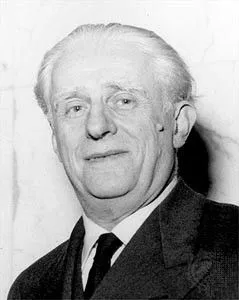
Gian Francesco Malipiero (吉安·弗朗切斯科·马利皮耶罗)
吉安·弗朗切斯科·马利皮耶罗
G·F·Malipiero / G·F·马利皮耶罗RegionItaly
TypeSolo
ProfessionComposer
Artist Profile
意大利作曲家,音乐学家。出生于威尼斯的一个音乐世家,他的祖父是一位歌剧作曲家。马利皮耶罗早年随博西学过对位,但主要靠研究古代乐谱如蒙特威尔第、弗雷斯科巴尔迪等自学。1906-1909年他住在柏林,参加过布鲁赫的作曲班。1913年移居巴黎,了解到了许多当代音乐作品,参加了“春之祭”的首演并结识了卡塞拉。回国后与卡塞拉一起创办了意大利当代音乐协会。1921年任帕尔玛音乐学院教授,1939年任威尼斯马尔切洛音乐学院院长,1952年退休后继续从事教学和研究工作。1973年在意大利特雷维索去世。
Gian Francesco Malipiero(Italian pronunciation:[ˈdʒaɱ franˈtʃesko maliˈpjɛːro]; 18 March 1882 – 1 August 1973) was anItaliancomposer,musicologist, music teacher andeditor.
Life
Early years
Born inVeniceinto an aristocratic family, the grandson of the opera composerFrancesco Malipiero, Gian Francesco Malipiero was prevented by family troubles from pursuing his musical education in a consistent manner. His father separated from his mother in 1893 and took Gian Francesco toTrieste,Berlinand eventually toVienna. The young Malipiero and his father broke up their relationship bitterly, and in 1899 Malipiero returned to his mother's home in Venice, where he entered the VeniceLiceo Musicale(now the Conservatorio Benedetto Marcello di Venezia).
After stoppingcounterpointlessons with the composer, organist and pedagogueMarco Enrico Bossi, Malipiero continued studying on his own by copying out music by such composers asClaudio MonteverdiandGirolamo Frescobaldifrom theBiblioteca Marciana, in Venice, thereby beginning a lifelong commitment to Italian music of that period.[1]In 1904 he went toBolognaand sought out Bossi to continue his studies, at the BolognaLiceo Musicale(now theConservatorio Giovanni Battista Martini). In 1906 he returned to the Venice Conservatory Benedetto Marcello of Music to continue his studies,After graduating, Malipiero became an assistant to the blind composerAntonio Smareglia.
Musical career
In 1905 Malipiero returned to Venice, but from 1906 and 1909 was often in Berlin,[3]followingMax Bruchclasses.[4]Later, in 1913, Malipiero moved to Paris, where he became acquainted with compositions byRavel,Debussy,Falla,Schoenberg, andBerg. Most importantly, he attended the première ofStravinsky'sLe Sacre du Printemps, soon after meetingAlfredo CasellaandGabriele d'Annunzio.He described the experience as an awakening "from a long and dangerous lethargy".[1][2]After that, he repudiated almost all the compositions he had written up to that time, with the exception ofImpressioni dal vero(1910–11).[1]At that time he won four composition prizes at theAccademia Nazionale di Santa Ceciliain Rome, by entering five compositions under five different pseudonyms.
In 1917, due to the Italian defeat atCaporetto, he was forced to flee from Venice and settled in Rome.
In 1923, he joined with Alfredo Casella andGabriele D'Annunzioin creating theCorporazione delle Nuove Musiche. Malipiero was on good terms withBenito Mussoliniuntil he setPirandello's librettoLa favola del figlio cambiato, earning the condemnation of the fascists. Malipiero dedicated his next opera,Giulio Cesare, to Mussolini, but this did not help him.
He was a professor of composition at theParma Conservatoryfrom 1921 to 1924. In 1932 he became professor of composition at the thenVenice Liceo Musicale, which he directed from 1939 to 1952. Among others, he taughtLuigi Nonoand his own nephewRiccardo Malipiero. See:List of music students by teacher: K to M#Gian Francesco Malipiero.
After permanently settling in the little town ofAsoloin 1923,[5]Malipiero began the editorial work for which he would become best known, a complete edition of all ofClaudio Monteverdi's oeuvre, from 1926 to 1942, and after 1952, editing much ofVivaldi's concerti at theIstituto Italiano Antonio Vivaldi.
Compositions
Malipiero had an ambivalent attitude towards the musical tradition dominated by Austro-German composers, and instead insisted on the rediscovery of pre-19th-century Italian music.[1]
His orchestral works include seventeen compositions he called symphonies, of which however only eleven are numbered. The first was composed in 1933, when Malipiero was already over fifty years old. Prior to that, Malipiero had written several important orchestral pieces but avoided the word"sinfonia"(symphony) almost completely. This was due to his rejection of the Austro-German symphonic tradition.[5]The only exceptions to that are the three compositionsSinfonia degli eroi(1905),Sinfonia del mare(1906) andSinfonie del silenzio e della morte(1909–1910). In such early works, the label "symphony" should not, however, be interpreted as indicating works in theBeethovenianorBrahmsiansymphonic style, but more assymphonic poems.[5]
When asked in the mid-1950s by the British encyclopediaThe World of Music, Malipiero listed as his most important compositions the following pieces[citation needed]:
Pause del Silenziofor the orchestra, composed in 1917
Rispetti e Strambottifor string quartet, composed in 1920
L'Orfeidefor the stage, composed between 1918 and 1922, and first performed in 1924
La Passione, a mystery play composed in 1935
his nine symphonies, composed between 1933 and 1955 (he would compose additional symphonies in the years after this list was made)
He regardedImpressioni dal vero, for orchestra, as his earliest work of lasting importance.[5]
Musical theory and style[edit]
Malipiero was strongly critical ofsonataform and, in general, of standard thematic development in composition. He declared:
“As a matter of fact I rejected the easy game of thematic development because I was fed up with it and it bored me to death. Once one finds a theme, turns it around, dismembers it and blows it up, it is not very difficult to assemble the first movement of a symphony (or a sonata) that will be amusing for amateurs and also satisfy the lack of sensitivity of the knowledgeable.[6]
”
Malipiero's musical language is characterized by an extreme formal freedom; he always renounced the academic discipline ofvariation, preferring the more anarchic expression of song, and he avoided falling intoprogram musicdescriptivism. Until the first half of the 1950s, Malipiero remained tied todiatonism, maintaining a connection with the pre-19th-century Italian instrumental music and Gregorian chant, moving then slowly to increasingly eerie and tense territories that put him closer to total chromaticism. He did not abandon his previous style but he reinvented it. In his latest pages, it is possible to recognize suggestions from his pupilsLuigi NonoandBruno Maderna.[citation needed]
His compositions are based on free, non-thematic passages as much as in thematic composition, and seldom do movements end in the keys in which they started.[1]
When Malipiero approached the symphony, he did not do so in the so-called post-Beethovenian sense, and for this reason authors rather described his works as "sinfonias" (the Italian term), to emphasize Malipiero's fundamentally Italian, anti-Germanic approach.[1]He remarked:
“The Italian symphony is a free kind of poem in several parts which follow one another capriciously, obeying only those mysterious laws that instinct recognizes[1]
”
AsErnest Ansermetonce declared, "these symphonies are not thematic but 'motivic': that is to say Malipiero uses melodic motifs like everyone else [...] they generate other motifs, they reappear, but they do notcarrythe musical discourse – they are, rather, carriedby it".
Reception
The French conductorAntonio de Almeidaled theMoscow Symphony Orchestrain recordings of the complete Malipiero symphonies for Naxos (Marco Polo, 1993–1994).
Recently, Malpiero's piano repertoire, including his complete concertos, has experienced a revival at the hands of noted Italian pianistSandro Ivo Bartoli.