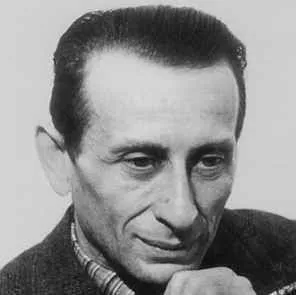
亚历山大·坦斯曼 Alexandre Tansman
亚历山大·坦斯曼
A·Tansman / A·坦斯曼RegionPoland
TypeSolo
ProfessionComposer, Pianist
Artist Profile
Alexandre Tansman (12 June 1897 – 15 November 1986) was a Polish composer and virtuoso pianist of Jewish origin. He spent his early years in his native Poland, but lived in France for most of his life, being granted French citizenship in 1938. His Polish identity influenced several orchestral and chamber works, such as Rapsodie polonaise and Quatre Danses polonaises, and some guitar works, such as Hommage à Lech Walesa and Hommage à Chopin. His music is often said to be primarily neoclassical, drawing on his Polish Jewish heritage as well as his French musical influences. Tansman was not only an internationally recognized composer, but was also a virtuoso pianist. From 1932–33, Tansman performed worldwide for audiences includingEmperor Hirohito of Japan and Mahatma Gandhi; he was regarded as one of the greatest Polish musicians. Later he performed five concert tours in the United States, including as a soloist under Serge Koussevitsky with the Boston Symphony Orchestra, as well as having a thriving career in France as a concert performer. Many musicologists have said that Tansman's music is written in the French neoclassical style of his adopted home, and the Polish styles of his birthplace, drawing on his Jewish heritage. Already on the edge of musical thought when he left Poland (critics questioned his chromatic and sometimes polytonal writing), he adopted the extended harmonies of Ravel in his work and later was compared to Alexander Scriabin in his departure from conventional tonality. One of Tansman's letters states that "it is obvious that I owe much to France, but anyone who has ever heard my compositions cannot have doubt that I have been, am and forever will be a Polish composer."[citation needed] After Chopin, Tansman may be the leading proponent of traditional Polish forms such as the polonaiseand the mazurka; they were inspired by and often written in homage to Chopin.[citation needed] For these pieces, which ranged from lighthearted miniatures to virtuoso showpieces, Tansman drew on traditional Polish folk themes and adapted them to his distinctive neoclassical style. However, he did not write straight settings of the folk songs themselves, as he states in a radio interview: "I have never used an actual Polish folk song in its original form, nor have I tried to reharmonize one. I find that modernizing a popular song spoils it. It must be preserved in its original harmonization." Tansman wrote more than 300 works, including 7 operas, 11 ballets, 6 oratorios, 80 orchestral pages (with 9 symphonies), and numerous works of chamber music, among which are 8 string quartets, 8 concerti, about 100 pages for piano, many pages for the radio, and many works for children. He is also known for his guitar pieces, mostly written for Andrés Segovia – in particular the "Cavatine" and the Suite in modo polonico (1962), a collection of Polish dances. Segovia frequently performed the work in recordings and on tour; it is today part of the standard repertoire. Tansman's music has been performed by musicians such as Segovia, Walter Gieseking, José Iturbi, Jascha Heifetz, Jane Bathori, Joseph Szigeti, Pablo Casals, Gregor Piatigorsky, Igor Zubkovsky, and Christopher Parkening. Almost all his works have been now recorded on CDs.
<a href="<a href=" https:="" en.wikipedia.org="" wiki="" '="">https://en.wikipedia.org/wiki/'>https://en.wikipedia.org/wiki/Alexandre Tansman
波兰裔法国作曲家、指挥家、钢琴家亚历山大·汤斯曼(又译“唐斯曼”、“泰斯曼”)于1897年6月12日生于波兰的罗兹(Lódz)。从他八岁那年起,他的父母便开始让他接触歌剧院的保留曲目,凭着他惊人的天赋,在九岁那年他便开始写作自己的作品。
1902-1914年间,汤斯曼在罗兹音乐学院学钢琴、和声学以及创作。在跟随派尔特·利特尔(Piotr Rytel) 学对位法、曲式学的同时,他获得了华沙大学哲学及法律学位。1919年,他以小提琴与钢琴《幻想曲》及钢琴作品《奏鸣曲》在华沙举行的波兰民族音乐比赛会中分别获得了第一、第二名。凭着比赛所获得的奖励,汤斯曼来到了巴黎,并最终定居在那里。通过朋友介绍会见了拉威尔、戈尔什曼(Golschmann) 和罗兰·曼努尔(Roland Manuel) ,并结识了米约和奥涅格。
1920年,他的《交响间奏曲》Intermezzo sinfonico 由戈尔什曼指挥首演。1922年,他的《第一钢琴协奏曲》由谢尔盖·库塞维茨基(Sergei Koussevitzky)指挥首演,由作曲家本人担任独奏。随后,他的作品在大部分欧美音乐会中均可见。
1927年,汤斯曼前往美国,开始以钢琴家兼指挥家的身份在欧美各地演出。在战争其间,他们全家移居好莱坞,在那他结识了斯特拉文斯基,并开始写作电影音乐。1932年为影片《人参》配乐。1941年,他获得了美国国会图书馆的柯立芝奖牌(Coolidge Medal)。1946年返回巴黎,入法国籍,继续巡回演出及创作新作品。
他为交响乐团、小型乐队、钢琴、吉他、萨克斯等写下了大量的作品。他的早期作品受肖邦影响,后来受席曼诺夫斯基、斯特拉文斯基、拉威尔、米约等人的影响。代表作有歌剧《库尔多人之夜》La nuit kurde (1927)、芭蕾舞剧《复活》Résurrection (1961) 、八部交响曲 (1925-1951) 、管弦乐曲《纪念斯特拉文斯基的墓碑》Stèle in memoriam d'Igor Stravinsky (1972) 、《钢琴协奏曲》、吉他曲《肖邦赞》Hommage a Chopin (1969) 、吉他组曲《卡伐蒂娜》Cavatina (1951) 、钢琴曲《奏鸣曲》和《小奏鸣曲》,以及为各种乐器写作的室内乐等。
1986年11月15日,汤斯曼在巴黎去世。