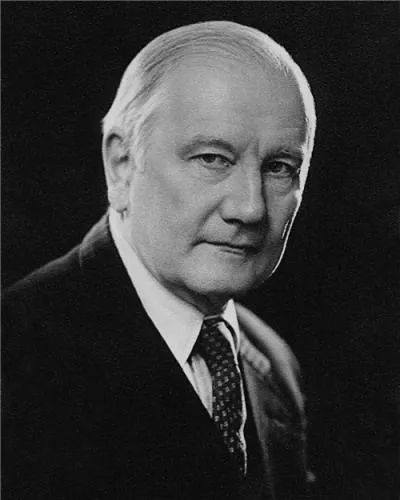
恩斯特·冯·多赫南伊 Ernst von Dohnányi
恩斯特·冯·多赫南伊
Erno Dohnányi / E·V·Dohnányi / E·V·多赫南伊RegionHungary
TypeSolo
ProfessionComposer, Pianist, Conductor
Artist Profile
匈牙利作曲家,钢琴家,指挥家。其孙克里斯托弗是著名的当代指挥家。出生于如今斯洛伐克布拉迪斯拉发(当时为匈牙利领土)。父亲是一位数学家,也是一位业余的大提琴手。多赫南伊的音乐启蒙教育来自他的父亲。1894年进入布达佩斯音乐学院学习,师从于汉斯·冯·柯斯勒学习作曲,巴托克是其同学。柯斯勒是一位勃拉姆斯风格的拥护者,这给多赫南伊作品风格的形成带来了很大的影响。1896年,他的“c小调第1钢琴五重奏”受到勃拉姆斯本人的赏识,并随后安排在维也纳上演。1897年多赫南伊移居柏林,以钢琴家身份在欧洲各地巡回演出。1915年回国,任布达佩斯爱乐乐团指挥。期间曾演出贝多芬全部钢琴作品。1934年他担任布达佩斯音乐学院院长。二战后移居美国,在佛罗里达州立大学任教,并留下了许多珍贵的录音。1960年在纽约去世。多赫南伊尽管身处20世纪,其作品却是纯粹的浪漫主义风格,对他影响最大的是勃拉姆斯和李斯特。他的作品常有宽广的旋律、丰满的和声和精湛的技术,近年来已得到越来越多的上演机会。
Ernő Dohnányior (native form)Dohnányi Ernő(Hungarian pronunciation:[ˈdohnaːɲi ˈɛrnøː]; 27 July 1877– 9 February 1960) was aHungariancomposer,pianistandconductor. He used a German form of his name,Ernst von Dohnányi, on most of his published compositions. The "von" implies nobility, and, according to the biography by his third wife, his family was ennobled in 1697 and given a family crest, which she describes in some detail.
Dohnányi was born in Pozsony, Kingdom of Hungary, Austria-Hungary (today Bratislava, capital of Slovakia). He first studied music with his father, a professor of mathematics and an amateur cellist, and then, when he was eight years old, with Carl Forstner, organist at the local cathedral. In 1894, in his seventeenth year, he moved to Budapest and enrolled in the Royal National Hungarian Academy of Music, studying piano with István Thomán and composition with Hans von Koessler, a cousin of Max Reger.
István Thomán was a favorite student of Franz Liszt and Hans von Koessler was a devotee of Johannes Brahms music. These two influences played an important role during Dohnányi's entire life: Liszt in his way of playing piano and Brahms in his compositions. Dohnányi's first published composition, his Piano Quintet in C minor, earned the approval of Johannes Brahms, who promoted the work in Vienna. Dohnányi didn't stay long at the Academy of Music: in June 1897 he asked permission to take the final exams right away, without completing his studies. Permission was granted, and only a few days later he passed with high marks, as a composer and pianist, obtaining his diploma at less than twenty years of age.
After a few lessons with Eugen d'Albert, another student of Liszt, Dohnányi made his debut in Berlin in 1897 and was at once recognized as an artist of high merit. Similar success in Vienna followed, and he then toured Europe with great success. He made his London debut at a Richter concert in Queen's Hall, where he gave a memorable performance of Beethoven's Piano Concerto No. 4. He was among the first to conduct Bartók's more accessible music and make it more popular.
During the following season, he visited the United States and established his reputation playing Beethoven's Piano Concerto No. 4 for his American debut with the St. Louis Symphony. Unlike most famous pianists of the time, he did not limit himself to solo recitals and concertos but also played chamber music. In 1901 he completed his Symphony No. 1, his first orchestral work. Although he was heavily influenced by established contemporaries, most notably Brahms, the work displayed considerable technical skill in its own right.
He married Elisabeth "Elsa" Kunwald (also a pianist). In 1902, their son, Hans, was born. (Hans would later distinguish himself as a leader of the anti-Nazi resistance in Germany and was a friend and collaborator of Dietrich Bonhoeffer, his brother-in-law. Hans, ultimately executed during the final stages of World War II, was the father of German politician Klaus von Dohnányi, and of conductor Christoph von Dohnányi, the former Music Director of the Cleveland Orchestra.) Dohnányi and Elsa Kunwald also had a daughter, Greta.
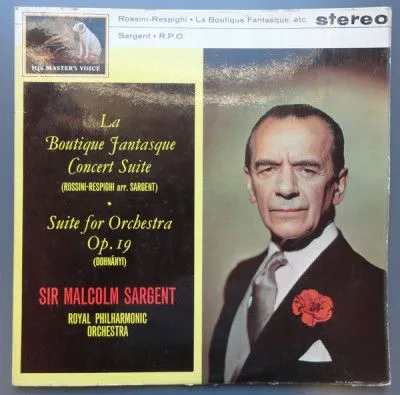
Following an invitation by the violinist (and close friend of Brahms) Joseph Joachim, Dohnányi taught at the Hochschule in Berlin from 1905 to 1915. While there he wrote The Veil of Pierrette, Op. 18, and the Suite in F-sharp minor, Op. 19. Returning to Budapest, he organized over a hundred concerts there each year.
Before World War I broke out, Dohnányi met and fell in love with a German actress (also described as a singer), and ballerina Elza Galafrés, who was married to the Polish Jewish violinist Bronisław Huberman. They could not marry, since their respective spouses refused to divorce them, but despite this they had a son, Matthew, in January 1917. Both later gained the divorces they sought, and were married in June 1919. Dohnányi also adopted Johannes, her son by Huberman.
In 1919, during the Hungarian Soviet Republic, he was appointed director of the Budapest Academy, but a few months later the new interim government replaced him with the prominent violinist Jenő Hubay after Dohnányi had refused to dismiss the pedagogue and composer Zoltán Kodály from the Academy for his leftist political position. In 1920, with Admiral Horthy becoming Regent of Hungary, Dohnányi was named music director of the Budapest Philharmonic Orchestra and promoted the music of Béla Bartók, Zoltán Kodály, Leo Weiner and other contemporary Hungarian composers. That same 1920 season, he performed the complete piano works of Beethoven and recorded several of his works on the Ampico player-piano-roll apparatus. He gained renown as a great teacher. His pupils included Andor Földes, Mischa Levitzki, Ervin Nyiregyházi, Géza Anda, Annie Fischer, Edward Kilenyi, Bálint Vázsonyi, Sir Georg Solti, Istvan Kantor, Georges Cziffra and Ľudovít Rajter (conductor and Dohnányi's godson). In 1933 he organized the first International Franz Liszt Piano Competition.
In 1937 he met Ilona Zachár, who was married with two children. By this time, he had separated from his second wife Elza Galafrés. He and Ilona travelled throughout Europe as husband and wife, but were not legally married until they settled in the United States. After Dohnányi's death, Ilona, in her biography, launched a campaign to disprove his reputation as a Nazi sympathizer. Peter Halász continued this in an article entitled "Persecuted Musicians in Hungary between 1919-1945",portraying Dohnányi as a "victim" of Nazism, and by James Grymes, who in his book stated that Dohnányi was "a forgotten hero of the Holocaust resistance".
In 1934 Dohnányi was once again appointed director of the Budapest Academy of Music, a post he held until 1943. According to the 2015 entry on Dohnányi in New Grove Dictionary of Music and Musicians, "From 1939 much of [Dohnányi's] time was devoted to the fight against growing Nazi influences. By 1941 he had resigned his directorial post at the Budapest Academy of Music, rather than submit to the anti-Jewish legislation. In his orchestra Budapest Philharmonic he succeeded in keeping on all Jewish members until two months after the German occupation of Hungary on 12 March 1944, in Operation Margarethe, when he disbanded the ensemble. In November 1944 he went to Austria, a decision which drew criticism for many years. In fact, Dohnányi was criticized either from the left or from the right for most of his deeds, from his student days on. The explanation may be found in his unassailability on musical or ethical grounds..... The ‘accusations’ levelled against him always took the form of rumours. This, and the magnitude of the so-called charges (never substantiated), made it impossible for Dohnányi to defend himself."
In March 2014, at a conference entitled "The Holocaust in Hungary, 70 Years On: New Perspectives" at the Center for Judaic, Holocaust, & Genocide Studies at Florida Gulf Coast University, the musicologist James A. Grymes presented research based on archival evidence he has gathered in Budapest, in a paper entitled "Ernst von Dohnányi: A Forgotten Hero of the Holocaust Resistance." It credits Dohnányi with (in the author's summary): 1) "blocking the creation of a Hungarian Chamber of Music that would have excluded Jews from the music profession, just as the infamous Reichsmusikkammer did in Nazi Germany"; 2) resigning "from his position as Director General of the Franz Liszt Academy of Music instead of carrying out orders to fire Jewish instructors"; 3) "As the conductor of the Budapest Philharmonic, Dohnányi disbanded the ensemble rather than dismiss its Jewish members"; 4) Assisting "a number of individual Jewish musicians. These included impresario Andrew Schulhof, whom Dohnányi helped emigrate from Germany to the U.S. in 1939. Pianist Lajos Hernádi was discharged from the labor service when Dohnányi wrote a letter declaring Hernádi and his hands to be irreplaceable national treasures. When the famous violinist Carl Flesch and his wife were in grave danger of being deported to a concentration camp, Dohnányi helped to reinstate their Hungarian nationalities, enabling them to travel through Germany, back to Hungary, and ultimately to Switzerland. Dohnányi personally saved the pianist György Ferenczy, Ferenczy’s wife, and several other Jewish musicians from the death trains. Zoltán Kodály later reported that Dohnányi had signed dozens of documents that had saved Jewish lives during the Holocaust. In Ernst von Dohnányi: A Song of Life,Dohnányi’s widow placed that number in the hundreds. Jewish violinist, violist, and composer Tibor Serly went so far as to credit Dohnányi’s frequent interventions for the fact that “Not one Jewish musician of any reputation living in Hungary lost his life or perished during the entire period of World War II.”.
Grymes notes the fact that after the war, Dohnányi "was investigated and cleared several times by the U.S. Military Government" - as a precondition to his postwar move to Florida. Grymes also notes that he was "repeatedly defended by prominent Jewish musicians who had worked closely with him in Hungary, including violist Egon Kenton [Kornstein], pianist Edward Kilenyi, musicologist Bence Szabolcsi, and composer Leó Weiner. The latter wrote at least two testimonials pointing out that the majority of Dohnányi’s students had been Jewish and that Dohnányi had consistently programmed Weiner’s own compositions, even during the Nazi regime."
He became an honorary member of the Epsilon Iota Chapter of Phi Mu Alpha Sinfonia Fraternity at Florida State University. From 1949 on, Dohnányi taught for ten years at the Florida State University School of Music in Tallahassee. He and his wife Ilona became American citizens in 1955.
In the US, he continued to compose and became interested in American folk music. His last orchestral work (except for his 1957 revision of the Symphony No. 2), American Rhapsody (1953), was written for the sesquicentennial of Ohio University and included folk material, for example, "Turkey in the Straw", "On Top of Old Smokey" and "I am a poor wayfaring stranger".[citation needed]
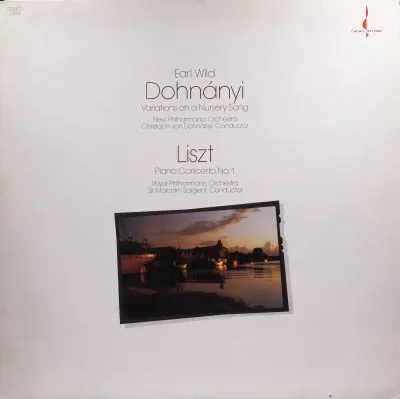
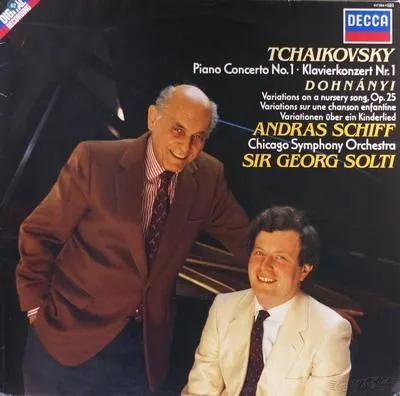
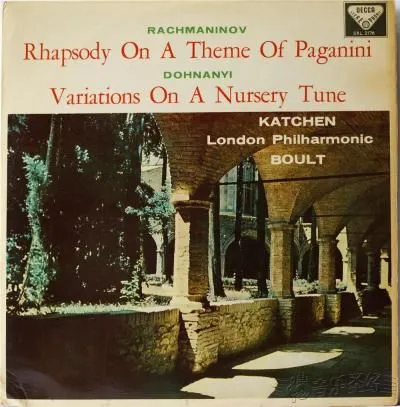
His last public performance, on January 30, 1960, was at Florida State University, conducting the university orchestra in a performance of Beethoven's Piano Concerto No. 4 with his doctoral student, Edward R. Thaden, as soloist. Following this performance, Dohnányi traveled to New York City to record some Beethoven piano sonatas and shorter piano pieces, on stereo LP discs for Everest Records. He had previously recorded a Mozart concerto in the early 1930s in Hungary (No. 17, in G major, K. 453, playing and conducting the Budapest Philharmonic, for Columbia, his own Variations on a Nursery Tune for HMV/Victor, the second movement of his Ruralia Hungarica (Gypsy Andante), and a few solo works (but no Beethoven sonatas) on 78 rpm;[citation needed] and various other works, including Beethoven's Tempest Sonata and Haydn's F minor Variations, on early mono LP discs.
From:https://en.wikipedia.org/wiki/Ernst_von_Dohn%C3%A1nyi
恩斯特·冯·多赫南伊(Ernst von Dohnányi,1877-1960)是一位匈牙利指挥家、作曲家和钢琴家。 恩斯特·冯·多赫南伊出生在匈牙利布拉迪斯拉发(今属斯洛伐克),父亲是数学教授,会大提琴。最初他随父亲学习音乐,8岁起向一位教堂风琴师学习。1894年,他进入布达佩斯音乐学院,师从István Thomán 和 Hans von Koessler,与巴托克为同班同学。多赫南伊的首部作品c小调钢琴五重奏获得勃拉姆斯赞许,后者在维也纳传播了这部作品。 在向欧根·达尔贝学习了几堂课后,多赫南伊于1897年在柏林进行了首演,随后又在维也纳、伦敦等多地演出,这些成功的演出获得了高度认可。他接着去美国演出,与圣路易斯交响乐团合作的贝多芬第四钢协让他赢得很高声望。当时著名的钢琴家主要以独奏或协奏曲录音,而多赫南伊亦以室内乐录音。 多赫南伊的第一交响曲完成于1901年,其风格深受勃拉姆斯影响。 他和钢琴家伊丽莎白·昆瓦尔德结婚,1902年其子汉斯·冯·多赫南伊出生。汉斯后来成为德国反纳粹抵抗活动的杰出领袖,帮助十多位犹太人逃离德国,亦参与过刺杀希特勒行动的策划,汉斯和好友迪特里希·朋霍费尔皆因刺杀事件被捕,于德国战败前被害。 汉斯的大儿子克劳斯于战后担任过汉堡市长,二儿子克利斯托弗后来成为优秀的指挥家,指挥过克利夫兰管弦乐团、爱乐乐团等,2004年起任北德广播交响乐团首席指挥。 1920年起恩斯特·冯·多赫南伊担任布达佩斯爱乐乐团音乐总监,大力推广巴托克、柯达伊等人的作品。作为优秀的老师,他的学生包括安达、安妮·费舍尔、齐夫拉、索尔蒂等名家。 多赫南伊结过三次婚。1917年他和昆瓦尔德离婚,两年后和女演员伊丽莎·格拉弗瑞斯结婚,后又离婚。1937年结识伊洛娜·扎夏尔,两人直道移居美国后才正式结婚。 1934年至1943年间多赫南伊再次担任布达佩斯学院董事(1919年首次任职因共产革命而很快中断)。1941年他曾威胁辞职以抗议开除一个欣赏的犹太学生,然而1943年他却公开拒绝犹太人进入硕士班(当时的排犹法律仍然允许6%的名额给犹太人)。 多赫南伊拒绝解散布达佩斯爱乐乐团(当时许多乐团以解散抗议驱逐犹太乐手),在驱逐犹太人后,他继续执掌乐团直到苏军围城前。 1943年时多赫南伊已经成了匈牙利音乐节的元老人物。他同时还指挥布达佩斯广播交响乐团。这期间他还演出了全部的贝多芬奏鸣曲。1944年苏军即将围城之际,多赫南伊逃离了布达佩斯,经奥地利逃往阿根廷,后定居美国。其后多赫南伊的事业衰退了,他在弗罗里达州立大学任教了十年,1960年因肺炎去世。 1990年匈牙利政府追授恩斯特·冯·多赫南伊以科苏特奖。
多赫南伊早年在布达佩斯音乐学院学习,同学中有巴托克。1896年,他的《第一钢琴五重奏》受勃拉姆斯赏识。1897年移居柏林,以钢琴家身份在欧洲各地巡回演出。1915年回国,任布达佩斯爱乐乐团指挥。期间曾演出贝多芬全部钢琴作品。1934年任布达佩斯音乐学院院长。二战后移居美国,在佛罗里达州立大学任教,并留下了许多珍贵的录音。