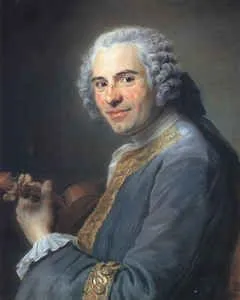
让-约瑟夫·德·蒙东维尔 Jean Joseph Cassanea De Mondonville
让-约瑟夫·德·蒙东维尔
J·J·C·D·Mondonville / J·J·C·D·蒙东维尔RegionFrance
TypeSolo
ProfessionComposer
Artist Profile
法国作曲家。和拉莫是同时代人。出生于纳博讷。自小受到身为管风琴师的父亲教育。1731年去往巴黎。在1734年的圣灵音乐会上他精湛的小提琴技术获得了赞誉。大约同时,他出版了他的早期作品。1738年他成为了里尔协奏团的首席小提琴。1739年,他成为皇家室内乐团和皇家礼拜堂的小提琴师。1744年成为皇家礼拜堂音乐指导。1748年成为了罗耶尔的助手,组织圣灵音乐会,1755年当罗耶尔去世后他开始指挥圣灵音乐会直到1762年。1772年他在巴黎去世。蒙东维尔的经文歌是18世纪中期这一音乐体裁在法国最卓越的创作。
Jean-Joseph de Mondonville(25 December 1711 (baptised) – 8 October 1772), also known asJean-Joseph Cassanéa de Mondonville, was aFrenchviolinistandcomposer. He was a younger contemporary ofJean-Philippe Rameauand enjoyed great success in his day. Pierre-Louis Daquin (son of the composerLouis-Claude Daquin) claimed: "If I couldn't be Rameau, there's no one I would rather be than Mondonville".
Mondonville was born inNarbonneinOccitania(SouthFrance) to an aristocratic family which had fallen on hard times. In 1733 he moved toPariswhere he gained the patronage of the king's mistressMadame de Pompadourand won several musical posts, including violinist for theConcert Spirituel.
His first opus was a volume ofviolinsonatas, published in 1733. He became a violinist of theChapelle royaleand chamber and performed in some 100 concerts; some of hisgrands motetswere also performed that year receiving considerable acclaim. He was appointedsous-maîtrein 1740 and then, in 1744, intendant of the Royal Chapel. He produced operas and grands motets for the Opéra and Concert Spirituel respectively, and was associated with the Théatre des Petits-Cabinets, all the while maintaining his career as a violinist throughout the 1740s. In 1755, he became director of the Concert Spirituel on the death ofPancrace Royer. Mondonville died inBellevillenearParisat the age of sixty.
Between 1734 and 1755 Mondonville composed 17grands motets, of which only nine have survived. The motetVenite exultemus domino, published in 1740, won him the post ofMaître de musique de la Chapelle(Master of Music of the Chapel). Thanks to his mastery of both orchestral and vocal music, Mondonville brought to the grand motet—the dominant genre of music in the repertory of theChapelle royale(Royal Chapel) before theFrench Revolution—an intensity of colour and a dramatic quality hitherto unknown. In 1758, Mondonville introducedoratoriosas a new genre at theConcert Spirituel.
Operas
Although Mondonville's first stage work,Isbé, was a failure, he enjoyed great success with the lighter forms of French Baroque opera:
theopéra-balletand thepastorale héroïque. His most popular works wereLe carnaval de Parnasse,Titon et l'AuroreandDaphnis et Alcimadure(for which Mondonville wrote his ownlibrettoinLanguedocien- his nativeOccitandialect).Titon et l'Auroreplayed an important role in theQuerelle des Bouffons, the controversy between partisans of French and Italian opera which raged in Paris in the early 1750s. Members of the "French party" ensured thatTiton's premiere was a resounding success (their opponents even alleged they had guaranteed this result by packing theAcadémie Royale de Musique, where the staging took place, with royal soldiers).Mondonville's one foray into serious French opera - the genre known astragédie en musique- was a failure however. He took the unusual step of re-using a libretto,Thésée, which had originally been set in 1675 by the "father of French opera",Jean-Baptiste Lully. Mondonville's bold move to substitute Lully's much-loved music with his own did not pay off. The premiere at the court in 1765 had a mixed reception and a public performance two years later ended with the audience demanding it be replaced by the original. Yet Mondonville was merely ahead of his time; in the 1770s, it became fashionable to reset Lully's tragedies with new music, the most famous example beingArmidebyGluck.
from:https://en.wikipedia.org/wiki/Jean-Joseph_de_Mondonville