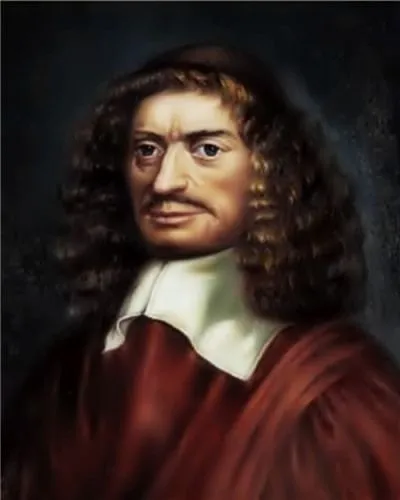
贾科莫·卡里西米 Giacomo Carissimi
贾科莫·卡里西米
G·Carissimi / G·卡里西米RegionItaly
TypeSolo
ProfessionComposer
Artist Profile
意大利作曲家,罗马音乐学派的代表作曲家。1628年成为圣路斐乐主教座堂的指挥,同年还成为了圣亚坡理纳圣殿的指挥,这个职位一直保持到他死为止。他似乎从没离开过意大利。有人形容他为:又高又瘦,非常节俭,对待他人彬彬有礼,多愁善感。卡里西米将蒙特威尔第在歌剧上的创新用于清唱剧,是最早用清唱剧形式创作的几位大师之一。于1674年逝世于罗马。
Giacomo Carissimi (baptized 18 April 1605 – 12 January 1674) was an Italian composer and music teacher. He is one of the most celebrated masters of the early Baroque or, more accurately, the Roman School of music. Carissimi established the characteristic features of the Latin oratorio and was a prolific composer of motets and cantatas. He was highly influential in musical developments in north European countries through his pupils and the wide dissemination of his music
Carissimi's exact birthdate is not known, but it was probably in 1604 or 1605 in Marino near Rome, Italy. Of his early life almost nothing is known. Giacomo’s parents, Amico (1548–1633, a cooper by trade) and Livia (1565–1622), were married on 14 May 1595 and had four daughters and two sons; Giacomo was the youngest.
Nothing is known of his early musical training. His first known appointments were at Tivoli Cathedral, under the maestri di cappella Aurelio Briganti Colonna, Alessandro Capece and Francesco Manelli; from October 1623 he sang in the choir, and from October 1624 to October 1627 he was the organist. In 1628 Carissimi moved north to Assisi, as maestro di cappella (chapel master) at the Cathedral of San Rufino.[1] In 1628 he obtained the same position at the church of Sant'Apollinare belonging to the Collegium Germanicum in Rome, which he held until his death. This was despite him receiving several offers to work in very prominent establishments, including an offer to take over from Claudio Monteverdi at San Marco di Venezia in Venice. In 1637 he was ordained a priest. He seems to have never left Italy at all during his entire lifetime. He died in 1674 in Rome.
Carissimi's successor as maestro di cappella at the Collegium Germanicum in 1686 described him as tall, thin, very frugal in his domestic affairs, with very noble manners towards his friends and acquaintances, and prone to melancholy.[3][full citation needed]
Music
The great achievements generally ascribed to Carissimi are the further development of the recitative, introduced by Monteverdi, which is highly important to the history of dramatic music; the further development of the chamber cantata, by which Carissimi superseded the concertato madrigals which had themselves replaced the madrigals of the late Renaissance; and the development of the oratorio, of which he was the first significant composer.
Carissimi's position in the history of church, vocal and chamber music is somewhat similar to that of Francesco Cavalli in the history of opera. While Luigi Rossi was his predecessor in developing the chamber cantata, Carissimi was the composer who first made this form the vehicle for the most intellectual style of chamber music, a function which it continued to perform until the death of Alessandro Scarlatti, Emanuele d'Astorga and Benedetto Marcello.
Carissimi is also noted as one of the first composers of oratorios, with Jephte as probably his best known work, along with Jonas. These works and others are important for establishing the form of oratorio unaccompanied by dramatic action, which maintained its hold for 200 years. The name comes from their presentation at the Oratory of Santissimo Crocifisso in Rome. He may also be credited for having given greater variety and interest to the instrumental accompaniments of vocal compositions. Charles Burneyand John Hawkins both published specimens of his compositions in their works on the history of music, while Henry Aldrichcollected an almost complete set of his compositions, which are currently housed at the library of Christ Church, Oxford. The British Museum also possesses numerous works by Carissimi. Most of his oratorios are in the Bibliothèque Nationale at Paris.
Carissimi was active at the time when secular music was about to usurp the dominance of sacred music in Italy. The change was decisive and permanent. When Carissimi began composing, the influence of the previous generations of Roman composers was still heavy (for instance, the style of Palestrina) and when his career came to a close the operatic forms, as well as the instrumental secular forms, were predominant. In addition, Carissimi was important as a teacher, and his influence spread far into Germany and France. Much of the musical style of Marc-Antoine Charpentier, for instance, was influenced by Carissimi.
Selected works
Jephte, oratorio for 6 voices & continuo 1648
Jonas, oratorio for soloists, SATB double chorus, 2 violins & continuo
Judicium Extremum, oratorio for soloists, chorus & continuo
Vanitas Vanitatum, oratorio for 5 voices, 2 violins & continuo
Cantatas[edit]
Piangete, aure, piangete, cantata for soprano & continuo
Così volete, così sarà, cantata for soprano & continuo 1640
Vittoria, mio core (Amante sciolto d'amore), cantata for soprano & continuo 1646
Ferma Lascia Ch'Io Parli (Lamento della Regina Maria Stuarda), cantata for soprano & continuo 1650
Sciolto havean dall'alte sponde (I naviganti), cantata for 2 sopranos, baritone & continuo 1653
Apritevi inferni (Peccator penitente), cantata for soprano & continuo 1663
Motets
Lamentationes Jeremiae Prophetae, motet for mezzo-soprano, soprano & continuo
Exulta, gaude, filia Sion, motet for 2 sopranos & continuo 1675
Exurge, cor meum, in cithara, motet for soprano, 2 violins, viole & continuo 1670
Ardens est cor nostrum [meum], motet for soprano, alto, tenor, bass & continuo 1664
Desiderata nobis, motet for alto, tenor, bass & continuo 1667
Masses
Missa "Sciolto havean dall'alte sponde," mass for 5 voices & continuo
In popular culture
Samuel Pepys was delighted with Carissimi's music. His Diary records that he met "Mr. Hill, and Andrews, and one slovenly and ugly fellow, Seignor Pedro, who sings Italian songs to the theorbo most neatly, and they spent the whole evening in singing the best piece of musique counted of all hands in the world, made by Seignor Charissimi, the famous master in Rome. Fine it was, indeed, and too fine for me to judge of."
Carissimi is the viewpoint character for the "Euterpe" series of short stories by Enrico M. Toro within the 1632 series of books edited by Eric Flint.
from:https://en.wikipedia.org/wiki/Giacomo Carissimi
卡里西米(Giacomo Carissimi,1605 —1674),意大利作曲家、罗马乐派的代表,先后受雇于阿西西与罗马,毕生从事宗教音乐活动,创作了大量清唱剧、康塔塔、经文歌和弥撒曲。清唱剧在其手中逐步成熟,成为富于表现力的声乐体裁。
贾科莫·卡里西米 Carissimi, Giacomo (1605年生于罗马的玛里尼;1674年卒于罗马)。意大利作曲家。最早用清唱剧形式创作的几位大师之一。
1605年4月18日受洗于罗马,1674年1 月12日卒于同地。1623~1627年在蒂沃利大教堂当歌手和管风琴师。1628~1629年在阿西西任圣卢菲诺大教堂乐长。自1629年底任罗马日尔曼公学乐长直到逝世。这所公学是耶稣会最重要的教育机构之一,附设圣阿波利纳雷教堂,卡里西米负责公学和教堂的音乐教育工作。卡里西米是清唱剧的创始人和康塔塔体裁的巩固与发展者。他的清唱剧采用拉丁文《圣经》为歌词,由简练流畅的宣叙调、咏叹调式的独唱和合唱构成,从而为世俗题材的歌剧产生创造了条件。他的清唱剧中都有一位独唱的讲解人,把情节连贯起来,极富戏剧性和田园风味。这些清唱剧于宗教节日在教堂演唱。他的作品大部分散失,流传至今的最著名清唱剧有《耶弗他》、《约拿》等。他集康塔塔创始人L.罗西之大成,使其转为教堂康塔塔,并发展了独唱康塔塔这一体裁。他的康塔塔以抒情、优美、富于戏剧性,以及和声自由、伴奏多样为特征,不久就取代了经文歌。G.P.科隆纳、A.切斯蒂、A.斯卡拉蒂等都是他的学生。
所作清唱剧包括《魔鬼》(Lucifer),《约伯》(Job),《伯沙撒》(Baltazar),《耶夫特》(Jephte)(1650),《所罗门的审判》(Judicium Salomonis);另作经文歌和朗诵[如《亚伯拉罕与以撒》(Abraham and Isaac)。将蒙特威尔第在歌剧上的创新用于宗教剧。他的《“武士歌”弥撒》(Missa"L'Homme arme")是此类作品中最后一部。1656年他被委任为瑞典女王克里斯蒂娜的唱诗班乐长,当时她逊位后在罗马建立了她的宫廷。