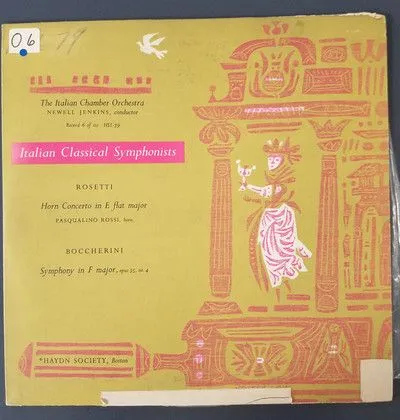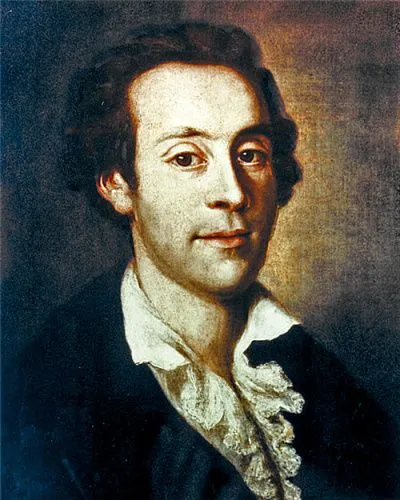
安东尼奥·罗塞蒂 Antonio Rosetti
安东尼奥·罗塞蒂
A·Rosetti / A·罗塞蒂RegionGermany
TypeSolo
ProfessionComposer
Artist Profile
波西米亚作曲家,低音提琴演奏家。原名弗朗蒂舍克·安东宁·罗斯勒,后来将名字改成意大利形式。出生于利托梅日采。曾先后在瓦伦斯坦和梅克伦堡-施维林任职。1781年短暂旅居巴黎,在那里许多乐团广泛上演了他的作品。1782年他将自己的作品出版。1792年在路德维希卢斯特去世。他的作品在当时评价很高,如圆号协奏曲曾经影响了莫扎特。他为莫扎特而作的“安魂曲”在莫扎特葬礼上演奏,却不想自己1年后也随莫扎特而去。
Francesco Antonio Rosetti (c. 1750 – June 30, 1792, born Franz Anton Rösler, changed to Italianate form by 1773) was aclassical era composer and double bass player, and was a contemporary of Haydn and Mozart. The occasional disambiguation with a supposed, but non-existent, "Antonio Rosetti born 1744 in Milan", is due to an error by Ernst Ludwig Gerber in a later edition of his Tonkünstler-Lexikon having mistaken Rosetti for an Italian in the first edition of his own Lexikon, and therefore including Rosetti twice - once as an Italian, once as a German-Czech. Rosetti was born around 1750 in Litoměřice, a town in NorthernBohemia, and was originally called Franz Anton Rösler. He is believed to have received early musical training from theJesuits. In 1773 Rosetti left this native country and joined the Hofkapelle of Prince von Öttingen-Wallerstein, whom he served for sixteen years, before becoming Kapellmeister to the Duke of Mecklenburg-Schwerin in 1789. In 1777, he married Rosina Neher, with whom he had three daughters. In 1781 he was granted leave to spend five months in Paris. Many of the finest ensembles in the city performed his works. Rosetti arranged for his music to be published, including a set of six symphonies published in 1782. He returned to his post, assured of recognition as an accomplished composer. He died only half a year after Mozart on June 30, 1792. Rosetti wrote a great deal of instrumental music, including many symphonies and concertos. Rosetti also composed a significant number of vocal and choral works, particularly in the last few years of his life. Among these are German oratorios including Der sterbende Jesu and Jesus in Gethsemane(1790) and a German Hallelujah. He is perhaps best known today for his horn concertos, whichMozart scholar H. C. Robbins Landon suggests (in The Mozart Companion) may have been a model for Mozart's four horn concerti. Rosetti is also known for writing the Requiem (1776) which was played at a memorial for Mozart in December 1791. Attributing some music to Rosetti is difficult because several other composers with similar names worked at the same time, including Franciscus Xaverius Antonius Rössler.
https://en.wikipedia.org/wiki/'>https://en.wikipedia.org/wiki/Antonio Rosetti