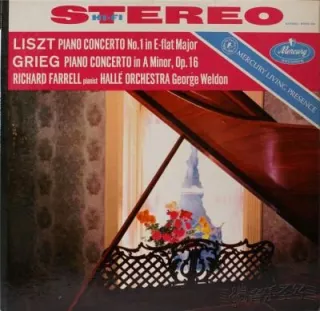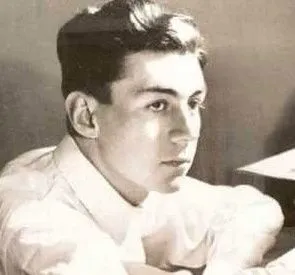
Richard Farrell (理查德·法雷尔)
理查德·法雷尔
R·Farrell / R·法雷尔RegionNew Zealand
TypeSolo
ProfessionPianist
Artist Profile
Richard Farrell (30 December 1926 – 27 May 1958) was a New Zealand classical pianist who achieved almost legendary status, but whose flourishing career was terminated in a road accident at the age of 31. He has been described as New Zealand's "greatest classical pianist".Thomas Richard Farrell was born in Auckland in 1926 to Thomas and Ella Farrell, and spent most of his young years in Wellington. His parents were not musicians, but his uncle, John Farrell, was an actor and singer with J. C. Williamson Theatres Ltd. He attended St Mary's Convent School and St. Patrick's College, both in Wellington. He made his first radio broadcast when aged only four. From age six he had piano lessons with Florence Fitzgerald, and from age 9 he studied with Gordon Short. At age seven Farrell played his own composition, a lament on the death of Archbishop Francis Redwood, in a public concert with the Wellington Symphony Orchestra. At the age of 12, he was noted to possess absolute pitch. At the age of 12 he moved to Sydney, Australia with his mother Ella and two brothers, Peter and Paul, going on to study under Alexander Sverjensky at the New South Wales Conservatorium of Music for five years.[5] During this time, he attracted the notice and commendations from Arthur Rubinstein and Eileen Joyce. While the tenor Richard Tauber was on an Australian tour, he heard Farrell and offered him a European tour, which Farrell was unable to accept due to the war that was then in progress. Farrell returned to New Zealand in 1939 and 1942, giving recitals and performances, but spent most of his time in Australia, where he received much support from the Australian Broadcasting Commission. In 1944 he won the NSW state final of the inaugural competition that later evolved into the ABC Symphony Australia Young Performers Awards. In 1945 Eugene Ormandy invited him to come to the USA when he was ready. Ormandy told the American pianist William Kapell about him, and Kapell befriended him on his 1947 visit to Australia, and later asked him to be best man at his wedding. On Kapell's personal recommendation he was granted a full scholarship to study with Olga Samaroff at the Juilliard School in New York. He remained with Samaroff for the remaining two years of her life, and she was said to have pronounced that Richard Farrell was the best student she had ever had. He also studied conducting at Juilliard with Serge Koussevitzky. At Juilliard, he was noticed by Aaron Copland and studied his 1941 Piano Sonata, which became a feature of his repertoire. Copland was heard to commend Farrell for performing the sonata without the aid of a musical score, saying, "Although I composed it myself, I can't memorise it". Farrell then toured in the United States, giving over 60 recitals a year. After another tour of New Zealand, he had his Carnegie Hall debut in 1948, and again received very glowing critiques. Arthur Rubinstein declared that there were "only three pianists in the world" - himself, William Kapell and Richard Farrell. He first appeared with the New York Philharmonic on 2 December 1950, playing Edvard Grieg's Piano Concerto in A minor with Dimitri Mitropoulos conducting.