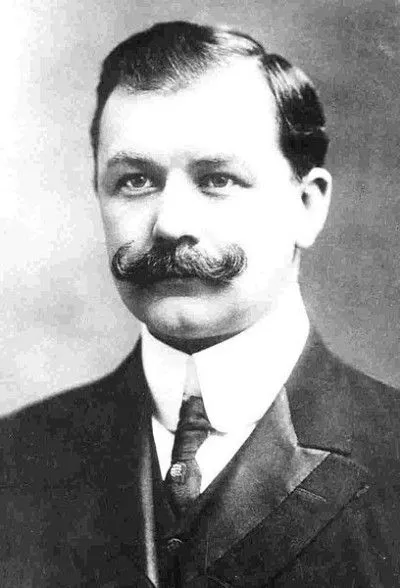
弗朗兹·莱哈尔 Franz Lehar
弗朗兹·莱哈尔
F·Lehár / F·雷哈尔RegionHungary
TypeSolo
ProfessionComposer
Artist Profile
匈牙利裔的奥地利作曲家。生于科马罗姆,父亲是一个军乐队的乐长。1882-1888年莱哈尔在布拉格音乐学院学习小提琴和音乐理论,毕业后曾任剧院小提琴师。后来在安东·德沃夏克的鼓励下钻研作曲。曾参加其父的军乐队任指挥,并在维也纳、布达佩斯等地演出,为此他创作了不少进行曲和圆舞曲。1902年定居维也纳。1905年他的轻歌剧“风流寡妇”在维也纳连续上演500场,使莱哈尔一举成名,成为继小约翰施特劳斯之后最受欢迎的轻歌剧作曲家。和爱默里希·卡尔曼是二战期间所谓“银色”维也纳轻歌剧时代的开启者。他轻歌剧的成功使他获得了大量财富,他购买了维也纳的史肯耐德小皇宫,仆人簇拥。1948年卒于巴特伊施尔。他在遗嘱中写明他的大部分财产和他的房子将会捐给他的出生地和帮助穷困的艺术家。
Franz Lehár(Hungarian:Lehár Ferenc; 30 April 1870 – 24 October 1948) was anAustro-Hungariancomposer. He is mainly known for hisoperettas, of which the most successful and best known isThe Merry Widow(Die lustige Witwe).
Lehár was born in the northern part of Komárom, Kingdom of Hungary, Austria-Hungary (now Komárno, Slovakia), the eldest son of Franz Lehár (senior) (1838–1898), an Austrian bandmaster in the Infantry Regiment No. 50 of the Austro-Hungarian Armyand Christine Neubrandt (1849–1906), a Hungarian woman from a family of German descent. He grew up speaking only Hungarian until the age of 12. Later he put an acute accent above the "a" of his father's surname "Lehár" to indicate the vowel in the corresponding Hungarian orthography.
While his younger brother Anton entered cadet school in Vienna to become a professional officer, Franz studied violin at the Prague Conservatory, where his violin teacher was Antonín Bennewitz, but was advised by Antonín Dvořák to focus on composition. However, the Conservatory's rules at that time did not allow students to study both performance and composition, and Bennewitz and Lehár senior exerted pressure on Lehár to take his degree in violin as a practical matter, arguing that he could study composition on his own later. Lehár followed their wishes, against his will, and aside from a few clandestine lessons with Zdeněk Fibich he was self-taught as a composer. After graduation in 1888 he joined his father's band in Vienna, as assistant bandmaster. Two years later he became bandmaster at Losonc (today Lučenec, Slovakia), making him the youngest bandmaster in the Austro-Hungarian Army at that time, but he left the army and joined the navy. With the navy he was first Kapellmeister at Pola (Pula) from 1894 to 1896, resigning in the later year when his first opera, Kukuschka (later reworked as Tatjana in 1906), premiered in Leipzig. It was only a middling success and Lehár eventually rejoined the army, with service in the garrisons at Trieste, Budapest (1898) and finally Vienna from 1899 to 1902. In 1902 he became conductor at the historic Vienna Theater an der Wien, where his operetta Wiener Frauen was performed in November of that year.
He is most famous for his operettas – the most successful of which is The Merry Widow (Die lustige Witwe) – but he also wrote sonatas, symphonic poems and marches. He also composed a number of waltzes (the most popular being Gold und Silber, composed for Princess Pauline von Metternich's "Gold and Silver" Ball, January 1902), some of which were drawn from his famous operettas. Individual songs from some of the operettas have become standards, notably "Vilja" from The Merry Widow and "You Are My Heart's Delight" ("Dein ist mein ganzes Herz") from The Land of Smiles (Das Land des Lächelns). His most ambitious work, Giudittain 1934 is closer to opera than to operetta. It contains the ever popular "Meine Lippen, sie küssen so heiß" ("On my lips every kiss is like wine").
Lehár was also associated with the operatic tenor Richard Tauber, who sang in many of his operettas, beginning with a revival of his 1910 operetta Zigeunerliebe (de) in 1920 and then Frasquita (de) in 1922, in which Lehár once again found a suitable post-war style. Lehár made a brief appearance in the 1930 film adaptation The Land of Smiles starring Tauber. Between 1925 and 1934 he wrote six operettas specifically for Tauber's voice. By 1935 he decided to form his own publishing house, Glocken-Verlag (Publishing House of the Bells), to maximize his personal control over performance rights to his works.
Lehár's relationship with the Nazi regime was an uneasy one. He had always used Jewish librettists for his operas and had been part of the cultural milieu in Vienna which included a significant Jewish contingent. Further, although Lehár was Roman Catholic, his wife, Sophie (née Paschkis) had been Jewish before her conversion to Catholicism upon marriage, and this was sufficient to generate hostility towards them personally and towards his work. Hitler enjoyed Lehár's music, and hostility diminished across Germany after Joseph Goebbels' intervention on Lehár's part. In 1938 Mrs. Lehár was given the status of "Ehrenarierin" (honorary Aryan by marriage). Nonetheless, attempts were made at least once to have her deported. The Nazi regime was aware of the uses of Lehár's music for propaganda purposes: concerts of his music were given in occupied Paris in 1941. Even so, Lehár's influence was limited. It is alleged that he tried personally to secure Hitler's guarantee of the safety of one of his librettists, Fritz Löhner-Beda, but he was not able to prevent the murder of Beda in Auschwitz-III.
On 12 January 1939 and 30 April 1940 Lehár personally received awards from Hitler in Berlin and Vienna, including the Goethe Medal. On Hitler's birthday in 1938 Lehár had given him as a special gift a red Morocco leather volume in commemoration of the 50th performance of The Merry Widow.
He died aged 78 in 1948 in Bad Ischl, near Salzburg, and was buried there.
His younger brother Anton became the administrator of his estate, promoting the popularity of Franz Lehár's music.
In 1908, the German branch of The Gramophone Company Ltd (afterwards HMV) issued twelve extracts (mostly ensembles) from Lehár's latest operetta, Der Mann mit den drei Frauen, with the composer conducting. The singers included Mizzi Günther, Louise Kartousch and Ludwig Herold.
In 1929 and 1934, Lehár had conducted for Odeon Records The Land of Smiles and Giuditta, starring Richard Tauber, Vera Schwarz and Jarmila Novotná. A 1942 Vienna broadcast of his operetta Paganini conducted by the composer has survived, starring soprano, Esther Réthy and tenor, Karl Friedrich (de). A 1942 Berlin radio production of Zigeunerliebe with Herbert Ernst Groh, conducted by Lehár, also survives.
In 1947, Lehár conducted the Tonhalle Orchester Zürich in a series of 78-rpm recordings for English Decca (released in the U.S. by London Records) of overtures and waltzes from his operettas. The recordings had remarkable sound for their time because they were made using Decca's Full Frequency Range Recording process, one of the first commercial high fidelity techniques. These recordings were later issued on LP (in 1969 on Decca eclipse ECM 2012 and reprocessed stereo on ECS 2012) and CD. A compilation of his recordings has been released by Naxos Records.
Following the collapse of the Berlin Wall, a set of discs recording the 1939 Saarbrücken concert of Lehár's works by German State Transmitter Saarbrücken conducted by Franz Lehár himself was discovered in East German state archives. This was released on CDs by Classic Produktion Osnabrück in 2000.