
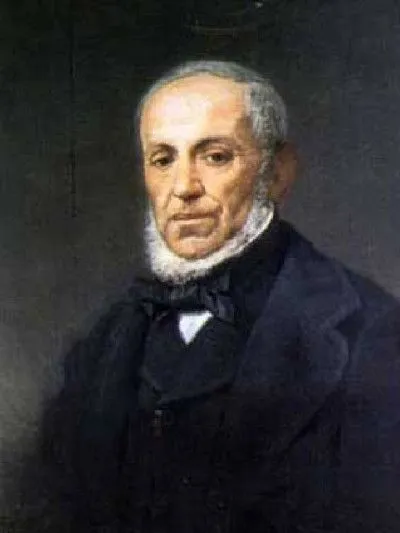
乔万尼·帕伊谢洛 Giovanni Paisiello
乔万尼·帕伊谢洛
G·Paisiello / G·帕伊谢洛RegionItaly
TypeSolo
ProfessionComposer
Artist Profile
意大利作曲家。出生于塔兰托附近。1754年求学于那不勒斯圣奥诺夫廖音乐学院。1759年毕业后,留校任教至1763年。他最初写作弥撒曲、清唱剧等宗教音乐,1763年他为校内剧场写的幕间剧很受欢迎,从此转向意大利喜歌剧的创作。1776-1784年,应俄国女皇叶卡婕琳娜二世之聘,在圣彼得堡任宫廷指挥兼意大利歌剧院的音乐指导。1782年演出了他的著名歌剧“塞维利亚的理发师”。1784年他回到那不勒斯,在斐迪南四世的宫廷任乐长。1799年法兰西共和军占领那不勒斯,斐迪南四世逃到西西里,帕伊谢洛又出任新共和国的国家乐长。1802年拿破仑召他去巴黎担任皇家小教堂乐长,1804年回那不勒斯。1815年波旁王政复辟,斐迪南四世重回那不勒斯,帕伊谢洛因曾为拿破仑效劳而受到歧视,最后抑郁而死。
Giovanni Paisiello(orPaesiello; 9 May 1740 – 5 June 1816) was anItaliancomposerof theClassical era, and was the most popular opera composer of the late 1700s.
Paisiello was born in Taranto in the Apulia region and educated by the Jesuits there. He became known for his beautiful singing voice and in 1754 was sent to the Conservatorio di S. Onofrio at Naples, where he studied under Francesco Durante, and eventually became assistant master. For the theatre of the Conservatorio, which he left in 1763, he wrote some intermezzi, one of which attracted so much notice that he was invited to write two operas, La Pupilla and Il Mondo al Rovescio, for Bologna, and a third, Il Marchese di Tidipano, for Rome.
His reputation now firmly established, he settled for some years at Naples, where, despite the popularity of Niccolò Piccinni, Domenico Cimarosa and Pietro Guglielmi, of whose triumphs he was bitterly jealous, he produced a series of highly successful operas, one of which, L'ldolo cinese, made a deep impression upon the Neapolitan public.
In 1772 Paisiello began to write church music, and composed a requiem for Gennara di Borbone, of the reigning dynasty. In the same year he married Cecilia Pallini, and the marriage was a happy one. In 1776 Paisiello was invited by the empress Catherine II of Russia to St. Petersburg, where he remained for eight years, producing, among other charming works, his masterpiece, Il barbiere di Siviglia, which soon attained a European reputation. The fate of this opera marks an epoch in the history of Italian art; for with it the gentle suavity cultivated by the masters of the 18th century died out to make room for the dazzling brilliance of a later period.
When, in 1816, Gioachino Rossini set a revised version of the libretto to music, under the title of "Almaviva ossia la inutil precauzione" the fans of Paisiello stormed the stage. Rossini's opera, now known as Il barbiere di Siviglia, is now acknowledged as Rossini's greatest work, while Paisiello's opera is only infrequently produced—a strange instance of poetical vengeance, since Paisiello himself had many years previously endeavoured to eclipse the fame of Giovanni Battista Pergolesi by resetting the libretto of his famous intermezzo, La serva padrona.
Paisiello left Russia in 1784, and, after producing Il Re Teodoro at Vienna, entered the service of Ferdinand IV of Naples, where he composed many of his best operas, including Nina and La Molinara. After many vicissitudes, resulting from political and dynastic changes, he was invited to Paris (1802) by Napoleon, whose favor he had won five years previously by composing a march for the funeral of General Hoche. Napoleon treated him munificently, while cruelly neglecting two more famous composers, Luigi Cherubini and Etienne Méhul, to whom the new favorite transferred the hatred he had formerly borne to Cimarosa, Guglielmi and Piccinni.
Paisiello conducted the music of the court in the Tuileries with a stipend of 10,000 francs and 4800 for lodging, but he entirely failed to conciliate the Parisian public, who received his opera Proserpine so coldly that, in 1803, he requested and with some difficulty obtained permission to return to Italy, upon the plea of his wife's ill health. On his arrival at Naples Paisiello was reinstated in his former appointments by Joseph Bonaparte and Joachim Murat, but he had taxed his genius beyond its strength, and was unable to meet the demands now made upon it for new ideas. His prospects, too, were precarious. The power of the Bonaparte family was tottering to its fall; and Paisiello's fortunes fell with it. The death of his wife in 1815 tried him severely. His health failed rapidly, and constitutional jealousy of the popularity of others was a source of worry and vexation.
Paisiello is known to have composed 94 operas, which are known for their gracefully beautiful melodies. Perhaps the best-known tune he ever wrote is Nel cor più non mi sento from La Molinara, immortalized when Beethoven composed variations based on it. Paisiello also wrote a great deal of church music, including eight masses; as well as fifty-one instrumental compositions and many stand-alone songs. He also composed the Inno al Re, the national anthem of the Kingdom of the Two Sicilies. Manuscript scores of many of his operas were presented to the library of the British Museum by Domenico Dragonetti.
The library of the Gerolamini at Naples possesses an interesting manuscript compilation recording Paisiello's opinions on contemporary composers, and exhibiting him as a somewhat severe critic, especially of the work of Pergolesi.
The Concise Grove Dictionary of Music notes that "Paisiello was one of the most successful and influential opera composers of his time. Most of his over 80 operas are comic and use a simple, direct and spirited style, latterly with sharper characterization, more colorful scoring and warmer melodies (features that influenced Mozart). His serious operas have less than the conventional amount of virtuoso vocal writing; those for Russia are the closest to Gluck's 'reform' approach."
Paisiello was primarily an opera composer. His instrumental works are therefore imbued with a similar vocally conceived melodic line, granted they may be lacking in the sophisticated counterpoint and motivic work of Haydn and Mozart's music. This characterization, however, does not do justice to the extreme drama and topical contrast in all his works such as the Piano Concerto No. 4 in G minor. (CD Naxos 8.557031. Francesco Nicolosi, Piano, Collegium Philarmonicum Chamber Orchestra - Gennaro Cappabianca, Conductor.) Essentially he had mastered all the techniques which made for good opera, and this made his works widely popular and admired throughout Europe.
Works composed for Napoleon's and King Joseph's Chapels.
(to be completed)
From:https://en.wikipedia.org/wiki/'>https://en.wikipedia.org/wiki/Giovanni Paisiello