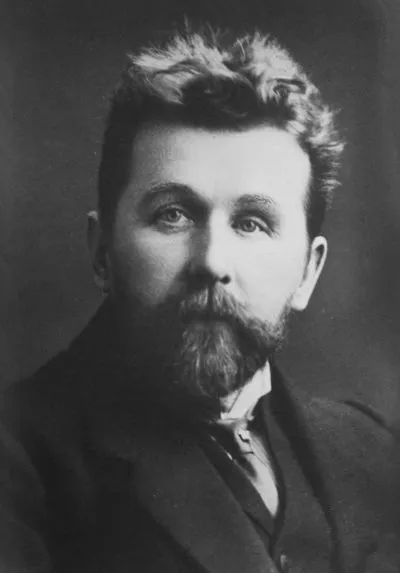
亚历山大·格列恰尼诺夫 Alexander Gretchaninov
亚历山大·格列恰尼诺夫
A·Gretchaninov / A·格列恰尼诺夫RegionRussia
TypeSolo
ProfessionComposer
Artist Profile
俄罗斯浪漫主义作曲家。出生于莫斯科,父亲是一个商人,希望儿子能够子承父业,所以格列恰尼诺夫较晚才接受到音乐教育,他回忆自己14岁前从来没看到过钢琴。之后他偷偷违背父亲的意愿进入莫斯科音乐学院学习,师从于塔涅耶夫和阿连斯基,与后者发生争执之后转投里姆斯基-科萨科夫。里姆斯基-科萨科夫十分欣赏格列恰尼诺夫的才华,直到自己1908年去世前一直在学习生活与经济上给予这位学生支持。大约1910年前后,格列恰尼诺夫已经成为了国内闻名的作曲家,沙皇给予他额外的补助津贴。俄国爆发革命之后格列恰尼诺夫先是在国内呆了几年,最终还是决定移居国外。先是在法国,然后到美国,直到以91岁高龄在纽约去世。格列恰尼诺夫的作品代表着浪漫主义向20世纪音乐风格的过渡,体现了俄国浪漫主义和民族乐派的深厚传统。
Alexander Tikhonovich Gretchaninov (25 October 1864, Kaluga – 3 January 1956, New York City) was a Russian Romantic composer. Gretchaninov started his musical studies rather late, because his father, a businessman, had expected the boy to take over the family firm. Gretchaninov himself related that he did not see a piano until he was 14 and began his studies at the Moscow Conservatory in 1881 against his father's wishes and without his knowledge. His main teachers there were Sergei Taneyev and Anton Arensky. In the late 1880s, after a quarrel with Arensky, he moved to St. Petersburg where he studied composition and orchestration with Nikolai Rimsky-Korsakov until 1893. Rimsky-Korsakov immediately recognized Gretchaninov's extraordinary musical imagination and talent and gave him much extra time as well as considerable financial help. This allowed the young man, whose parents were not supporting him, to survive. Out of this came an important friendship, which only ended in 1908 with Rimsky's death. As such, it is not surprising that Rimsky's influence can be heard in Gretchaninov’s early works, such as his String Quartet No.1, a prize-winning composition. Around 1896, Gretchaninov returned to Moscow and was involved with writing for the theatre, the opera and the Russian Orthodox Church. His works, especially those for voice, achieved considerable success within Russia, while his instrumental works enjoyed even wider acclaim. By 1910, he was considered a composer of such distinction that the Tsar awarded him an annual pension. Though Gretchaninov remained in Russia for several years after the Revolution, he ultimately chose to emigrate, first to France in 1925, and then, at the age of 75, to the United States in 1939. He remained in the U.S. the rest of his life and eventually became an American citizen. He died in New York at the age of 91 and is buried outside the church at Rova Farms, a Russian enclave in Jackson Township, Ocean County, New Jersey. Gretchaninov wrote five symphonies, the first premiered by Rimsky-Korsakov; four string quartets, the first two of which won important prizes, two piano trios, sonatas for violin, cello, clarinet, piano and balalaika, several operas, song cycle Les Fleurs du Mal, op. 48 (setting lyrics by Baudelaire) and much other music. Like Vladimir Rebikov's, his position in the history of Russian music was mainly transitional, his earlier music belonging firmly in that earlier Romantic tradition while his later work is influenced by some of the streams that also affected Igor Stravinsky and Sergei Prokofiev. Sketches for an unfinished sixth symphony from the 1940s exist. He also composed a number of small scale piano pieces. Most of Gretchaninov's manuscripts reside in the Music Division of New York Public Library for the Performing Arts.
https://en.wikipedia.org/wiki/'>https://en.wikipedia.org/wiki/Alexander Gretchaninov
亚历山大·蒂洪诺维奇·格列恰尼诺夫(俄语:Александр Тихонович Гречанинов,1864年10月25日-1956年1月3日),俄国浪漫主义作曲家,生于莫斯科,曾受教于塔涅耶夫和阿连斯基,与后者发生争执之后转投里姆斯基-科萨科夫,俄国革命之后曾留在国内数年,但是后来决定移居国外,先是在法国,然后到美国,1945年入美国籍,直到以91岁高龄在纽约逝世。格列恰尼诺夫的作品是浪漫主义时期与20世纪的过渡期作品,体现了俄国浪漫主义和民族乐派的深厚传统,其交响曲和宗教性合唱作品以及室内乐等都十分动听。 格列恰尼诺夫(Alexander Tikhonovich Gretchaninov, 1864-1956),俄国浪漫派作曲家。 由于其经商的父亲希望他继承家业,格列恰尼诺夫很晚才开始学习音乐——据他自己回忆,他长到14岁时才第一次看到一架钢琴,17岁时又不顾父亲的意愿,偷偷地跑到莫斯科音乐学院去学音乐,师从塞盖尔·塔涅耶夫(Sergei Taneyev)和安东·阿连斯基(Anton Arensky)。80年代末,由于和阿连斯基大吵了一架,格列恰尼诺夫转往圣彼得堡随里姆斯基-柯萨科夫学习作曲及管弦乐编曲,直至1893年止。恩师极为赏识格列恰尼诺夫超凡的音乐想象力和艺术天分,花了大量的时间和精力悉心栽培,并不时济以钱财相助,使得年轻的格列恰尼诺夫虽缺少了父母的资助也能继续学习下去。师生间的这种情谊一直维持到1908年里姆斯基去世后,因此在格列恰尼诺夫早期的作品(例如其著名的第一弦乐四重奏)中也不难窥见到里姆斯基对其产生的影响。在1896年前后,格列恰尼诺夫回到了莫斯科,开始为剧场、歌剧院、东正教教堂等谱曲。他的作品(尤其是声乐作品)在俄国获得了不俗的佳绩,而器乐作品在国外也受到好评,因此他也从1910年开始领取沙皇御准的年度津贴。俄国革命胜利后,格列恰尼诺夫仍留在了祖国,但最终还是选择了移民之路,并于1925年移居法国,后于1939年转赴美国开始了新的生活,直至1956年在纽约去世,享年91岁。 格列恰尼诺夫写有5部交响曲(第一部的首演由恩师里姆斯基执棒)、4首弦乐四重奏、2首钢琴三重奏等作品。《七天受难曲》作于1911-1912年间,是他早期的为俄罗斯东正教礼拜仪式而写的无伴奏合唱作品。