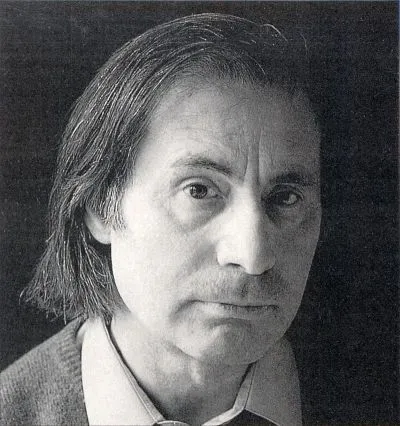
阿尔佛雷德·施尼特凯 Alfred Schnittke
阿尔佛雷德·施尼特凯
A·Schnittke / A·施尼特凯TypeSolo
ProfessionComposer
Artist Profile
Alfred Schnittke (November 24, 1934 – August 3, 1998) was a Soviet and German composer. Schnittke's early music shows the strong influence of Dmitri Shostakovich. He developed apolystylistic technique in works such as the epic Symphony No. 1 (1969–1972) and his first concerto grosso (1977). In the 1980s, Schnittke's music began to become more widely known abroad with the publication of his second (1980) and third (1983) string quartets and the String Trio (1985); the ballet Peer Gynt (1985–1987); the third (1981), fourth (1984), and fifth(1988) symphonies; and the viola (1985) and first cello (1985–1986) concertos. As his health deteriorated, Schnittke's music started to abandon much of the extroversion of his polystylism and retreated into a more withdrawn, bleak style. Schnittke's early music shows the strong influence of Dmitri Shostakovich, but after the visit of the Italian composer Luigi Nono to the USSR, he took up theserial technique in works such as Music for Piano and Chamber Orchestra (1964). However, Schnittke soon became dissatisfied with what he termed the "puberty rites of serial self-denial." He created a new style which has been called "polystylism", where he juxtaposed and combined music of various styles past and present. He once wrote, "The goal of my life is to unify serious music and light music, even if I break my neck in doing so." His first concert work to use the polystylistic technique was the Second Violin Sonata, Quasi una sonata (1967–1968). He experimented with techniques in his film work, as shown by much of the sonata appearing first in his score for the animation short "The Glass Harmonica". He continued to develop the polystylistic technique in works such as the epic First Symphony (1969–1972) and First Concerto Grosso (1977). Other works were more stylistically unified, such as his Piano Quintet (1972–1976), written in memory of his recently deceased mother. In the 1980s, Schnittke's music began to become more widely known abroad, thanks in part to the work of émigré Soviet artists such as the violinists Gidon Kremer and Mark Lubotsky. Despite constant illness, he produced a large amount of music, including important works such as the Second (1980) and Third (1983) String Quartets and the String Trio (1985); the Faust Cantata (1983), which he later incorporated in his opera Historia von D. Johann Fausten; the ballet Peer Gynt (1985–1987); the Third (1981), Fourth (1984) and Fifth (1988) Symphonies (the last of which is also known as the Fourth Concerto Grosso) and the Viola (1985) and First Cello (1985–1986) concertos. As his health deteriorated, Schnittke started to abandon much of the extroversion of his polystylism and retreated into a more withdrawn, bleak style, quite accessible to the lay listener. The Fourth Quartet (1989) and Sixth (1992), Seventh (1993) and Eighth (1994) symphonies are good examples of this. Some Schnittke scholars, such as Gerard McBurney, have argued that it is the late works that will ultimately be the most influential parts of Schnittke's output. After a stroke in 1994 left him almost completely paralysed, Schnittke largely ceased to compose. He did complete some short works in 1997 and also a Ninth Symphony; its score was almost unreadable because he had written it with great difficulty with his left hand. The Ninth Symphony was first performed on 19 June 1998 in Moscow in a version deciphered – but also 'arranged' – by Gennady Rozhdestvensky, who conducted the premiere. After hearing a tape of the performance, Schnittke indicated he wanted it withdrawn. After he died, though, others worked to decipher the score.Nikolai Korndorf died before he could complete the task, which was continued and completed by Alexander Raskatov. In Raskatov's version, the three orchestral movements of Schnittke's symphony may be followed by a choral fourth, which is Raskatov's own Nunc Dimittis (in memoriam Alfred Schnittke). This version was premiered in Dresden, Germany, on June 16, 2007. Andrei Boreyko also has a version of the symphony.
<a href="<a href=" https:="" en.wikipedia.org="" wiki="" '="">https://en.wikipedia.org/wiki/'>https://en.wikipedia.org/wiki/Alfred Schnittke
阿尔弗雷德·施尼特凯(Alfred Schnittke,1934—1998)是俄罗斯时期当代最杰出的作曲家之一,被誉为肖斯塔科维奇之后俄罗斯最伟大的作曲家,当代的肖斯塔科维奇。施尼特凯的一生经历了苏联音乐从封闭到解冻,再到走向世界的过程。在这一过程中,施尼特凯的创作风格也经历了从学生时代的模仿与学习,再到青年时期对“复风格”早期的实验,最后形成自己独有风格的过程。他的音乐地位无论是在当代俄罗斯作曲家之中还是在俄罗斯人民的心中都是最高的,无可替代的。
http://xueshu.baidu.com/s?wd=paperuri:(cda310f3a95cc9e5db31e59fbceaeef2)&filter=sc_long_sign&sc_ks_para=q%3D%E6%96%BD%E5%B0%BC%E7%89%B9%E5%87%AF%E5%88%9B%E4%BD%9C%E6%8A%80%E6%B3%95%E7%A0%94%E7%A9%B6&tn=SE_baiduxueshu_c1gjeupa&ie=utf-8&sc_us=1308694677248876618