Don Shirley (唐·雪莉)
唐·雪莉
D·Shirley / D·雪莉RegionUSA
TypeSolo
ProfessionComposer, Pianist
Artist Profile
如果你看过《绿皮书》,那你一定对Donald Shirley的各种小要求小条件印象深刻。包括他对Tony Lip的名字到底怎么取都有极高的要求——语音语调,短小易于记忆(intonation, reflection, and your choice of words.)。
(Tony的本名叫Frank Vallelonga,Vallelonga是他的出生地,后来人称Tony Lip,Tony取自他的middle name,而Lip则因为他从小就喜欢讲话)
事实上,当你看了他的各种访谈,就会发现Shirley先生远比电影的人设更认真。他对用词非常谨慎,较真的可爱。他的自我控制(self-control)非常强,崇尚规则和纪律,对各种东西都有自己的准则,不喜欢就是不喜欢,不对的就是不对。简直可以用会计Auditing里的due diligence准则来形容他了。
而且他对于词语的要求,真的是极其严格,在他的访谈里经常能发现他对错置在自己身上的形容词的厌恶:
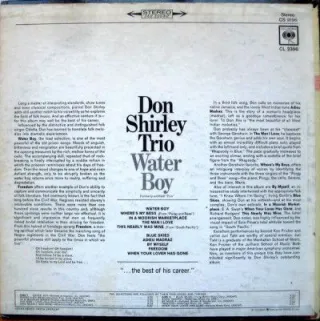
Shirley设计了自己第一张专辑的封面,在封面上,烫金的字写着Tonal Expressions “Donald Shirley”,但是不知道什么原因唱片公司(可能“为了节省印刷的钱”),在专辑反面的封面设计署名只写了“Don Shirley”。随后,第二张专辑出来了——接着,之后所有其他二十张专辑都只出现了“Don Shirley”。
“而我讨厌它,今天我讨厌它。”
And I hated it and I hate it today.
恩,并且他在死后可能会一直憎恨这个名字。
因为他的Wiki词条名依然是”Don Shirley“,而纽约时报在2013年为他写的讣闻上补刀道:“正是Cadence唱片公司的创始人Archie Bleyer坚持让人们称呼Shirley为“Don”,这一不拘礼节的称呼在他的整个职业生涯中一直萦绕不去,令人厌烦地提醒他,他不可能成为自己一直希望成为的那种音乐会演奏家。“
Based on True Story?
Emmmm……
电影里的Shirley一直试图和解自己的两个身份——一个音乐家(Musician),和一个为白人演奏的黑人娱乐者(Entertainer)。
他被邀请到俄罗斯圣彼得堡的列宁格勒音乐学院(Leningrad Conservatory of Music)师从米特洛夫斯基(Mittolovski)学习音乐,那一年他9岁。1945年,17岁的他以博士学位从俄罗斯毕业回到美国,”I didn’t know when I was a black." 这是他第一次感受到自己的肤色差异,并被迫接受自己是一个“黑”人。
因为种族歧视,Shirley一直秉持着Musician的精神和觉悟,接着Entertainer的活儿。活在规则下,哪怕不合理,他仍用极强的自控力以合理的方式抗议,希望改变人们对种族歧视的看法。他在入狱后要求打电话给律师,在被警察要求下车并言语侮辱后依然冷静,在被主办方拒绝使用非有色人种的卫生间后依然从容的遵守这个愚蠢的规定。
虽然经常被人误解,但他对于自身的定位一直很清晰:''I am not an entertainer. But I'm running the risk of being considered an entertainer by going into a nightclub because that's what they have in there. I don't want anybody to know me well enough to slap me on the back and say 'Hey, baby.' The black experience through music, with a sense of dignity, that's all I have ever tried to do.(作为黑人,有尊严的感受音乐,这是我一直努力去做的。)''
他终其一生,都在纠正外界因为种种偏见给他贴上的标签。
在看Shirley的访谈和采访的时候,我脑海里总会出现Mahershala Ali的形象,他说话的腔调,白衬衣黑西装,永远是fancy和elegant的样子,对一切不喜欢的事皱眉头,并毫不留情的指责。他的表演非常出色。电影里的Shirley,则是在和Tony的相处中,接受理解,逐渐找到了自我身份的交叠,包括拥抱家庭和朋友。
其中有一段在车里的对话,Tony问到了Shirley的家人,电影里的Mahershala Ali说,我有过一段婚姻,Gene是个好姑娘。但我不能即作为一个钢琴家,又作为一个丈夫。
但是在Let It Shine(DS还未面试的纪录片素材)里,你会发现他的这句台词是in context的。完整的回答是“I got divorced not it had nothing to do with love, had nothing do with us. It had to do with the fact that here I had an opportunity to have a career; and God knows since it is something I'd always want it trained for it all my life; and this was just not the time to play macho you know. I didn't have the Constitution to do a husband act as well as a concert pianist, because I was dead set on being what I had been trained on my life to be(我一心想要成为我被训练成的那种人).”
他的自我要求太清晰,更知道家庭的重量(虽然Shirley被怀疑是gay,但在生前从未出柜)。他在雇佣Tony之前就曾对Tony已婚且有孩子有家庭的背景有些许担忧,对于家庭,Shirley的理解是作为父亲和丈夫需要给予足够的陪伴和支持,但他一年至少19周在外演出。
电影毫无缘由的强调了他对种族概念的缺乏理解,(可能因为从小在俄罗斯长大)——他可以坐在小轿车里让白人司机为他工作,而车窗外烈日下则是辛苦劳作的南方黑人。他不知道黑人流行音乐,轻视Jazz,也不和黑人兄弟玩耍。以此制造出足够的人物戏剧张力,为最后的高光时刻——寻找到自我做了足够的铺垫。
版权归作者所有,任何形式转载请联系作者。
作者:Lys.(来自豆瓣)
来源:https://movie.douban.com/review/9892009/
但是,但是,但是。
那些泛黄的采访中的Shirley的形象,让人感觉更加清晰——他对自己的身份毫无质疑和模糊,他知道他是谁,他想做什么,以及他为什么要这样做。
自在电影节公映(去年11月)以来,《绿皮书》剧组就陷入各种争议当中——饰演Tony Lip的Viggo因为在电影节回答记者问题是使用“N- word”而被众人指责;之后,Shirley的家人站出来boycott电影,说剧组完全是根据作为雇员的Tony Lip对儿子说的故事改编的剧本,丝毫没有尊重Shirley家人的立场,对Donald Shirley的塑造是以白人角度的臆想,并不真实;就在最近,编剧还因为自己反穆斯林的言论,被要求公开致歉……
在《绿皮书》申报的奖项里,
男主角是Tony Lip的饰演者Viggo,
男配角是Donald Shirley的扮演者Mahershala Ali.
这部电影,本来就是从白人角度开始的吧。
《绿皮书》作为一个故事,是非常好的。
那些被省略的,
让故事变得"Sweet and short."
Just like the name made by Donald Shirley in the movie.
它有所有人希望看见的包容之后的圆满结局。
但是,
可能现实是
同为以种族议题为题材且有更多争议的《黑色党徒》结尾那样,
3K火炬仍然在某处熊熊燃烧着……
摘自:https://www.douban.com/review/9892009/
Donald Walbridge Shirley(January 29, 1927– April 6, 2013) was an American jazz pianist and composer. Shirley's piano skills were recognized at an early age and he began his career as a composer and virtuoso performer at a young age.Shirley's music is hard to categorize. As an arranger-composer he treated each piece of music as a new composition, not just an arrangement. Shirley playedstandardsin a non-standard way. He was a virtuoso performer, playing everything from show tunes, to ballads, to his personal arrangements of Negro spirituals, to jazz, and always with the overtone of a classically trained musician who has utmost respect for the music he is playing.
Shirley was born on January 29, 1927, in Pensacola, Florida. His first teacher was his mother. He began playing piano at age of 2½ and made his first public performance at the age of 3. At the age of nine he was invited to study theory with Mittolovski at the Leningrad Conservatory of Music, and he later studied with organist Conrad Bernier and studied advanced composition with both Bernier and Dr. Thaddeus Jones at Catholic University of Americain Washington D. C.
Shirley made his concert debut at the age of 18 with the Boston Pops June 25, 1945, with Dean Dixon as guest conductor playing the Tchaikovsky B-flat minor concerto. In 1946 his first major composition was performed by the London Philharmonic Orchestra.
In 1949 he received an invitation from the Haitian government to play at the Exposition International du Bi-Centenaire De Port-au-Prince followed by a request from Archbishop Le Goise and President Estime for a repeat performance the following week.
At Arthur Fiedler's invitation he appeared with the Boston Pops in Chicago in June 1954. He performed the Tchaikovsky concerto in the fall of 1968 with the Detroit Symphony. He has appeared as soloist with the Detroit Symphony, the Chicago Symphony, the Cleveland Orchestra, the NBC Symphony, and the National Symphony Orchestra Washington to name only a few. Including his appearances with the trio, he averaged 95 concerts a year.
He wrote symphonies performed by the Philadelphia Orchestra and the New York Philharmonic, and composed four organ symphonies, numerous pieces for piano, two string quartets, and a piano concerto. He played as soloist with the orchestra at Milan's La Scala opera house in a program dedicated to Gershwin's music. Only two other pianists have performed there as soloists, Arthur Rubinstein and Sviatoslav Richter.
He held a Doctorate of Music, Doctorate of Psychology (University of Chicago, Phi Beta Kappa), and Doctorate in Liturgical Arts. He spoke eight languages fluently, and was a talented painter as well.
He abandoned the piano as a career while quite young, and it was while in Chicago as a psychologist that Don "tripped" back into a musical career. He was given a grant to study the relationship, if any, between music and juvenile crime wave which had suddenly broken out in the early 1950s. Working in a small club there, he used his knowledge and skill to perform experiments in sound, whereby he proved that certain tonal combinations affected the audience's reactions. No one in the audience knew of his experiment, or that students had been planted among them to gauge their reactions. But Don Shirley the pianist became a sensation.
During the 1950s and 60s he cut 16 albums for Cadence Records. His single "Water Boy" reached #40 on the Billboard Hot 100 and stayed on the chart for 14 weeks. He then began to make appearances in New York followed, notably at "Basin Street East", where Duke Ellington first heard him. Here started their warm friendship which was highlighted by Don's performance in 1955 of the premiere of Duke's Piano Concerto at Carnegie Hall with the NBC Symphony of the Air. An appearance on the Arthur Godfrey Show launched his career nationwide.
He composed 3 symphonies, two piano concerti, a cello concerto, three string quartets, a one-act opera, works for organ, piano and violin, a symphonic tone poem based on Finnegans Wake and a set of "Variations" on the legend of Orpheus in the Underworld.
He died of heart disease in 2013. He was 86.
From:<a href="<a href=" https:="" en.wikipedia.org="" wiki="" '="">https://en.wikipedia.org/wiki/'>https://en.wikipedia.org/wiki/Don Shirley