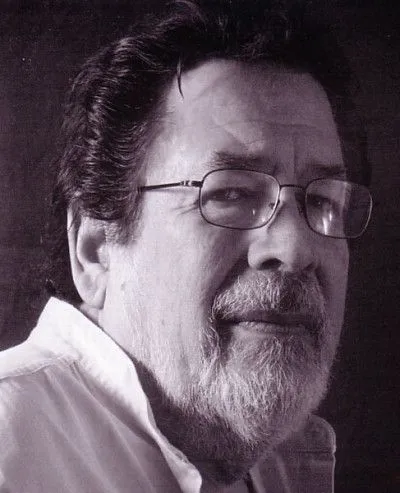
雷·巴雷托 Ray Barretto
雷·巴雷托
R·Barretto / R·巴雷托TypeSolo
ProfessionComposer, Conductor
Artist Profile
Ray Barretto From Wikipedia, the free encyclopedia Jump to navigationJump to searchRay Ray Barretto Barretto in 2006. Background information Born April 29, 1929 New York City, New York, US Died February 17, 2006(aged 76) Hackensack, New Jersey, US Genres Afro-Cuban jazz, salsa,son cubano, boogaloo,pachanga Occupation(s) Musician, bandleader Instruments Congas, drums, percussion Years active 1949–2006 Labels Tico, Riverside, United Artists, Fania, Atlantic,CTI, Concord Jazz, Zoho Associated acts The Blackout All-Stars,Fania All-Stars,Adalberto Santiago Ray Barretto (April 29, 1929 – February 17, 2006) was an American Grammy Award-winning congadrummer and bandleader of Puerto Rican ancestry. Throughout his career as a percussionist he played a wide variety of Latin music styles, as well as Latin jazz. His first hit, "El Watusi", was recorded by his Charanga Moderna in 1962, becoming the most successful pachanga song in the United States. In the late 1960s, Barretto became one of the leading exponents of boogaloo and what would later be known as salsa. Nonetheless, many of Barretto's recordings would remain rooted in more traditional genres such as son cubano. A master of the descarga (improvised jam session), Barretto was a long-time member of the Fania All-Stars. His success continued into the 1970s with songs such as "Cocinando" and "Indestructible". His last album for Fania Records, Soy dichoso, was released in 1990. He then formed the New World Spirit jazz ensemble and continued to tour and record until his death in 2006.
Contents [hide] 1Life and career1.1Early years 1.2Beginnings as a sideman 1.3Charanga Moderna and rise to fame 1.4Boogaloo and early salsa 1.5Success with Fania 1.6New World Spirit 1.7Death 2Discography2.1As leader 2.2With New World Spirit 2.3As sideman 3See also 4References 5External links
Life and career[edit] Early years[edit] Barretto (his real name, "Barreto", was misspelled on his birth certificate)[citation needed] was born on April 29, 1929, in New York City. His parents moved to New York from Puerto Rico in the early 1920s, looking for a better life. He was raised in Spanish Harlem and at a young age was influenced by his mother's love of music and by the jazz of Duke Ellington and Count Basie.[1][2][3]
In 1946, when Barretto was 17 years old, he joined the Army. While stationed in Germany, he met Belgian vibraphonist Fats Sadi. However, it was when he heard Dizzy Gillespie's "Manteca" with Gil Fuller and Chano Pozo that he realized his calling.[1][2][3]
Beginnings as a sideman[edit] In 1949, when Barretto returned home from military service, he started to visit clubs and participated in jam sessions, where he perfected his conga playing. On one occasion Charlie Parker heard Barretto play and invited him to play in his band. Later, he was asked to play forJosé Curbelo and Tito Puente, for whom he played for four years. Barretto developed a unique style of playing the conga and soon he was sought by other jazz band leaders. Latin percussionists started to appear in jazz groups with frequency as a consequence of Barretto's musical influence.[1][2][3]
Charanga Moderna and rise to fame[edit] In 1960, Barretto was a house musician for the Prestige, Blue Note, and Riverside labels. He also recorded on Columbia Records with Jazz flautist Herbie Mann. New York had become the center of Latin music in the United States and a musical genre called pachanga was the Latin music craze of the early 1960s. In 1962, Barretto recorded his first hit, "El Watusi" for Tico Records. He was quite successful with the song and the genre, to the point of being typecast (something that he disliked).[1][2][3]
Boogaloo and early salsa[edit] In 1965, Barretto signed with the Latin division of United Artists, UA Latino, and began recording a series of albums in the boogaloo genre, which merges rhythm and blues with Latin music. On his album El Ray Criollo, Barretto explored the modern Latin sounds of New York, combining features of charanga and conjunto to birth a new style which would later be known as salsa. After recording four albums for the United Artists label, Barretto joined the Fania record label in 1967, and his first recording for the new label was the 1968 album Acid, which is often cited as one of the most enduring boogaloo albums, with songs such as "A Deeper Shade of Soul". During this period, Adalberto Santiago was the band's lead vocalist.
Success with Fania[edit] Ray Barretto, at UC Berkeley Jazz Festival 1982 In 1972 Barretto's Que viva la música was released. "Cocinando," a track from the album, opened the soundtrack of the Fania All Stars film Our Latin Thing in which Barretto had a role. In 1973, Barretto recorded the album Indestructible, in which he played "La familia", a song written by José Curbelo in 1953 and recorded by the sonero Carlos Argentino with the Cuban band Sonora Matancera; Tito Allen joined as new vocalist. After a number of successful albums, and just as his Afro-Cuban band had attained a remarkable following, most of its members left it to form Típica 73, a multinational salsa conglomerate. This left Barretto depressed and disappointed with salsa; he then redirected his efforts to jazz, while remaining as musical director of the Fania All Stars. In 1975 he released Barretto, also referred to as the Guararé album, with new vocalists Ruben Blades and Tito Gomez.[1][2][3]
Barretto played the conga in recording sessions for the Rolling Stones and the Bee Gees. In 1975, he was nominated for a Grammy Award for the song "Barretto". From 1976 to 1978, Barretto recorded three records for Atlantic Records, and was nominated for a Grammy for Barretto Live...Tomorrow. In 1979, he recordedLa Cuna for CTI records and produced a salsa record for Fania, titled Ricanstruction, which was named 1980 "Best Album" by Latin N.Y. Magazine, with Barretto crowned as Conga Player of the Year.[1][2][3]
New World Spirit[edit] Ray Barretto (left) performing in Deauville, France, in 1991. In 1990, Barretto won his first Grammy for the album Ritmo en el corazón ("Rhythm in the Heart"), which featured the vocals of Celia Cruz. His 1968 song "A Deeper Shade Of Soul" was sampled for the 1991Billboard Hot 100 #21 hit "Deeper Shade of Soul" by Dutch band Urban Dance Squad.[1][2][3]
Also in the 1990s, a Latin agent, Chino Rodríguez, approached Barretto with a concept he also pitched toLarry Harlow. The idea was "The Latin Legends of Fania", and Barretto, Harlow, Yomo Toro, Pete "el Conde" Rodríguez, Junior González, Ismael Miranda, and Adalberto Santiago came together and formed "The Latin Legends of Fania", booked by Chino Rodríguez of Latin Music Booking.com. However, Barretto had to leave the Legends to focus on his new jazz ensemble, New World Spirits, with which he recorded several albums for the Concord Jazz label.
In 1999, Barretto was inducted into the International Latin Music Hall of Fame.[1][2][3]
Barretto lived in New York and was an active musical producer, as well as the leader of a touring band which embarked on tours of the United States, Africa, Europe, Israel and Latin America.[1][2][3]
Death[edit] Barretto died of heart failure and complications of multiple health issues on February 17, 2006 at the Hackensack University Medical Centerin New Jersey. His body was flown to Puerto Rico, where Barretto was given formal honors by the Institute of Puerto Rican Culture; his remains were cremated.[1][2][3]
Discography[edit] External audio You may listen to Ray Barretto's "El Watusi" on YouTube. As leader[edit] Barretto para bailar (Riverside, 1960) Latino! (Riverside, 1962) Charanga Moderna (Tico, 1962) Moderna de Siempre (Tico, 1963) On Fire Again (Encendido otra vez) (Tico, 1963) The Big Hits Latin Style (Tico, 1963) Guajira y guaguancó (Tico, 1964) Viva Watusi! (United Artists, 1965) Señor 007 (United Artists, 1966) El Ray Criollo (United Artists, 1966) Latino con Soul (United Artists, 1966) Fiesta En El Barrio (United Artists, 1967) Acid (Fania, 1968) Hard Hands (Fania, 1968) Together (Fania, 1969) Head Sounds (Fania, 1969) Barretto Power (Fania, 1970) The Message (Fania, 1971) From the Beginning (Fania, 1971) Que viva la música (Fania, 1972) Indestructible (Fania, 1973) The Other Road (Fania, 1973) Barretto (Fania, 1975) Tomorrow: Barretto Live (Atlantic, 1976) Energy to Burn (Fania, 1977) Eye of the Beholder (Atlantic, 1977) Can You Feel It? (Atlantic, 1978) Gracias (Fania, 1978) La Cuna (CTI, 1979) Rican/Struction (Fania, 1979) Giant Force (Fania, 1980) Rhythm of Life (Fania, 1982) Todo se va poder (Fania, 1984) Aquí se puede (Fania, 1987) Irresistible (Fania, 1989) Handprints (Concord Picante, 1991) Soy Dichoso (Fania, 1992) Live in New York (Messidor, 1992) Salsa Caliente de Nu York (Universe, 2001) Fuerza Gigante: Live in Puerto Rico April 27, 2001 (Universe, 2004) Standards Rican-ditioned (Zoho Music, 2006) With New World Spirit[edit] Ancestral Messages (Concord Picante, 1992) Taboo (Concord Picante, 1994) My Summertime (Owl, 1995) Contact! (Blue Note, 1997) Portraits in Jazz and Clave (RCA, 2000) Trancedance (Circular Moves, 2001) Homage to Art Blakey and The Jazz Messengers (Sunnyside, 2003) Hot Hands (Concord Picante, 2003) Time Was - Time Is (O+ Music, 2005) As sideman[edit] With Gene Ammons
Blue Gene (Prestige, 1958) Boss Tenor (Prestige, 1960) Up Tight! (Prestige, 1961) Boss Soul! (Prestige, 1961) Twisting the Jug (Prestige, 1961) with Joe Newman and Jack McDuff Soul Summit Vol. 2 (Prestige, 1961 [1962]) Late Hour Special (Prestige, 1961 [1964]) Velvet Soul (Prestige, 1961 [1964]) Goodbye (Prestige, 1974) With the Bee Gees
Main Course (RSO, 1975) With Ray Bryant
Dancing the Big Twist (Columbia, 1961) With Kenny Burrell
Bluesy Burrell (Moodsville, 1962) with Coleman Hawkins Midnight Blue (Blue Note, 1963) Crash! (Prestige, 1963) with Brother Jack McDuff Soul Call (Prestige, 1964) God Bless the Child (CTI, 1971) With Arnett Cobb
Party Time (Prestige, 1959) With Billy Cobham
Spectrum (Atlantic, 1973) With Celia Cruz
Tremendo Trío! (Fania, 1983) Ritmo en el Corazón (Fania, 1989) With Eddie "Lockjaw" Davis
Bacalao (Prestige, 1959) with Shirley Scott Misty (Moodsville, 1960 [1963]) with Shirley Scott Afro-Jaws (Riverside, 1960) Lock, the Fox (RCA Victor, 1966) With Deodato
Prelude (CTI, 1972) With Art Farmer
Listen to Art Farmer and the Orchestra (Mercury, 1962) With Jimmy Forrest
Most Much! (Prestige, 1961) Soul Street (New Jazz, 1962) With the Red Garland Trio
Manteca (Prestige, 1958) With Dizzy Gillespie
Carnegie Hall Concert (Verve, 1961) With Al Grey
The Al Grey - Billy Mitchell Sextet (Argo, 1961) with Billy Mitchell With Slide Hampton
Jazz with a Twist (Atlantic, 1962) With Eddie Harris
Mean Greens (Atlantic, 1966) The Electrifying Eddie Harris (Atlantic, 1967) With Willis Jackson
Thunderbird (Prestige, 1962) With Clifford Jordan
Soul Fountain (Vortex, 1966 [1970]) With Yusef Lateef
Yusef Lateef's Detroit (Atlantic, 1969) In a Temple Garden (CTI, 1979) With Johnny Lytle
Moon Child (Jazzland, 1962) The Soulful Rebel (Milestone, 1971) With Junior Mance
I Believe to My Soul (Atlantic, 1968) With Herbie Mann
Flute, Brass, Vibes and Percussion (Verve, 1959) The Common Ground (Atlantic, 1960) The Family of Mann (Atlantic, 1961) Herbie Mann Returns to the Village Gate (Atlantic, 1961 [1963]) Our Mann Flute (Atlantic, 1966) The Herbie Mann String Album (Atlantic, 1967) Glory of Love (A&M/CTI, 1967) Discothèque (Atlantic, 1975) Waterbed (Atlantic, 1975) With Jack McDuff
Somethin' Slick! (Prestige, 1963)' With Wes Montgomery
SO Much Guitar! (Riverside, 1961) With Oliver Nelson
Impressions of Phaedra (United Artists, 1962) With Dave Pike
Limbo Carnival (New Jazz, 1962) With Michel Sardaby
Michel Sardaby in New York (Sound Hills, 2002) With Johnny "Hammond" Smith
Talk That Talk (New Jazz, 1960) Open House! (Riverside, 1963) With Jeremy Steig and Eddie Gómez
Rain Forest (CMP, 1980) With Sonny Stitt
Stitt Meets Brother Jack (Prestige, 1962) with Jack McDuff The Matadors Meet the Bull (Roulette, 1965) With Julius Watkins
French Horns for My Lady (Philips, 1962) With Weather Report
Mysterious Traveller (Columbia, 1974) With Frank Wess
Southern Comfort (Prestige, 1962) With Charles Williams
Stickball (Mainstream, 1972)
摘自:<a href="<a href=" https:="" en.wikipedia.org="" wiki="" '="">https://en.wikipedia.org/wiki/'>https://en.wikipedia.org/wiki/Ray Barretto