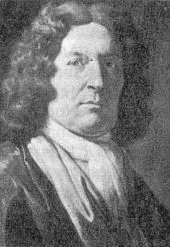
伯纳多·帕斯奎尼 Bernardo Pasquini
伯纳多·帕斯奎尼
B·Pasquini / B·帕斯奎尼RegionItaly
TypeSolo
ProfessionComposer
Artist Profile
意大利作曲家,键盘演奏家。他是介于弗雷斯科巴尔迪与D.斯卡拉蒂之间最重要的键盘音乐作曲家之一。出生于马萨。1650年左右搬往费拉拉居住,在当地担任管风琴师。后搬往罗马居住。1657年成为小谷圣母教堂的管风琴师。1667年开始为博尔盖塞家族服务。在罗马期间,他创作了大量键盘乐曲。同时他的多部歌剧也在罗马上演。1710年他在罗马去世。
Bernardo Pasquini (7 December 1637– 21 November 1710) was an Italian composer of operas, oratorios, cantatas and keyboard music. A renowned virtuoso keyboard player in his day, he was one of the most important Italian composers for harpsichord between Girolamo Frescobaldiand Domenico Scarlatti, having also made substantial contributions to the opera and oratorio.
Pasquini was born at Massa in Val di Nievole (today Massa e Cozzile), Grand Duchy of Tuscany. He was a pupil of Mariotto Bocciantini in Uzzano. Around 1650 he moved to Ferrara with his uncle Giovanni Pasquini. In 1654–55 he was organist of Accademia della Morte. Later he moved to Rome and in 1657 became organist of Santa Maria in Vallicella (Chiesa nuova). In November 1667 entered to the service ofPrince Borghese. In February 1664 he was appointed organist of the Basilica di Santa Maria Maggiore and Santa Maria in Aracoeli. As a composer and keyboard player, he collaborated to the music performances patronised by most famous patrons in Rome, such as cardinalsFlavio Chigi, Benedetto Pamphilj, Pietro Ottoboni, and Queen Christina of Sweden in whose honour his operas L'Alcasta (libretto by Giovanni Filippo Apolloni), and Il Lisimaco (libretto by Giacomo Sinibaldi) were performed respectively in 1673 and 1681.
Together with Arcangelo Corelli and Alessandro Scarlatti, in 1706 Pasquini became member of the Academy of Arcadia.
He composed numerous operas, all staged in Rome between 1672 and 1692, and partially replayed in several Italian theatres (Florence, Pisa, Naples, Ferrara, Perugia, Genoa, Rimini etc.).
Pasquini died at Rome, and was buried in the church of San Lorenzo in Lucina.
One of his harpsichord pieces was transcribed for orchestra by Ottorino Respighi for his suite Gli uccelli.
Operas
Oratorios
Pasquini composed around sixty cantatas, mainly for one voice and continuo, but also for two or three voices, with or without instruments, and continuo.
He celebrated the ubiquitous cuckoo in Toccata con lo Scherzo del Cucco, written in florid style in 1702. It is perhaps the best keyboard cuckoo piece in existence for it interestingly imitates the cuckoo's notes, which seems to have been a favourite device in early baroque music.
https://en.wikipedia.org/wiki/'>https://en.wikipedia.org/wiki/Bernardo Pasquini