
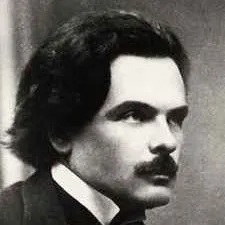
托伊沃库拉 Toivo Kuula
托伊沃库拉
T..Kuula / T..托伊沃库拉RegionFinland
TypeSolo
ProfessionComposer, Conductor
Artist Profile
英文简介
Born on July 7, 1883 in Alavus, Finland. A Finnish composer and conductor. Died on May 18, 1918 in Viipuri, Finland. (Nowadays Vyborg, Russia)
Toivo Kuula (1883-1918) studied the violin and music theory withMartin Wegeliusat the Helsinki Music Institute in 1900–03. Later he became Sibelius's first composition pupil. In 1908 he studied withMarco EnricoBossiin Italy, and in 1909 withHans Sittin Leipzig andMarcel Labeyin Paris.
His principal student works, theViolin Sonata(1907) and thePiano Trioperformed in 1908, attracted great attention as large-scale chamber works had only rarely been heard in Finland; Kuula was also perceived to be a young champion of Finnish-speaking music culture.
Kuula was director of music in Oulu (1910–11), in Helsinki (1912–15) and in Viipuri (1916–18). In 1914 he married the singerAlma Silventoinen, for whom he wrote most of his songs and with whom he made extensive concert tours. Toivo Kuula died tragically at the final stages of the Finnish Civil War.
Kuula's dark, impetuous, modally inclined Romanticism is mixed with influences absorbed from the new French music, in particular in the orchestration reminiscent of the French colours and the Impressionism of Debussy.
Kuula has become best known for his much-loved songs and for his arrangements of folk tunes from his native southern Ostrobothnia. He is also noteworthy as a choral composer, and his partsongs can be divided into three types: complex polyphonic songs; simpler songs; and light, rhythmically expressive, even humorous songs, including the folk-style Kanteletar settings.
Fennica Gehrman has published all the major works by Kuula such as the famousStabat Mater Op. 25. His works for the strings and for the voice have been published in extensive collections.
摘自:https://www.fennicagehrman.fi/composers-works/kuula-toivo/