
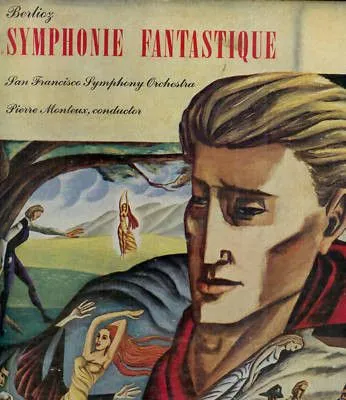
《柏辽兹《幻想交响曲,为管弦乐队而作的5个部分,一个艺术家生涯的插曲》 /蒙特 指挥 ,旧金山交响乐团 》
簡介
Symphonie fantastique
Symphonie fantastique: Épisode de la vie d'un artiste … en cinq parties(Fantastical Symphony: Episode in the Life of an Artist … in Five Sections)Op.14, is aprogram symphonywritten by the French composerHector Berliozin 1830. It is an important piece of the earlyRomanticperiod. The first performance was at theParis Conservatoireon 5 December 1830.Franz Lisztmade a piano transcription of the symphony in 1833 (S. 470).[1]
Leonard Bernsteindescribed the symphony as the first musical expedition intopsychedeliabecause of its hallucinatory and dream-like nature, and because history suggests Berlioz composed at least a portion of it under the influence ofopium. According to Bernstein, "Berlioz tells it like it is. You take a trip, you wind up screaming at your own funeral."[2][3]
In 1831, Berlioz wrote a lesser-known sequel to the work,Lélio, for actor, soloists, chorus, piano and orchestra.
Overview
Symphonie fantastiqueis a piece ofprogram musicthat tells the story of an artist gifted with a lively imagination who has poisoned himself withopiumin the depths of despair because of hopeless, unrequited love. Berlioz provided his own preface andprogram notesfor each movement of the work. They exist in two principal versions – one from 1845 in the first score of the work and the second from 1855.[4]From the revised preface and notes, it can be seen how Berlioz, later in his life, downplayed the programmatic aspect of the work.
In the first score from 1845, he writes:[4]
The composer's intention has been to develop various episodes in the life of an artist, in so far as they lend themselves to musical treatment. As the work cannot rely on the assistance of speech, the plan of the instrumental drama needs to be set out in advance. The following programme must therefore be considered as the spoken text of an opera, which serves to introduce musical movements and to motivate their character and expression.
George Clint's portrait of actressHarriett Smithson, the inspiration for the symphony
In the 1855 preface, a different outlook towards the work's programmatic undertones is established by Berlioz:[4]
The following programme should be distributed to the audience every time theSymphonie fantastiqueis performed dramatically and thus followed by themonodramaofLéliowhich concludes and completes the episode in the life of an artist. In this case the invisible orchestra is placed on the stage of a theatre behind the lowered curtain. If the symphony is performed on its own as a concert piece this arrangement is no longer necessary: one may even dispense with distributing the programme and keep only the title of the five movements. The author hopes that the symphony provides on its own sufficient musical interest independently of any dramatic intention.
Inspiration
After attending a performance of Shakespeare'sHamleton 11 September 1827, Berlioz fell in love with the Irish actressHarriet Smithsonwho had played the role ofOphelia. He sent her numerous love letters, all of which went unanswered. When she left Paris, they had still not met. Berlioz then wroteSymphonie fantastiqueas a way to express his unrequited love. Harriet did not attend the premiere in 1830, but she heard the work in 1832 and realized Berlioz's genius. The two finally met and were married on 3 October 1833. However, their marriage became increasingly bitter, and they eventually separated after several years of unhappiness.[5]