Anja Silja 安雅·希丽雅
安雅·希丽雅
A·Silja / A·希丽雅地區德国
類型个人
職業女高音
藝人資料
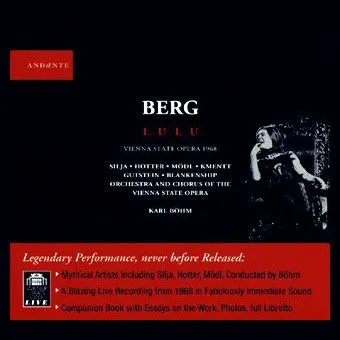
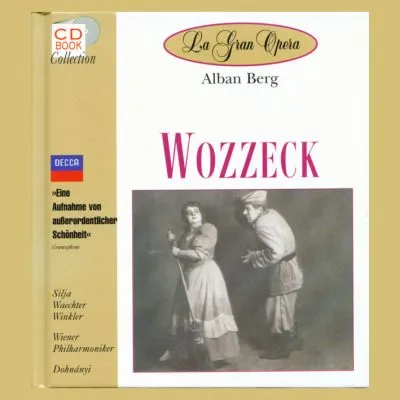
Silja began her operatic career at a very early age, with her grandfather, Egon Friedrich Maria Anders van Rijn, as her voice teacher. She sang Rosina in Rossini's The Barber of Seville at Braunschweig in 1956, following this with Micaëla inCarmen and Zerbinetta in Ariadne auf Naxos. The important part of her career began in 1959, when she sang the Queen of Night in Mozart's Die Zauberflöte at the Vienna State Opera (under Karl Böhm) and at the Aix-en-Provence Festival. France-Soir dubbed her "a second Callas." Other early roles included Leonora in Il trovatore, Santuzza in Cavalleria rusticana, the four heroines of Les contes d'Hoffmann, Konstanze in Die Entführung aus dem Serail, and Fiordiligi in Così fan tutte. Additional new roles in the 1960s were Sieglinde (Die Walküre), Ariadne, Jenny Smith (Aufstieg und Fall der Stadt Mahagonny), Lady Macbeth (Macbeth), Violetta Valéry (La traviata), Turandot (first Liù, then the title role), Lucy (The Telephone), Cassandre (Les troyens, opposite Jon Vickers) and Renata in The Fiery Angel. She was seen in Frankfurt, Toulouse, Paris, Turin, Naples, Stuttgart, Zurich, Barcelona, Geneva, The Netherlands, Budapest, London (Royal Festival Hall, thenCovent Garden), San Francisco (her American debut, in 1968, as Salome), and Chicago. That first Lady Macbeth, in 1967, was conducted by Christoph von Dohnányi, with whom she had a long relationship, including a marriage that produced three children. They divorced in the 1990s, during Dohnányi's tenure with the Cleveland Orchestra. Silja continued her career with appearances at Trieste, the Edinburgh Festival, the Salzburg Festival, Barcelona, Metropolitan Opera (Fidelio and Salome, 1972), Paris (Erwartung, under Sir Georg Solti), Berlin, Cologne (La fanciulla del West), Vienna (world premiere of Einem's Kabale und Liebe) and Brussels. Other new roles in this period were Emilia Marty in The Makropoulos Case, Leonora in La forza del destino, Médée, Die lustige Witwe, Carmen (staged by Jean-Pierre Ponnelle), La juive, Katya Kabanova, Tosca, Tatiana in Eugene Onegin, and Die Königin von Saba (conducted by Julius Rudel). In the 1980s, Silja added Lady Macbeth of the Mtsensk District (opposite Chester Ludgin), La Cubana, Regan in Lear, Prinz Orlofsky in Die Fledermaus (with Karita Mattila and Judith Blegen, staged by Maurice Béjart), the Kostelnička in Jenůfa (at the Glyndebourne Festival), Grete in Der ferne Klang, and the Nurse in Die Frau ohne Schatten (opposite Dame Gwyneth Jones as Barak's Wife). Silja made her debut as a stage director in 1990 at Brussels with Lohengrin. She then assumed the roles of Agave in The Bassarids (at Carnegie Hall), Ortrud inLohengrin (in Robert Wilson's production), Herodias in Salome, Anna I in Die sieben Todsünden, Klytämnestra in Elektra, Jocasta in Œdipus rex (opposite René Kollo), Mother Marie of the Incarnation in Dialogues des Carmélites, Pierrot lunaire, Judith in Bluebeard's Castle, Countess Geschwitz in Lulu, Madame de Croissy in Dialogues des Carmélites (her Teatro alla Scala debut, under Riccardo Muti, 2004; three years later she sang in Jenůfa there), La voix humaine, Míla's Mother inOsud, the Comtesse in Pique-dame, and the Witch in Hänsel und Gretel. She was first heard in Cleveland, Boston, Madrid, Leipzig, Prague, and Rio de Janeiro in these recent seasons. Her 2001 recording of Jenůfa, from Covent Garden, won a Grammy Award. Mme Silja now resides in Paris, having purchased the former home of the conductor André Cluytens. In January 2013, she sang the role of the Grandmother ("Babulenka") in The Gambler, in Frankfurt, in the production by Harry Kupfer.
<a href="<a href=" https:="" en.wikipedia.org="" wiki="" '="">https://en.wikipedia.org/wiki/'>https://en.wikipedia.org/wiki/Anja Silja