Gian Carlo Menotti 吉安·卡洛·梅诺蒂
吉安·卡洛·梅诺蒂
G·C·Menotti / G·C·梅诺蒂地區意大利
類型个人
職業作曲
藝人資料
Gian Carlo Menotti(pronounced[dʒan ˈkarlo meˈnɔtːi]; July 7, 1911 – February 1, 2007) was anItalian-Americancomposer andlibrettist. Although he often referred to himself as an American composer, he kept his Italian citizenship.[1]He wrote the classicChristmas operaAmahl and the Night Visitors, along with over two dozen other operas intended to appeal to popular taste.
He won aPulitzer Prizetwice, forThe Consul(1950) and forThe Saint of Bleecker Street(1955). He founded the notedFestival dei Due Mondi(Festival of the Two Worlds) inSpoletoin 1958 and its American counterpart,Spoleto Festival USA, in 1977. In 1986 he commenced aMelbourne Spoleto Festivalin Australia, but he withdrew after three years.
Menotti died on February 1, 2007, at the age of 95 in a hospital inMonte Carlo, Monaco, where he had a home. He was buried in East Lothian, Scotland.
Early life and education
Born inCadegliano-Viconago,Italy, nearLake Maggioreand the Swiss border, Menotti was the sixth of eight children of Alfonso and Ines Menotti,[2]his father being a coffee merchant. Menotti began writing songs when he was seven years old, and at eleven wrote both the libretto and music for his first opera,The Death of Pierrot. He began his formal musical training at theMilan Conservatoryin 1923.
Following her husband's death, Ines Menotti went toColombiain a futile attempt to salvage the family's coffee business. She took Gian Carlo with her, and in 1928 she enrolled him atPhiladelphia'sCurtis Institute of Music, but she returned to Italy. Armed with a letter of introduction from the wife ofArturo Toscanini, Gian Carlo studied composition at Curtis underRosario Scalero.[3]Fellow students at Curtis includedLeonard BernsteinandSamuel Barber.
Barber became Menotti's partner in life and in work, with Menotti crafting the libretto for Barber's most famous opera,Vanessa, which premiered at theMetropolitan Operain 1958. As a student, Menotti spent much of his time with the Barber family inWest Chester, Pennsylvania. After graduation, the two men bought a house together inMount Kisco, New York, which they named "Capricorn" and shared for over forty years.
In 1974, Menotti adoptedFrancis "Chip" Phelan, an American actor and figure skater[5][6]he had known since the early 1960s. In the same year, Menotti, persuaded by the goodacousticsof the main room,[7][8]purchased the ancestral home of theMarquess of Tweeddale,Yester House, in the village ofGifford, East Lothian, inScotland. While there, he jokingly referred to himself as "Mr McNotti".
Career as composer[edit]
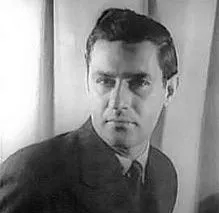
Gian Carlo Menotti, photographed byCarl Van Vechtenin 1944 .
It was at Curtis that Menotti wrote his first mature opera,Amelia Goes to the Ball(Amelia al Ballo), to his own Italian text.The Island God(which he suppressed, though its libretto was printed by theMetropolitan Operaand can be found in many libraries) andThe Last Savagewere the only other operas he wrote in Italian, the rest being in English. LikeWagner, he wrote the libretti of all his operas. His most successful works were composed in the 1940s and 1950s.
Menotti also taught at the Curtis Institute of Music. Music criticJoel Honigserved as his personal secretary during the late 1950s.
Menotti wrote the libretti for two ofSamuel Barber's operas,VanessaandA Hand of Bridge, as well as revising the libretto forAntony and Cleopatra.
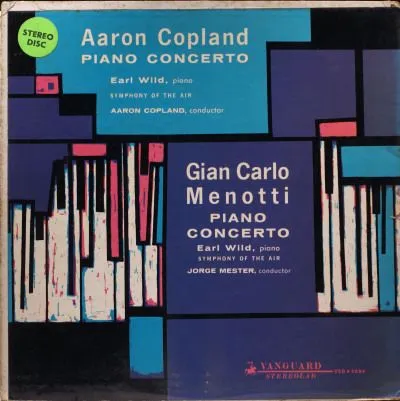
Amelia al Ballois the only one of Menotti's operas still to be published in its original or perhaps "complementary" Italian libretto (alongside the English) (see Ricordi editions 1937, 1976 and recent): it is an example of the traditional romantic Italianate style, with a nod to (but not an imitation of)Pucciniand, notably,Mascagni(whose final opera,Nerone, had premiered in 1935). The success ofAmeliapromptedNBCtocommissionan opera specifically for radio,The Old Maid and the Thief, one of the first such works. Following this, he wrote a ballet,Sebastian(1944), and a piano concerto (1945) before returning to opera withThe MediumandThe Telephone, or L'Amour à trois.
His first full-length opera,The Consul, which premiered in 1950, won both thePulitzer Prize for Musicand theNew York Drama Critics' Circle Awardfor Musical Play of the Year (the latter in 1954). American soprano Patricia Neway starred as the tormented protagonist Magda Sorel, for which she won the Donaldson Award for Best Actress in a Musical in 1950. Menotti apparently intended to give a role to a then-unknownMaria Callas, but the producer would not have it.[9]In 1951, Menotti wrote his Christmas operaAmahl and the Night Visitorsfor NBC. It was the first opera ever written for television in America,[10]and first aired on Christmas Eve, 1951. The opera was such a success that the broadcasting ofAmahl and the Night Visitorsbecame an annual Christmas tradition. It remains Menotti's most popular work to this day. Menotti won a second Pulitzer Prize for his operaThe Saint of Bleecker Streetin 1955. WithGoya, Menotti reverted to a traditionalGiovane ScuolaItalian style.
Menotti also wrote several ballets and numerous choral works. Notable among these is hiscantataThe Death of the Bishop of Brindisi, written in 1963, and the cantataLandscapes and Remembrancesin 1976 – a descriptive work of Menotti's memories of America written for theUnited States Bicentennial. Also worthy of note is a small Mass commissioned by theRoman Catholic Archdiocese of Baltimore–Mass for the Contemporary English Liturgy. He also wrote aviolin concerto, symphonies, and a stage play,The Leper. It was in the field of opera, however, that he made his most notable contributions to American cultural life.
Spoleto Festivals
Menotti founded theFestival of Two WorldsinSpoleto, Italy in 1958, and its companion festival, Spoleto Festival USA, inCharleston, South Carolinain 1977. For three weeks each summer, Spoleto is visited by nearly a half-million people.These festivals were intended to bring opera to a popular audience and helped launch the careers of such artists as singerShirley Verrettand choreographersPaul TaylorandTwyla Tharp.
In June and July 2007 the Festival of Two Worlds, which Menotti founded and oversaw until his death, dedicated the 50th Anniversary of the Festival to his memory, organised by his son Francis. Menotti works performed during the festival includedMaria Golovin,Landscapes and Remembrances,Missa O Pulchritudo, andThe Unicorn, the Gorgon, and the Manticore.
Spoleto in Melbourne
He left Spoleto USA in 1993 to take the helm of theRome Opera, and in 1986, he extended the concept to a Spoleto Festival inMelbourne, Australia. Menotti was the artistic director during the period of 1986–88, but after three festivals there, he decided to withdraw – and took the naming rights with him. However, while he was in Melbourne, he put the finishing touches to his operaGoya. The Melbourne Spoleto Festival has now become theMelbourne International Arts Festival.[13]
Honors
In 1984 Menotti was awarded aKennedy Center Honorfor achievement in the arts, and in 1991 he was chosenMusical America's "Musician of the Year". In addition to composing operas to his own texts, on his chosen subject matter, Menotti directed most productions of his work.
In 1997, he was awarded theBrock Commissionfrom the American Choral Directors Association.
In 2010, the main theatre in Spoleto was renamed as theTeatro Nuovo Gian Carlo Menottito honour his role as creator and spirit of the festival.