迈拉·赫斯 (Myra Hess)
迈拉·赫斯
M·Hess / M·赫斯類型个人
職業钢琴
藝人資料
迈拉·赫斯(Myra Hess,1890--1965)出生在伦敦北部的汉普斯特德,5岁开始学琴,后因得到奖学金而上了伦敦市政厅音乐学校,师从朱利恩·伯斯卡尔和奥兰多·摩根。她从小就崭露头角,开始其一生的辉煌事业并名扬天下(特别是在英国和美国)。 几乎终生与疾病相伴的哈丝基尔,1895年出生于罗马尼亚首都布加勒斯特,4岁丧父后被母亲带到维也纳。她自幼就表露出卓越的音乐天赋,6岁开始学钢琴,7岁时又随理查罗伯特学小提琴。1905年,年仅10岁的哈丝基尔在巴黎举行了首次独奏会,并在翌年被当时任巴黎音乐学院院长的作曲家福列接收进该校学习。1907年又进入科尔托开设的大师班,科尔托非常欣赏哈丝基尔的艺术天赋,并准备了大批曲目供她学习,不料哈丝基尔只用了短短的几个月便全部弹好了。1910年,15岁的哈丝基尔离开巴黎音乐学院,开始以职业钢琴家身份在法国、罗马尼亚、意大利与瑞士等地进行巡回演出。她所到之处皆获得好评,布索尼、帕德列夫斯基等当时的琴坛名流对她也大加赞赏。可惜天意弄人,1913年正当花样年华的哈丝基尔春风得意之时却患了硬化疾,使她在四年的时间里要常常卧床休息不能弹琴。母亲过世后她还要负担起照顾妹妹的生活担子,因此不得不以教琴为生,直到1921年才恢复公开演出。但孱弱的身体已令她难以驾驭那些需要消耗大量体能的作品,于是她逐渐将精力集中到诸如莫扎特等不太耗体能的曲目上来,并向室内乐方向发展,那时著名小提琴家乔治·埃内斯库、伊萨依和大提琴家卡萨尔斯都曾是她的好搭档。
摘自:http://www.xiami.com/artist/profile-98870?spm=a1z1s.6659509.6856553.1.PHFENg
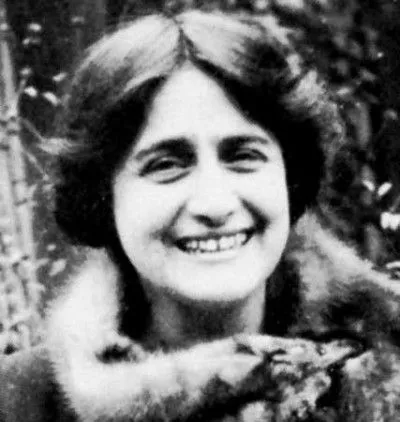
Myra Hess, DBE (25 February 1890 – 25 November 1965) was a British pianist.
Julia Myra Hess was born on 25 February 1890 to a Jewish family in Kilburn, London. The youngest of four children, she began playing the piano at an early age, starting lessons when she was five.. Two years later, she entered the Guildhall School of Music, where she graduated as winner of the Gold Medal.
She studied at the Royal Academy of Music under Tobias Matthay. Her debut came in 1907 when she played Beethoven's Piano Concerto No. 4 with Sir Thomas Beecham conducting. She went on to tour through Britain, the Netherlands and France. Upon her American debut (New York City, 24 January 1922) she became a prime favourite in the United States, not only as a soloist, but also as an ensemble player. She also has a link to jazz, having given lessons in the 1920s to Elizabeth Ivy Brubeck, mother of Dave Brubeck.
Hess garnered greater fame during the Second World War when, with all concert halls blacked out at night to avoid being targets of German bombers, she organised what would turn out to be almost 2,000 lunchtime concerts spanning a period of six years, starting during the London Blitz. The concerts were held at the National Gallery, in Trafalgar Square; Hess herself played in 150 of them. For this contribution to maintaining the morale of the populace of London, King George VI created her a Dame Commander of the Order of the British Empire (DBE) in 1941. (She had previously been created a CBE in 1936.) She makes a brief appearance performing at one of her lunchtime concerts in the 1942 wartime documentary Listen to Britain (directed by Humphrey Jennings and Stewart McAllister).
Hess began her lunchtime concerts a few weeks after the start of the Second World War. They were presented on Monday to Friday, for six-and-a-half years without fail. If London was being bombed, the concert was moved to a smaller, safer room. Every artist was paid five guineas no matter who they were. In all, Hess presented 1,968 concerts seen by 824,152 people. Hess's lunchtime concerts influenced the formation of the City Music Society.
In 1946, Arturo Toscanini invited Hess to perform with the NBC Symphony Orchestra in New York City. According to Toscanini's biographer, Mortimer Frank, after Hess and the conductor had failed to agree on tempos for Beethoven's Fifth Piano Concerto, they decided instead to perform Beethoven's Third. The 24 November 1946 broadcast concert was preserved on transcription discs and later issued on CD by Naxos Records.
Hess was most renowned for her interpretations of the works of Mozart, Beethoven and Schumann, but had a wide repertoire, ranging from Domenico Scarlatti to contemporary works. She gave the premiere of Howard Ferguson's Piano Sonata and his Piano Concerto. She also played a good amount of chamber music and performed in a piano duo with Irene Scharrer. She promoted public awareness of the piano duet and two-piano works of Schubert.
In 1926 and 1934 she famously arranged, for both solo piano and for two pianos the chorale, Wohl mir, daß ich Jesum habe from Bach's Cantata Herz und Mund und Tat und Leben, BWV 147. This is Movement 6 of the cantata; the music is the same for Movement 10, Jesus bleibet meine Freude. Her arrangement was published under the title Jesu, Joy of Man's Desiring, which is a translation of neither of these German titles but, roughly, of the unrelated work Jesu, meiner Seelen Wonne by Martin Janus (or Jahn). The chorale melody, written in 1641, is by violinist Johann Schop, not Bach who composed its setting.
Her protégés included Clive Lythgoe and Richard and John Contiguglia and Leah (Celine) Benatar (Leah Labos) between 1941 and 1944, a noted linguist, cryptanalyst and Egyptologist. She was a teacher of Stephen Kovacevich (then known as Stephen Bishop).
摘自:<a href="<a href=" https:="" en.wikipedia.org="" wiki="" '="">https://en.wikipedia.org/wiki/'>https://en.wikipedia.org/wiki/Myra Hess