布鲁斯·特纳 (Bruce Turner)
布鲁斯·特纳
B·Turner / B·特纳類型个人
職業萨克斯、单簧管
藝人資料
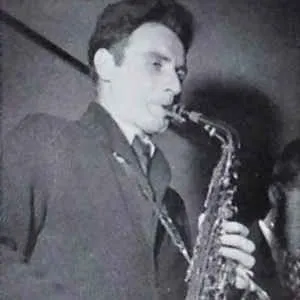
Bruce Turner(5 July 1922 – 28 November 1993) was anEnglishsaxophonist,clarinetist, andbandleader.
BornBruce TurnerinSaltburn, and educated atDulwich College, he learned to play theclarinetas a schoolboy and began playing alto sax while serving in theRoyal Air Forcein 1943 duringWorld War II. He played withFreddy Randallfrom 1948–53, and worked on theQueen Maryin a dance band and in a quartet withDill JonesandPeter Ind. He briefly studied underLee KonitzinNew York Cityin 1950.
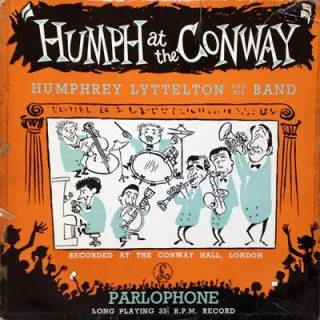
His first period with Humphrey Lyttelton ran from 1953 to 1957, but began inauspiciously. At a concert performed in Birmingham's Town Hall, Lyttelton's more literal traditionalist fans displayed a banner instructing "Go Home Dirty Bopper!" After leaving Lyttelton he led his own Jump Band from 1957–65, which was featured in the 1961 film Living Jazz. Turner arranged the music for this film as well. On 16 and 17 February 1961, Turner and his band recorded the LP Jumpin' At The NFT (National Film Theatre) which was issued later that year, on Doug Dobell's 77 Records label, to coincide with the film's release. In January 1963, the British music magazine, NMEreported that the biggest trad jazz event to be staged in Britain had taken place at Alexandra Palace. The event included George Melly, Diz Disley, Acker Bilk, Chris Barber, Kenny Ball, Ken Colyer, Monty Sunshine, Bob Wallis, Alex Welsh, Mick Mulligan and Turner.
He returned to duty under Randall from 1964–66, and played with Don Byas (1966) and Acker Bilk (1966-70). He continued to work with Lyttelton and Ind in the 1960s, 1970s and 1980s, and played with the Jump Band intermittently; he also worked with Wally Fawkes, John Chilton, Stan Greig (1975–76), Alex Welsh, and Dave Green. He led his own small ensembles in the 1990s, up until his death in 1993 in Newport Pagnell. He was noted for his very quiet voice - Humphrey Lyttelton claimed that, on a clear day, it could be heard two inches away - and for innumerable eccentricities, including his own private language in which everybody, regardless of age or gender, was called Dad", phrases would be repeated and he made extensive use of outdated slang expressions drawn from comics of the 1930s such as "Some fun, I'd say!"
Turner's autobiography Hot Air, Cool Music, published by Quartet Books appeared in 1984. He also wrote a column on jazz for the Daily Worker. Some of Turner's albums have been reissued by Lake Records.
From:<a href="<a href=" https:="" en.wikipedia.org="" wiki="" '="">https://en.wikipedia.org/wiki/'>https://en.wikipedia.org/wiki/Bruce Turner