Mischa Elman 米沙·艾尔曼
米沙·艾尔曼
M·Elman / M·艾尔曼地區白俄罗斯
類型个人
職業小提琴
藝人資料
简介Biography
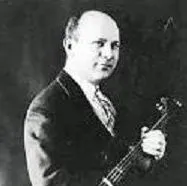
米夏·艾尔曼(1891年-1967年),著名俄罗斯犹太小提琴家,以琴声优美动人而闻名于世。
生平
艾尔曼出身在俄罗斯基辅市郊托尔瑙村。父亲是一位犹太校长,擅长演奏小提琴。艾尔曼4岁时,父亲教他小提琴,进步神速,因此父母将他送入敖德萨的音乐学校,师从亚历山大·菲德尔曼。有一天著名小提琴大师莱奥波德·奥尔来校访问,听见艾尔曼的琴声,印象深刻,立即安排他进入圣彼得堡音乐院学习。他是奥尔的得意门生。1904你奥尔带他到柏林登台演奏,大受欢迎。1905年在伦敦皇后音乐厅首演,受到热烈欢迎。1908年12月,17岁的艾尔曼在纽约首次登台演奏,在俄罗斯交响乐团伴奏下,演奏柴可夫斯基小提琴协奏曲。一周后在卡内基音乐厅演出。
1917年艾尔曼居家迁居美国,1923年入籍成为美国公民。
摘自:https://www.sin80.com/artist/mischa-elman
Mischa (Mikhail Saulovich) Elman(Russian:Михаил Саулович Эльман; January 20, 1891– April 5, 1967) was a Ukrainian-bornJewish-American violinist, famed for his passionate style, beautiful tone, and impeccable artistry and musicality.
Moses or Moishe Elman was born in the small town of Talnoye (now known as Talne) in the Kiev Governorate, Ukraine, then in Russian Empire.
His grandfather was a klezmer, or Jewish folk, musician, who also played the violin. It became apparent when Mischa was very young that he had perfect pitch, but his father hesitated about a career as a musician, since musicians were not very high on the social scale. He finally gave in, and gave Mischa a miniature violin, on which he soon learned several tunes by himself. Soon thereafter, he was taken to Odessa, where he studied at the Imperial Academy of Music. Pablo de Sarasate gave him a recommendation, stating that he could become one of the great talents of Europe. He auditioned for Leopold Auerat the age of 11, playing the Wieniawski Concerto No. 2 and 24th Caprice by Paganini. Auer was so impressed that he had Elman admitted to the St. Petersburg Conservatory.
Elman was still only a boy when Auer arranged for him to play with the famous Colonne Orchestra during their visit to Pavlovsk. Knowing Édouard Colonne's hatred of child prodigies, Auer did not tell him Elman's age when making the arrangements, and not until the famous conductor saw young Mischa waiting to go on the platform did he realize that he had engaged a child. He was furious, and flatly refused to continue with the programme. Frantic attempts were made to assure him that Elman had the recommendation of Auer himself and was well capable of doing justice to the music, but Colonne was adamant, "I have never yet played with a child, and I refuse to start now," he retorted. So Elman had to play with piano accompaniment while conductor and orchestra sat listening." According to Elman ."I was eleven at the time. When Colonne saw me, violin in hand, ready to step on the stage, he drew himself up and said with emphasis: 'I play with a prodigy! Never!' Nothing could move him, and I had to play to a piano accompaniment. After he had heard me play, though, he came over to me and said: 'The best apology I can make for what I said is to ask you to do me the honor of playing with the Orchestre Colonne in Paris.' He was as good as his word. Four months later I went to Paris and played the Mendelssohn concerto for him with great success."
In 1903, Elman began to play concerts in the homes of wealthy patrons of the arts, and he made his Berlin debut in 1904, creating a great sensation. His London debut in 1905 included the British premiere of Alexander Glazunov's Violin Concerto in A minor. He played in Carnegie Hall in 1908, making a great impression on his American audience. He toured Australia in 1914.
In 1917, he was elected to honorary membership in Phi Mu Alpha Sinfonia music fraternity. He sometimes performed in as many as 107 concerts in a 29-week season. The Elman family moved to the United States, and Mischa became a citizen in 1923. In 1943, he gave the premiere of Bohuslav Martinů's second concerto, which was written for him. Sales of his records exceeded two million.
A frequent accompanist in chamber works during Elman's early American career was Emmanuel Bay, who was born on exactly the same day as Elman, January 20, 1891. But Elman also performed and recorded with Josef Bonime, Carroll Hollister, Wolfgang Rosé and others, and from 1950, his steady accompanist and recital partner was Joseph Seiger. He also briefly performed and made recordings with the Mischa Elman String Quartet.
Elman died in his apartment on April 5, 1967 in Manhattan, New York City, a few hours after completing a rehearsal with Seiger. He is buried in the Westchester Hills Cemetery in Hastings-on-Hudson, New York.
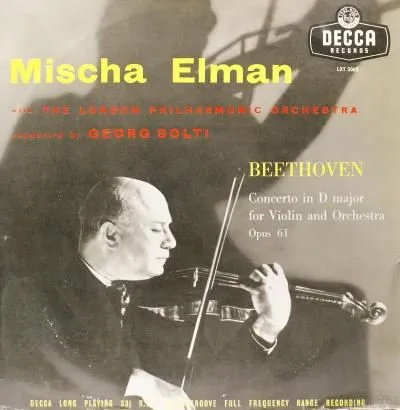
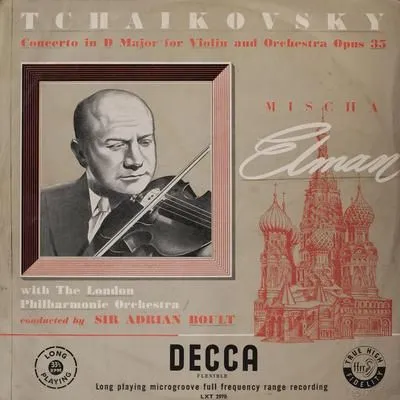
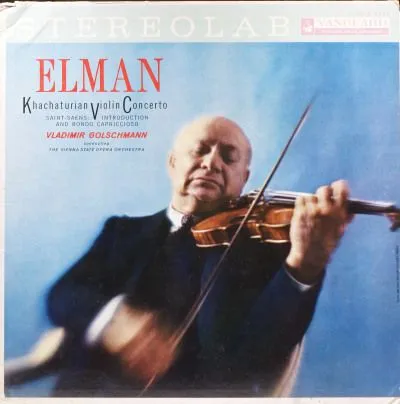
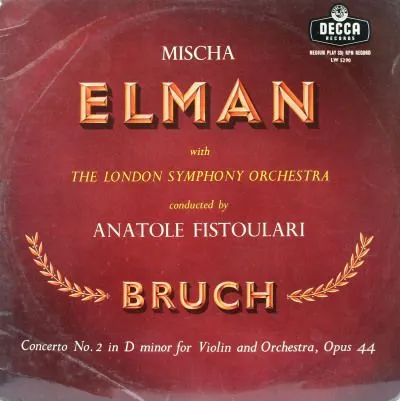
Elman's recorded legacy spanned more than six decades. His first 78 rpm discs were made for Pathe, in Paris, in 1906; his final LP sessions were for Vanguard, in New York, in 1967. The greater part of his discography was recorded for the Victor Talking Machine Company/RCA Victor, with whom he had an exclusive relationship through 1950. Thereafter, he recorded for Decca/London and later the Vanguard label. Regrettably, Elman's discs have never been reissued on CD in a systematic manner (whereas almost every recording which his contemporary Jascha Heifetz made has been readily available on CD for years).