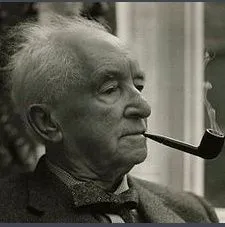
William Havergal Brian 威廉·哈维格·布莱恩
威廉·哈维格·布莱恩
W·H·Brian / W·H·布莱恩地區英国
類型个人
職業作曲
藝人資料
二十世纪英国作曲家。出身于英国斯塔福德郡的特伦特河畔斯托克德雷斯顿区,那里是典型的英国工人阶层社区。布莱恩只念完小学后便开始踏足社会工作,当时他只有12岁。然而他却发觉没有合适的工作,凭着他曾经在当地教堂担任管风琴手的经历,他开始自学音乐理论。1895年他在参加一场埃尔加合唱作品的排练时,有机会接触到了理查施特劳斯的作品,理查施特劳斯的风格令布莱恩为之倾慕,而这次机会亦令他认识了毕生的好友格兰维尔·班托克。1907年,他的“第1英国组曲”受到指挥家伍德的注意,并有机会于逍遥音乐会中演出,这次演出令布莱恩一夜成名,很快便得到出版商答应为他发行乐谱。不过基于他害羞、缺乏自信及不善交际的性格,他的成功并不长久,纵然之后得到一位富商长期的经济援助,他始终不能保持名气。第一次世界大战期间,布莱恩移居伦敦,但他的音乐成就仍然停滞不前。除了靠富商的资助外,他还得以其他的工作维生,生活非常艰苦。1920年代末,他获聘于音乐期刊担任助理编辑,令他对近代的英国音乐有进一步的体会和了解,但这些经验仍不足以让他的音乐仕途有所起色。1946年那位富商去世,布莱恩的生活更加捉襟见肘。终于在1950年初,刚成为BBC音乐监制的罗伯特·辛普森发现了布莱恩的音乐。他先为布莱恩录制了“第8交响曲”的录音,然后在往后的20多年间,不断在电台中播放他的作品,自此,布莱恩开始为人熟知。1958年,已年届82岁的布莱恩由伦敦移居至西塞克萨斯的滨海索尔海姆,这里成为他晚年的定居地。往后的10年间,他从“第13交响曲”一口气写到了“第32交响曲”,直到1972年在当地去世。
Havergal Brian(bornWilliam Brian; 29 January 1876– 28 November 1972) was a British classical composer.
Brian was extremely prolific, his body of work including thirty two symphonies, many of them extremely long and ambitious works for massive orchestral forces. Stylistically, he wrote in a late romantic idiom, exhibiting the influence of Gustav Mahler in his ambitious orchestration and progressive tonality.
Brian enjoyed a period of significant popularity earlier in his career and rediscovery in the 1950s, though his music fell out of favour and since the 1970s he is very rarely studied and performed. Still, he continued to be extremely productive late into his career, composing large works even into his nineties, many of which remain unperformed. Today, he is often remembered for his First Symphony which calls for the largest orchestral force demanded by any conventionally structured concert work.
William Brian (he adopted the name "Havergal" from a local family of hymn-writers) was born in Dresden, a district of Stoke-on-Trent, and was one of a very small number of composers to originate from the English working class. After attending an elementary school he had difficulty finding any congenial work, and taught himself the rudiments of music.[1] For a time he was organist[2] of Odd Rode Church just across the border in Cheshire. In 1895, he heard a choir rehearsing Elgar's King Olaf, attended the first performance and became a fervent enthusiast of the new music being produced by Richard Strauss and the British composers of the day. Through attending music festivals he made the lifelong friendship of his near-contemporary composer Granville Bantock(1868–1946).
In 1907 his first English Suite attracted the attention of Henry J. Wood, who performed it at the London Proms. It was an overnight success and Brian obtained a publisher and performances for his next few orchestral works. Why he never succeeded in maintaining his success is a matter for debate, but it was probably due to his shyness with strangers and lack of confidence on public occasions. Whatever it was, the offers of performance soon dried up.
In 1898, Brian married Isabel Priestley, by whom he had five children. One of his sons was named Sterndale after the English composer Sir William Sterndale Bennett. At this point (1907) a development unusual in British 20th century musical history transformed Brian's life; whether for better or for worse has never been decided. He was offered a yearly income of £500 (then a respectable lower-middle-class salary) by a local wealthy businessman, Herbert Minton Robinson, to enable him to devote all his time to composition. It seems Robinson expected Brian soon to become successful and financially independent on the strength of his compositions. This never happened. For a while Brian worked on a number of ambitious large-scale choral and orchestral works, but felt no urgency to finish them, and began to indulge in hitherto-undreamt-of pleasures, such as expensive foods and a trip to Italy.
Arguments over the money and an affair with a young servant, Hilda Mary Hayward, led to the collapse of his first marriage in 1913. Brian fled to London and, although Robinson deeply disapproved of the incident, he continued to provide Brian with money until his own death, though most of the allowance went to Brian's estranged wife. The affair with Hilda turned into a lifelong relationship: Brian and she began living together as man and wife, and after Isabel's death in 1933 they were married. Hilda had already borne him another five children. In London, Brian began composing copiously, to alleviate the fact of living in conditions of the most basic poverty. On the outbreak of World War I he volunteered for the Honourable Artillery Company but saw no service before he was invalided out with a hand injury. He subsequently worked at the Audit Office of the Canadian Expeditionary Forceuntil December 1915. The family then moved to Erdington, near Birmingham, Warwickshire, until May 1919 and then spent several years in various locations in Sussex. Brian eventually obtained work of a musical kind, copying and arranging, and writing for the journal The British Bandsman. In 1927, he became assistant editor of the journal Musical Opinion and moved back to London. In 1940 he retired, and from then on devoted himself to composition, living firstly in London, and then in Shoreham-by-Sea, Sussex.
His brief war service gave him the material for his first opera The Tigers. In the 1920s he turned to composing symphonies, though he had written more than ten before one of them was first performed in the early 1950s. This was due to his discovery by Robert Simpson, himself a significant composer and BBC Music Producer, who asked Sir Adrian Boult to programme the Eighth Symphony in 1954. From then on Brian composed another twenty-two symphonies, many of the later ones short, single or two-movement works, and several other pieces.
In 1961, Brian's largest surviving work, the Gothic Symphony, which had been written between 1919 and 1927, was first performed at Westminster Central Hall, in a partly amateur performance conducted by Bryan Fairfax, and in 1966 the first fully professional performance was given at the Royal Albert Hall conducted by Boult. The latter performance was broadcast live and many people heard their first music of Brian that evening. This encouraged considerable interest, and by his death six years later several of his works had been performed and the first commercial recordings had begun to appear. For a few years after Brian's death, while Simpson still had influence at the BBC, there was a revival of interest with a number of recordings and performances; two biographies and a three-volume study of his symphonies appeared. The reputation of his music has always been restricted to enthusiasts and it has never achieved great popularity.
Only one of the great international virtuoso conductors showed any interest in Brian's music. Leopold Stokowski heard the Sinfonia Tragica and let it be known that he would like to perform a Brian work. The upshot was the world premiere in 1973 of the 28th Symphony, in a BBC broadcast produced by Robert Simpson in Maida Vale Studio 1, and played by the New Philharmonia Orchestra. Anthony Payne in his Daily Telegraph review wrote: "It was fascinating to contemplate the uniqueness of the event – a 91-year-old conductor learning a new work by a 91-year-old composer."[citation needed]
Brian's music owes much to Wagner, Bruckner, Elgar, Strauss, Mahler and Bach. Like Bach and Bruckner, Brian was an organist, and the organ repertoire influenced his musical habits (and the organ appears in several of his symphonies). Other sources of influence are brass and military bands (Brian’s music is always very brassy and his music never strays far from the march, either slow and solemn, or fast and violent), and late Victorian street music. Brian's music often includes a violin solo, like Vaughan Williams's music, but whereas with Vaughan Williams the solo violin writing is long, sustained and eloquent and usually sets the lyric seal to the music, with Brian the violin solos are often poignant and brief and swept aside by the turbulent currents of the music.
However, as with the music of Robert Simpson, Brian's great champion, in certain passages the music does suddenly verge on the pastoral.
The only music that Brian's could reasonably be mistaken for is some of the work of Arnold Bax, particularly Bax's violent early symphonies (1 and 2). However, while Bax's music sounds on first hearing more eloquent and connected, and more lyrical, some assert that Brian's music has a greater flow and, despite its apparent fragmentary structure, a greater symphonic cohesion.[citation needed]
Brian's music has several recognisable hallmarks: the liking of extreme dotted rhythms, deep brass notes, and various uncharacteristic harp, piano and percussion timbres, and other sounds (and textures) than no-one else has conjured from the orchestra. Also typical are moments of stillness, such as the slow harp arpeggio that is heard near the beginning and ending of the Eighth Symphony. But its most notable characteristics is its restlessness: rarely does one mood persist for long before it is contrasted, often abruptly, with another. Even in Brian’s slow movements, lyrical meditation does not often structure the music for long before restless thoughts intrude. Brian’s music is basically always tonal though capable of a great sense of violence. Sometimes, for example at the end of the 3rd Symphony, Brian seems to be celebrating violence and the brute power of the music, but on repeated listening his music seems wiser than this – Brian seems to be enjoying making us think his music worships brutality, although its composer does not. This is his comment on the world of the 1930s, racing towards world war.
However fragmentary Brian’s music is, it is never directionless; he maintains strong symphonic cohesion by long-term tonal processes (similar to Carl Nielsen's "progressive tonality", where the music is aiming towards a key, rather than being in a home key and returning to it). Although the fragmentary nature of his music militates against classical thematic unity, he often employs structural blocks of sound, where similar rhythms and thematic material allude to previous passages (as opposed to classical statement and recapitulation).
Brian’s symphonies start off with the colossal Gothic Symphony, and most of the early ones are large scale. He usually alludes to the classical four-movement structure of the symphony, even in single-movement works. As he progressed through his life his symphonies become shorter and more compact, and often sound Haydnesque, though the orchestra they employ is usually still large. The Gothic Symphony lasts for nearly two hours, the last symphony of all, No. 32, barely twenty minutes, and yet it is no less substantial. This symphony is an extremely compressed contrapuntal unfolding of ideas that owes as much to Bach as to Romanticism, and includes the classical four movements – the finale is reminiscent of the last movement of Mozart's Symphony No. 41.[citation needed]
In 1997, Brian's 1951 opera in eight scenes The Cenci, based on the 1819 play by Percy Bysshe Shelley, was premiered in a concert performance by the Millennium Sinfonia, conducted by James Kelleher, at the Queen Elizabeth Hall, London.[3]
These lists follow the Havergal Brian Society's Extant Works (ordered by type)