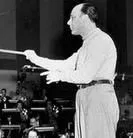
强尼·格林 (Johnny Green)
强尼·格林
J·Green / J·格林地區美国
類型个人
職業作曲、指挥
藝人資料
John Green (10 October 1908 – 15 May 1989) was an American songwriter, composer, musical arranger, andconductor. He was given the nickname "Beulah" by colleague Conrad Salinger. His most famous song was one of his earliest, "Body and Soul". Green won four Academy Awards for his film scores and a fifth for producing a short musical film, and he was inducted into the Songwriters Hall of Fame in 1972. John Waldo Green was born in New York City, the son of musical parents. He attended Horace Mann School and the New York Military Academy, and was accepted by Harvard at the age of 15, entering the University in 1924. His musical tutors were Herman Wasserman, Ignace Hilsberg and Walter Spalding. Between semesters, bandleader Guy Lombardo heard his Harvard Gold Coast Orchestra and hired him to create dance arrangements for his nationally famous orchestra. His first song hit, Coquette(1928), was written for Lombardo (with Carmen Lombardo, Guy's brother, and lyricist Gus Kahn). Green was educated in music,history, economics, and government. His instruments were the piano and the trombone, although he abandoned the latter after college. His father compelled him to take a job as a stockbroker. Disliking the job, and encouraged by his wife, the former Carol Faulk (to whom he dedicated "I'm Yours"), he left Wall Street to pursue a musical career. Green wrote a number of songs which have become jazz standards, including "Out of Nowhere" and "Body and Soul". He wrote the scores for various films and TV programs. His earliest songs appeared with the billing "John W. Green," a styling he reverted to in the 1960s. After that anyone addressing "Johnny" was put right with the statement, "You can call me John – or you can call me Maestro!" At the beginning of his musical career, he arranged for dance orchestras, most notably Jean Goldkette on NBC. He was accompanist/arranger to musicians such asJames Melton, Libby Holman and Ethel Merman. It was while writing material for Gertrude Lawrence in 1930 that he composed "Body and Soul", the first recording of which was made by Jack Hylton & His Orchestra eleven days before the song was copyrighted. Between 1930 and 1933, Green was the arranger and conductor for Paramount Pictures and worked with singers Ethel Merman, Gertrude Lawrence and James Melton. Green composed many of his hit standards during the 1930s, including "Out of Nowhere" (1931, co-authored with Edward Heyman), "Rain Rain Go Away" (1932), "I Cover the Waterfront", "You're Mine You", "I Wanna Be Loved" (all 1933), "Easy Come Easy Go" and the wonderful but obscure "Repeal The Blues" (both 1934). He also composed the theme for Max Fleischer's Betty Boop cartoons in 1932, with Edward Heyman as lyricist. After 1933, Green had his own orchestra which he used to perform around the country. He also, until 1940, conducted orchestras for the Jack Benny and Philip Morris records and radio shows. Nathaniel Shilkret and Paul Whiteman commissioned Green to write larger works for orchestra, such as "Night Club (Six Impressions for Orchestra with Three Pianos)", introduced by Whiteman on January 25, 1933 at Carnegie Hall. Green was at piano "one," and Roy Bargy and Ramona played the other two pianos. During the early 1930s, Green also wrote music for numerous films at Paramount's Astoria Studios, conducted in East Coast theatres, and toured vaudeville as musical director for Buddy Rogers. During his two and a half years at Paramount Astoria, he was able to learn more about film scoring from veterans Adolph Deutsch and Frank Tours. <a href="<a href=" https:="" en.wikipedia.org="" wiki="" '="">https://en.wikipedia.org/wiki/'>https://en.wikipedia.org/wiki/Johnny Green