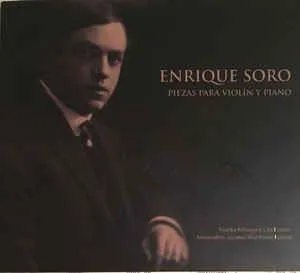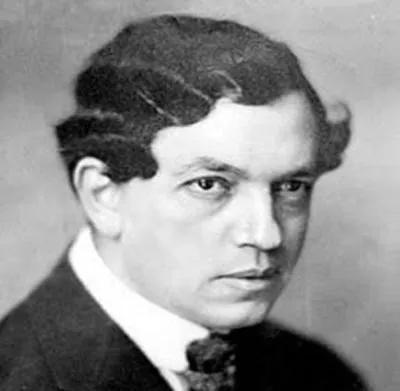
恩里克·索罗 (Enrique Soro)
恩里克·索罗
E.Soro / E.索罗地區智利
類型个人
職業作曲
藝人資料
(bConcepción,15 July 1884;dSantiago,3 Dec 1954).Chileancomposer. He studied the piano and theory with his father, José Soro Sforza, an Italian composer who had settled in Chile by the late 19th century. His training was completed at the Milan Conservatory (1898–1904), where he was a pupil of Coronaro; on graduation he received the grand prize in composition. After an extended concert tour of Italy and France, he returned to Chile in 1905 and was appointed supervisor of public school music education. In 1906 he was made professor of the piano and composition at the Santiago National Conservatory, of which he became sub-director (1907–19) and director (1919–28). He was a member of the Board of the Instituto de Extensión Musical from 1942 until his death. His compositional style was always traditional and eclectic, and the solid craftsmanship of his work appealed to Chilean audiences brought up on a repertory of Tchaikovsky, Dvořák, Grieg and Italian opera. TheSinfonia romántica(1921) was the first full-length symphony written in Chile. Among the awards he received were a first prize in the Pan-American Composition Competition (1912), the order of Officer of the Crown of the King of Italy (1931) and the Chilean National Arts Prize (1948).
WORKS
(selective list)
Orch: Andante appassionato, 1902; Danza fantástica, 1916; Pf Conc., d, 1918; Impresiones líricas, pf, str, 1919; Sinfonia romántica, 1921; 3 Preludios sinfónicos, 1929; 3 Aires chilenos, 1942; Suite en estilo antiguo, 1943
Chbr: St Qt, A, 1903; Pf Qnt, b, 1911; Sonata no.2, a, 1914; Pf Trio, g, 1924; Sonata, e, vc, pf, 1929; Sonata no.1, vn, pf
Pf: 3 sonatas: no.1, c, 1912, no.2, e, 1915, no.3, D, 1922; other pieces
Songs
BIBLIOGRAPHY
RMC, no.30 (1948) [Soro issue]
V.Salas:La creación musical en Chile, 1900–1951(Santiago, [1951])
Compositores de América/Composers of the Americas, ed. Pan American Union, i (Washington, DC,1955), 73–82
R.Bustos:‘Enrique Soro’,RMC, nos.135–6 (1976), 39–99