Hans Knappertsbusch 汉斯·克纳佩茨布什
汉斯·克纳佩茨布什
H·Knappertsbusch / H·克纳佩茨布什地區德国
類型个人
職業指挥
藝人資料
汉斯·克纳佩兹布什(Hans Knappertsbusch,1888-1965)生于德国的艾尔伯非尔德,中学期间便指挥学校管弦乐团,至波恩大学后学习哲学,后转科隆音乐学院,师从史坦巴哈及洛舍(1909-12)。
1911年于曼海姆首次上台指挥,翌年参加荷兰瓦格纳音乐节指挥演出。他先在博赫姆市正式担任指挥,然后即调任故乡艾尔伯非尔德(1913-18)、莱比锡(1918)、德骚(1919-22)等地。1922年他接替瓦尔特擢升为慕尼黑巴伐利亚国家歌剧院终身指挥,在这里他开始以指挥瓦格纳、斯特劳斯和莫札特而崭露才华。他对纳粹恨之入骨,坚决不加入纳粹党,导致他因希特勒的口授旨意而告退休。侨居维也纳后,他常在维也纳国家歌剧院及维也纳爱乐的音乐会上指挥。但是纳粹吞并奥地利后,他再次被迫放弃演出,在欧洲的几个非法西斯国家作客席指挥。此前于1936年比彻姆曾邀请他赴高文花园指挥。德国当局迟迟不给他出国护照,后来他终于到了伦敦并指挥演出了《莎乐美》。战后他重返德国,不久便建立了自己在贝多芬、布拉姆斯、瓦格纳、布鲁克纳和斯特劳斯作品表现上的稳固地位。
1951年他于拜鲁依特演出的《帕西法尔》有口皆碑,成为传奇轶闻。虽然他对战后的许多演出很不满意,但仍继续在拜鲁依特指挥。1954年他重新被任命为慕尼黑歌剧院指挥,但是整整一年他都缺席以抗议市政当局拖延重修国家剧院。米兰及巴黎上演瓦格纳时,都曾请他客席指挥。
克纳佩兹布什是一名指挥大师,其真正才华在歌剧院上能充分发挥。只要他在乐池里一出现,剧院的气氛马上象触了电一般激动起来。
梅塔在维也纳求学时也曾多次欣赏他的指挥,一次评论到这位大师的音乐张力时,他说,“就算他以原来速度的一半来指挥布拉姆斯第三号交响曲,听点也不厌倦乏味,因为充满音乐感。他是位巨匠,也是位瓦格纳歌剧不可多得的指挥。”
克纳佩兹布什不喜欢排练,也水远不会因录音而特别讲求准确性。Decca公司的录音师库尔绍在《铃声回响》一书中讲了个故事 ,说克纳佩兹布许有次正在录制斯特劳斯的一首圆舞曲时,跟平常一样没经过排练。一个乐句多次反复之后,有一半人照谱子继续接了下去,另外一半人居然忘了谱子继续反复,结果有四个小节乱了。录好后,他大声问库尔绍:“这个带子行了吧?我们不必重来一遍了,是不是?”库尔绍告诉他实况,他说:“嘘…,小声点!你以为别人知道?”。
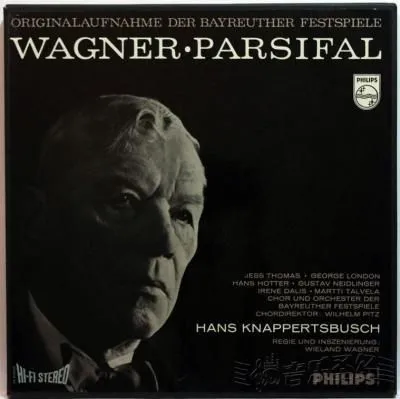
说来也怪,他在录音室里做的唱片几乎都是成功之作,但最佳唱片还是1951年在拜鲁依特演出的《帕西法尔》,由Decca录音师录下排练及现场演出实况。按罗森塔尔的权威说法,大众普遍认为这次演出是本世纪最优美的,唱片就是最有力的证明。它捕捉住这次饱富魔力的演出,且一直成为瓦格纳歌剧的最佳唱片之一。克纳佩兹布什于1962年和1963年仍在拜鲁依特演出《帕西法尔》,由Philips分别录制。虽然音效较佳,但仍无法与第一张媲美。他因为不能适应录音环境,终于被索尔提1961年为Decca录制的《特里斯坦与伊索尔德》所超越。二次世界大战前,他曾指挥柏林爱乐为Polydor、HMV和其他公司录制过许多七十八转唱片,包括贝多芬第三、七号交响曲。战后他大多为Decca录制,第一批天皇巨作为全本《名歌手》(维也纳爱乐等),早先是分幕灌录发行,第二幕是Decca发行的第一批LP唱片。其他LP唱片还有布鲁克纳第三、四、五及七号交响曲(维也纳爱乐,Decca)以及八号(慕尼黑爱乐, Westminster)。但是这些唱片仍然无法再现他在录音室里的那种魔力。
摘自:https://baike.baidu.com/item/%E6%B1%89%E6%96%AF%C2%B7%E5%85%8B%E7%BA%B3%E4%BD%A9%E5%85%B9%E5%B8%83%E4%BB%80/3728197?fr=aladdin&fromid=11181000&fromtitle=Hans Knappertsbusch
Hans Knappertsbusch(12 March 1888 – 25 October 1965) was a German conductor, best known for his performances of the music ofRichard Wagner,Anton BrucknerandRichard Straussas well as his unique public persona and conducting style. To this day, his interpretations of the works ofWagner, especiallyParsifal, are regarded by many as among the best of the 20th century.
Knappertsbusch was born in Elberfeld, today's Wuppertal. He studied philosophy at Bonn University and conducting at the Cologne Conservatory with Fritz Steinbach. For a few summers, he assisted Siegfried Wagner and Hans Richter at Bayreuth. He began his career with conducting jobs in Elberfeld (1913–1918), Leipzig (1918–1919) and Dessau (1919–1922). When Bruno Walterleft Munich for New York, Knappertsbusch succeeded him as General Music Director of the Bavarian State Orchestra and the Bavarian State Opera, with a lifelong contract. Knappertsbusch later refused to join the Nazi party.
In April 1933, Knappertsbusch, along with Richard Strauss and other prominent German musicians, issued and signed a short statement in the newspaper "Münchner Neueste Nachrichten", titled Protest der Richard-Wagner-Stadt München ("protest of the Richard Wagner city of Munich"), in reaction to Thomas Mann's Leiden und Größe Richard Wagners ("Woes and greatness of Richard Wagner"), a critical but ultimately admiring lecture about the composer. The signatories, who generally held staunchly conservative (although not necessarily National Socialist) world views, considered the text, which was essentially a psychoanalytical treatise on Wagner, as denigrating and indecent. In addition to the Nazi Party's demands for an oath of allegiance shortly thereafter, which applied to all writers and artists in general at that time, their efforts contributed to Mann's decision to never return to Germany until the end of World War II.
Knappertsbusch was a highly educated moderate nationalist and never held a NSDAP membership. He had no sympathy for the Nazis, which he viewed as coarse and uncivilised, and was unusually outspoken in his distate for them. He often came into conflict with the authorities, risking his freedom and even his life in the process. For example, he incurred the wrath of Joseph Goebbels by asking a German diplomat in the Netherlands whether he was a "Muss-Nazi" (someone who was forced to join the Nazi Party for career reasons); as a result his Munich contract was revoked and he was temporarily banned from working in Germany. Hitler himself was involved in the decision to dismiss him. However, since there was a shortage of first-class conductors in Germany, a consequence of the Nazis' racial and ideological policies, his banning from work was retracted after a short while. Over the course of the Third Reich's existence, Knappertsbusch made numerous other unveiled insults towards Nazi officials, and only his excellent international reputation and high popularity among the general public saved him from more severe punishments.
In 1936, Sir Thomas Beecham invited him to Covent Garden to conduct, but his permit to leave Germany was withheld. In the late 1930s he went to Vienna to conduct at the Wiener Staatsoper, thus ignoring the Nazis' policy of not allowing German artists to work in Austria. At the same time, Knappertsbusch became one of the emerging artists of the Salzburg Festival and continued to appear in Vienna and Salzburg during the Anschluss, the annexation of Austria by Nazi Germany in 1938.
In 1944, he was added to the so-called Gottbegnadeten list (literally "God-gifted list"), which excluded him from military service. Despite his animosity towards the Nazi regime, Knappertsbusch never considered emigrating from his home country, being deeply rooted in German arts and culture.
When World War II ended, Knappertsbusch returned to Munich, where he lived and worked for the remainder of his life. He continued to guest conduct in Vienna, as well as to make appearances at the Bayreuth Festival. He conducted the first performances of Der Ring des Nibelungen at the reopening of the Bayreuth Festival in 1951, though only the Götterdämmerung survives. The Parsifal of that year, in which Martha Mödl made her Bayreuth premiere as Kundry, remains among the marquee recordings of that role. Mödl, the preeminent Kundry and Wagner actress of the twentieth century, would go on to sing that role under Knappertsbusch for the rest of the decade. He was one of the favorite conductors of the Wiener Philharmoniker, leading the orchestra in Vienna, Salzburg and on tour abroad, although generally he rarely toured outside the German-speaking world.
A rare appearance outside Austria and Germany occurred in 1956 when he conducted "Tristan und Isolde" with Astrid Varnay at the Paris Opera in the Palais Garnier.
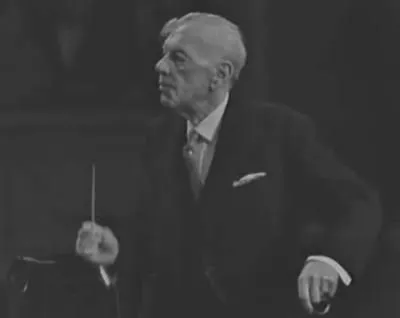
Knappertsbusch became famous for his interpretations of the works of Ludwig van Beethoven, Anton Bruckner, Johannes Brahms and Richard Strauss, but his greatest legacy is his remarkable treatment of Richard Wagner's works, which he loved most dearly. He is widely considered as one of the greatest Wagner-conductors of all time. Artistically, Knappertsbusch was known for conducting very slowly but intensely, emphasizing beauty, gravitas and dignity over liveliness. His personality was modest and straightforward, at the same time forceful and highly sensitive. He was known for being able to conduct with minimal gesticulation at times, conveying his intentions with simply a look and a few facial expressions.
One of his well-known idiosyncratic quirks was his strong dislike for rehearsals, which he avoided whenever he could. Instead, he preferred to rely more on his instinct and spontaneity. He also didn't care much for studio records, which is why there exists only a relatively small number of them. However, numerous live recordings of his performances are available.
Knappertsbusch was highly regarded by his musicians and the general public alike, especially in Munich, where he was simply called "Kna" by the residents and became something of a widely recognized cultural icon. On the other hand, he was quick to anger when rehearsing and could be extraordinarily rude to his personnel, especially to his singers, an example being his legendary outburst against Birgit Nilsson. Although sometimes rough on the outside and increasingly unsociable towards the end of his life, he was a humanist at heart – Andreas Novak called him a "ruppigen Humanisten" ( "gruff humanist"). After the war, it became known that Knappertsbusch had helped persecuted musicians during the Nazi era.
Knappertsbusch died in Munich in 1965. Many of his recordings, including his historic Decca recordings in stereo, have been re-released on CD. Decca went to Bayreuth in 1951 to record only Parsifal, but with the approval of Wieland Wagner and Knappertsbusch himself, Decca also as an experiment recorded a Ring cycle. John Culshaw, the Decca recording producer, was disappointed with the performances of the first three operas in the tetralogy, but was impressed by the Götterdämmerung and edited up a version of it; but Decca did not release it. His 1951 and 1962 recordings of Parsifal are highly regarded; Bavarian Radio holds a tape of the 1955 Parsifal, but it has not yet been issued. Recordings of live performances of Parsifal from Bayreuth are available from nearly all the intervening years and extending through 1964.
From:https://en.wikipedia.org/wiki/Hans Knappertsbusch