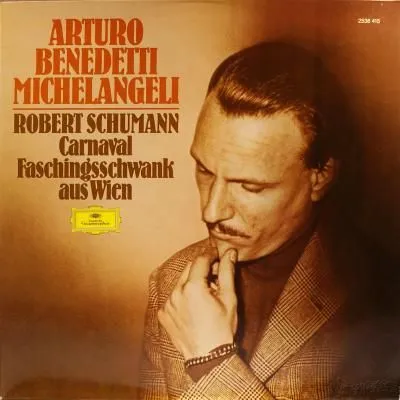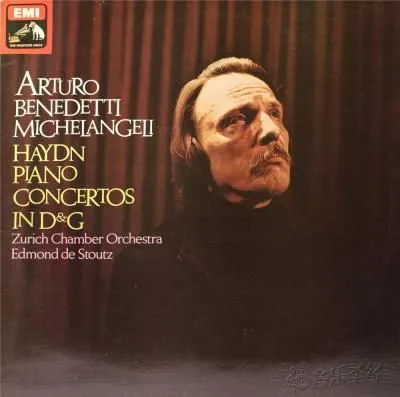
Arturo Benedetti Michelangeli 阿尔图罗·贝内代托·米凯兰杰利
阿尔图罗·贝内代托·米凯兰杰利
A·B·Michelangeli / A·B·米凯兰杰利地區意大利
類型个人
職業钢琴
藝人資料
概况Overview
阿尔图罗·米凯兰杰利(Arturo·Benedetti·Michelangeli 1920-1995),世界著名的意大利钢琴大师。
简介Biography
阿尔图罗·贝内代托·米凯兰杰利(Arturo Benedetti Michelangeli1920-1995),世界著名的意大利钢琴大师。
人物生平
1920年1月5日
米凯兰杰里生于意大利巴雷西亚,父亲是个有很高音乐素养的律师,也是个业余钢琴家。小阿图罗3岁开始便在父亲指导下学琴,由于具有非凡的音乐领悟力,加上对技巧的刻苦锻炼,琴艺进步神速,4岁就被温都里音乐学校破格录取。那段时期小阿图罗不仅学习钢琴,还学习管风琴和小提琴,这对他后来的演奏风格有重大的影响。
10岁那年
小阿图罗进入米兰威尔第音乐学院,师从李斯特门生陶西格的弟子安佛西,这位杰出的女教师不仅在技巧上对阿图罗严格训练,更重要的是把意大利钢琴传统中最精华和独特的精雕细琢的细节处理,清澈明净而又变换多端的音色等都传授给阿图罗。
14岁的时候
阿图罗毕业并开始了职业演奏家的生涯,但就是从这时起,命运一再地和他开了许多玩笑。他当外科医生,也曾进过修道院。17岁的时候在意大利的一家广播公司应聘没有成功,参加第二届布鲁塞尔国际钢琴比赛却只得了个第七。当时第一名是苏联演奏家吉列尔斯,评委中的鲁宾斯坦给米凯兰杰里打了很低的分数,但他的演奏却深得比利时皇太后的喜爱,后来两人成了终身挚友。
1939年
参加日内瓦国际钢琴比赛,深得法国钢琴大师Cortot赏识,Cortot称其为“一个新的李斯特”,并获得第一名与科尔托特别奖,被看起来似乎一切走上了正轨,谁知在这个时候二战爆发了。由于战乱, 米凯兰杰里不得不停止了如日中天的演奏生涯,去意大利空军服兵役,但不久他又加入了反纳粹德国的地下抵抗组织。结果战争后期米凯兰杰里不幸被捕入狱,渡过了八个多月的铁窗生活。但上帝却一直眷顾着这位日后神一般的钢琴大师,米凯兰杰里奇迹般地得以从俘虏营逃脱。
战争结束,米凯兰杰里以令人吃惊的速度迅速地恢复了他的演奏水平,很快以国际级钢琴家的姿态出现在世界乐坛,并于1948年在卡内基大厅首次亮相,获得了潮水般的好评。
50年代到70年代
是米凯兰杰里演奏生涯中的黄金时期,他的很多著名的音乐会和录音都出自这个时期。从60年代起他开始办学,他的学生中包括有波利尼、阿格里奇等等日后世界级的钢琴大师。米凯兰杰里教学从不收取学费,还经常用自己的音乐会收入资助学生,他认为对于具备音乐天才的人来说,“学习音乐是他们的权利。”
六十年代末米凯兰杰里移居瑞士卢加诺,直到1995年去世。
演奏特点
米凯兰杰里的演奏技术无懈可击,善于恰到好处地把握音色和多声部层次的控制,有条理地处理整体与细节的关系,追求音色清澄、干净的演奏灵魂。他的演奏既保持了古典乐派的内在与平衡,又注入了浪漫乐派的热情与感染力,极具强烈的艺术魅力。
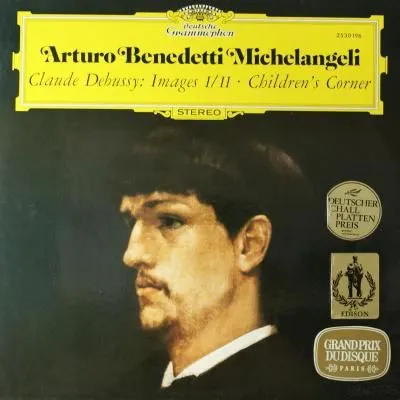
米凯兰杰里一生虽然留下了近40年的录音,但因为选择曲目挑剔,对演奏的要求又近乎苛刻地高,所以演奏曲目并不广泛,录音数量相对其他同时代的演奏家来也少的可怜。正因为这样,虽然他的唱片很少,但只要有的都是极品。米凯兰杰利也正是因为对自己的演奏质量要求甚高,决不轻易举办独奏会。他演绎的贝多芬作品,摆脱了任何一种巴洛克风味的弹奏方式,将自己的音乐个性隐藏在乐曲自身的内涵下,完美地表达出作品的深情和精髓。他演绎的德彪西作品,以全然柔软圆滑的线条歌唱,丝毫不带钢铁的森冷,已达”无槌之音”的佳境,因而获得“音乐哲学家”的美誉。此外,他还是一位卓有贡献的钢琴教育家,指导和培养出了一批钢琴家,其中不少已名扬世界,如意大利钢琴家波利尼,阿根廷钢琴家阿格里奇以及捷克钢琴家伊万·莫拉维茨。
同时,和神奇的演奏一样著名的,就是米凯兰杰里那古怪的脾气和性格。他对钢琴的音色出奇地挑剔,挑剔到了让人无法理解的程度。他经常不顾观众的感受临时取消音乐会,任意改变甚至中断演出的日程安排,中途停止录音等。因此在音乐评论界和广大乐迷中留下了“古怪孤僻,反常乖戾”的名声,甚至他的高徒波利尼、阿格里奇都与他格格不入。“对我们这些被消费时尚崇坏了的听众来说,米的存在显得像是一个冒犯。”实际上,米凯兰杰里一切的反常举止都来源于他近乎苛刻的严格要求和对艺术极端负责的态度:每一次演出结束,即使观众为之迷醉倾倒,好评如潮,他仍要自己和自己较劲一般地挑出自己演奏中一大堆的毛病。尽管这些毛病在别人看来完全可以忽略不计,他却固执己见,闭门思过,苦思冥想。正是因为这种原因,他才出现了前面所说的种种“反常”的举动。
成就
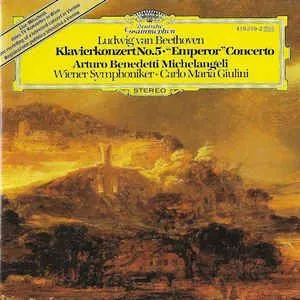
《贝多芬第五钢琴协奏曲》,朱里尼指挥维也纳交响乐团,DG 419 249-2...
有人说这张唱片是老米一生的最高成就(当然可以有不同看法),也是他所有音乐理念的完美总结。这是个登峰造极的优秀版本,有很多专家和资料将它推荐为“贝五”的最优秀版本。其实在这个交响曲一般的协奏曲中,朱里尼的协奏是担当了一个相对次要的角色,他优秀的协奏搭建了一个辉煌而坚实的平台,剩下的就是这位“皇帝”的隆重登场了。没有人能比老米弹出更加晶莹华美的音阶,更加雄浑有力的和弦,更加精致轻巧的颤音。在这部很多演奏家望而却步的高难度巨著中,不仅有大片快速的经过句,层出不穷的宏伟和弦,还要赋予作品帝王般的气势和让人仰视的高贵气质,这一切对于毫无灵性的钢琴匠来说是个无法逾越的高峰,但在老米手下,却成为了历史上的永恒。整个作品听下来,心中充盈的感觉就和唱片的封面一样,如凡高的油画一般到处喷溅着琥珀般金黄的色调,句子从容不迫却没有任何拖沓,充满皇帝般的气派和威严,而第二乐章那真挚、亲切的旋律更是如春天的阳光般普照人心,既有消融人心中一切坚冰的圣洁和温暖,又有催人泪下的感动。完美无瑕的音色即使在fff的强奏下仍然圆润动听,没有一个破音和炸音,一切都臣服在老米王者般威严的控制之下,而辉煌多变的色彩,高贵的气质和丰富的层次也只能令人叹服,加上对作品深刻的理解后赋予作品的那破云般的璀璨,淡然恢弘的孤傲和雄浑不羁的霸气,使这个录音达到了一个后人难以企及的高峰,和伟大的作品一同化为永恒。
摘自:https://www.sin80.com/artist/michelangeli
English Introduction
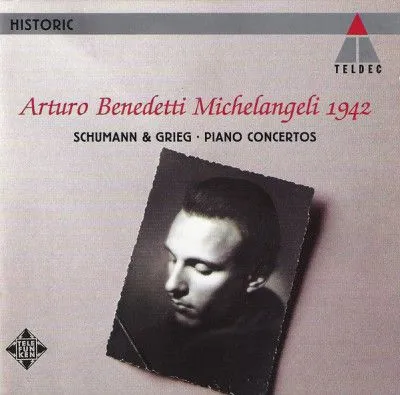
Arturo Benedetti Michelangeli (Italian: [arˈtuːro beneˈdetti mikeˈlandʒeli]; 5 January 1920 – 12 June 1995) was an Italian classical pianist. He is considered one of the greatest pianists of the twentieth century. Biography Born in Brescia, Italy, he began music lessons at the age of three, initially with the violin, but quickly switched to the piano. At eleven he entered the Milan Conservatory, graduating three years later at fourteen. In 1938, at the age of eighteen, he began his international career by entering the Ysaÿe International Festival in Brussels, Belgium, where he was placed seventh. (A brief account of this competition, at which Emil Gilels took first prize and Moura Lympany second, is given by Arthur Rubinstein,who was one of the judges. According to Rubinstein, Benedetti Michelangeli gave "an unsatisfactory performance, but already showed his impeccable technique.") A year later he earned first prize in the Geneva International Competition, where he was acclaimed as "a new Liszt" by pianist Alfred Cortot, a member of the judging panel, which was presided over byIgnacy Jan Paderewski. The music critic Harold C. Schonberg wrote of Benedetti Michelangeli: His fingers can no more hit a wrong note or smudge a passage than a bullet can be veered off course once it has been fired...The puzzling part about Michelangeli is that in many pieces of the romantic repertoire he seems unsure of himself emotionally, and his otherwise direct playing is then laden with expressive devices that disturb the musical flow. On the other hand, the Romanian conductor Sergiu Celibidache always saw in Benedetti Michelangeli a colleague, and not merely another competent pianist: “Michelangeli makes colors; he is a conductor."Celibidache also considered Michelangeli the "greatest living artist". The teacher and commentator David Dubal argued that he was best in the earlier works of Beethoven and seemed insecure in Chopin, but that he was "demonic" in such works as the Bach-Busoni Chaconne and the Brahms Paganini Variations. His repertoire was seemingly strikingly small for a concert pianist of such stature, indeed we know from colleagues and students that he dominated most of the piano repertoire.[5] Owing to his perfectionism, relatively few recordings were officially released during Benedetti Michelangeli's lifetime, but these are augmented by numerous unauthorized recordings of live performances. Discographical highlights include the (authorized) live performances in London of Ravel's Gaspard de la nuit, Chopin's Mazurkas and Sonata No. 2, Schumann's Carnaval, Op. 9 and Faschingsschwank aus Wien,Op. 26 as well as various recordings of Beethoven's Piano Concerto No. 5, Liszt's Piano Concerto No. 1 and Totentanz, and the piano concertos ofRobert Schumann, and Edvard Grieg. In addition, his playing of Ravel's Piano Concerto in G and Gaspard de la nuit set standards for those works. His reading of Rachmaninoff's Piano Concerto No. 4 is comparable to that of Rachmaninoff himself. His Debussy series for DG is something of a benchmark, even if it is sometimes accused of being a little unatmospheric ("swimming in cool water," in Dubal's words).[citation needed] He is also credited with the rediscovery of some works of Catalan composer Federico Mompou. As a composer, Benedetti Michelangeli arranged 19 Italian Folksongs a cappella for the Coro della Società Alpinisti Tridentini, a men's chorus fromTrent (Italy). A recording of these pieces can be found on the DIVOX music label. As a teacher, his pupils included world-class artists as Maurizio Pollini, Martha Argerich and Ivan Moravec. On 20 September 1943 Benedetti Michelangeli married pianist Giulia Linda Guidetti, who was a pupil of his father. She was a valued counselor and secretary to her husband. She lived quietly, sharing time with her husband at their villa in Bornato, near Brescia, or in Bolzano or Arezzo, and appeared so seldom in public with her husband that hardly anybody knew he was married. They separated in 1970. From 1970 on, his secretary, and later his agent and partner, Marie-José Gros-Dubois, was faithfully near his side. She organized concerts and dates for him, and also presided over his financial affairs. Benedetti Michelangeli reputedly did not enjoy giving concerts. In an interview, Gros-Dubois remembered that he could not believe that his concerts were worth so much money. After a concert, she reported that he gloomily said: "You see, so much applause, so much public. Then, in half an hour, you feel alone more than before." Benedetti Michelangeli was a connoisseur of the mechanics of the piano and he insisted that his concert instruments be in perfect condition.Whenever possible he took his own Steinway piano with him on tour. His last concert (all Debussy) took place on 7 May 1993 in Hamburg, Germany. After an extended illness he died in Lugano, Switzerland. He is buried in nearby Pura.
from:https://en.wikipedia.org/wiki/Arturo_Benedetti_Michelangeli'>https://en.wikipedia.org/wiki/Arturo_Benedetti_Michelangeli