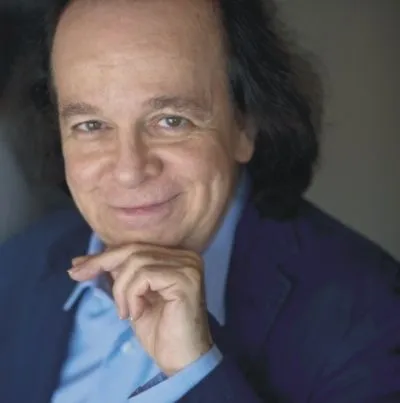
Karl Münchinger 卡尔·明兴格尔
卡尔·明兴格尔
K·Münchinger / K·明兴格尔地區德国
類型个人
職業指挥
藝人資料
卡尔·明兴格尔(德语:Karl Münchinger,1915年5月29日-1990年3月13日),生卒于德国斯图加特,是一位指挥家。
个人简介
明兴格尔在年轻的时候学习过小提琴,后来在斯图加特音乐高校卡尔·里昂哈特门下学习指挥。后来在斯图加特圣母教堂当合唱指挥和管风琴手。紧接着他又在莱比锡音乐高校赫尔曼·阿本多特和克莱门斯·克劳斯的夏季课程学习,经福特文格勒的帮助,他当上了汉诺威下萨克森交响乐团指挥(1941年-1943年)。二战中他被囚禁,战后1945年获得释放后他成立了斯图加特室内乐团, 他带领乐团直到1987年,并且把乐团带向了世界。1953年他因在艺术方面的贡献获得了巴登·符腾堡州的教授衔头,和联邦十字勋章。
个人经历
虽然穆辛格尔算不上“本真”派人物,但是从他出道的那一天起,他就以其干净的音色取胜,这有别于浪漫派指挥家的诠释风格。
他的原则是:小编制乐队,严格遵循作曲家在乐谱上所做的指示,以达到通透统一的音乐表达。
穆辛格尔这一名字很快就和约翰·塞巴斯蒂安·巴赫管弦乐作品的忠实演绎(与浪漫演绎相对)联系起来了。他与斯图加特室内乐团演绎了很多前巴洛克时期和巴洛克时期的作曲家的作品,获奖无数。 他在战后立刻对新生代的作曲家大加支持。1960年起他将维也纳古典乐派的作品加到他的剧目中。1966年他又成立了斯图加特古典爱乐乐团。 从此他就蜚声国际,成为欧陆和北美很多乐团的常客。
摘自:https://baike.baidu.com/item/%E5%8D%A1%E5%B0%94%C2%B7%E6%98%8E%E5%85%B4%E6%A0%BC%E5%B0%94
English Introduction
Karl Münchinger (29 May 1915 – 13 March 1990) was a German conductor of European classical music. He helped to revive the now-ubiquitous Canon in D by Johann Pachelbel, through recording it with his Stuttgart Chamber Orchestra in 1960. (Jean-François Paillard made a rival, and also very popular, recording of the same piece at around the same time.) Münchinger is also noted for restoring baroque traditions to the interpretation of Bach's oeuvre, his greatest musical love: moderate-sized forces, judicious ornamentation, and rhythmic sprightliness, though not on "period instruments".
Born in Stuttgart, Münchinger studied at the Hochschule für Musik in his home city. At first, he guest-conducted often, supporting himself also with other duties as an organist and church choir director. In 1941, he became principal conductor of the Hanover Symphony, a post he held for the next two years. He held no other conducting position until the end of World War II.
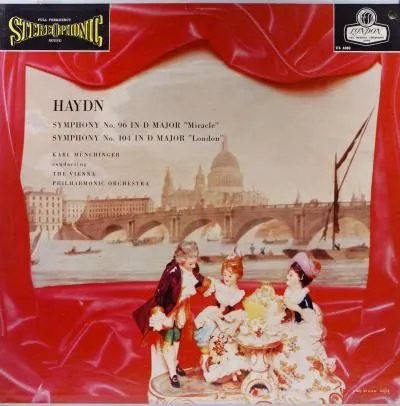
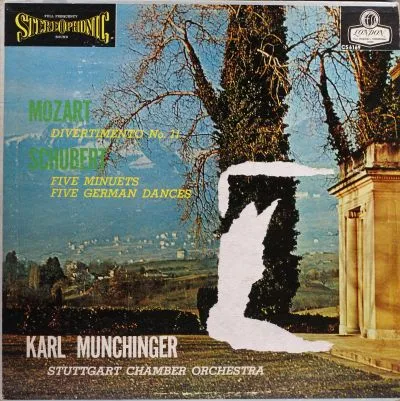
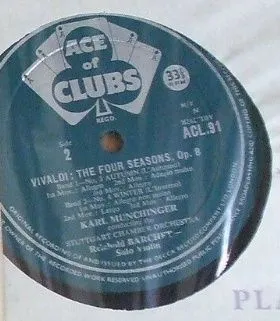
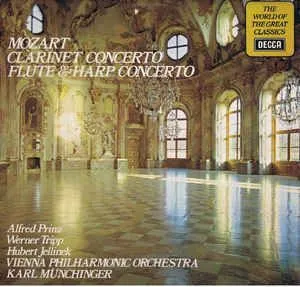
The year that the war ended, he founded the Stuttgart Chamber Orchestra, which he built into an impressive touring ensemble; it made its Paris debut in 1949 and its American debut in San Francisco in 1953. Under his leadership the orchestra issued (for the Decca label) numerous recordings, mostly during the 1950s and 1960s, and mostly of Bach's output; these included the Brandenburg Concertos (three times), the orchestral suites, the St. Matthew Passion, the St. John Passion, the Musical Offering, and the Christmas Oratorio. Of his and the ensemble's non-Bach releases, probably the best – and certainly the most famous, other than the Pachelbel performance mentioned earlier – is that of Haydn's The Creation.
In 1977, the Stuttgart Chamber Orchestra became the first German ensemble to visit the People's Republic of China. Münchinger retired in 1988, two years before his death.
Stylistically Münchinger's approach with his orchestra was rather similar to those of his somewhat younger contemporaries Raymond Leppard, Sir Neville Marriner, Claudio Scimone, and the above-mentioned Paillard, though displaying an extra element of tonal solidity (not to mention a fierce rigor during rehearsals as well as performances) which might be thought of as Teutonic. With the increased fashionability of 18th-century instruments, from the 1970s onwards, Münchinger's interpretations fell dramatically from critical favor and were often dismissed as "passé", though he always showed himself to be a fine, tough, disciplined, and sensitive musician. There have been more profoundly imaginative German conductors than Münchinger, but there have been very few who matched his consistently high standards.