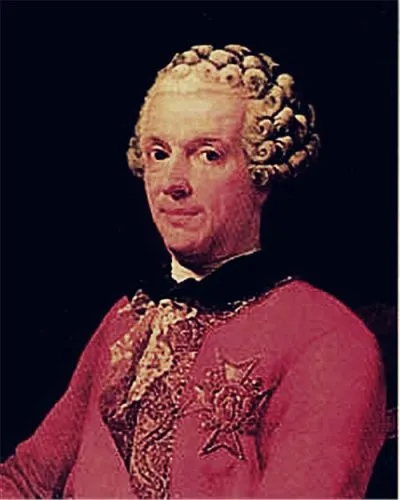
Giuseppe Cambini 朱塞佩·坎比尼
朱塞佩·坎比尼
G·Cambini / G·坎比尼地區意大利
類型个人
職業作曲
藝人資料
意大利作曲家,小提琴家。出生于里窝那。早年情况未知。1770年代来到巴黎,他创作的芭蕾作品得到了格鲁克的欢迎。他还在圣灵音乐会上表演自己的小提琴协奏曲作品。1788年起他在多家剧院任职。1800年代开始又在多家报刊杂志撰写评论。他的去世时间没有明确的说法,有一说1818年在荷兰去世;又有一说1825年在巴黎比塞特医院去世。坎比尼的作品包括有歌剧、宗教音乐以及大量奏鸣曲、弦乐四重奏以及交响曲等。
Giuseppe Maria Gioacchino Cambini (Livorno, 13 February? 1746–Netherlands? 1810s? or Paris? 1825?) was an Italian composer and violinist.
Information about his life is scarcely traceable. Louis-Gabriel MichaudFrench scholar and François-Joseph Fétis,Belgian musicologist drafted his biography, and Cambini himself speaks about his past in an article published in Allgemeine musikalische Zeitung in 1804. However, all of these documents are full of errors and, therefore, need to be verified. It is not possible to confirm his personal data (only Fétis indicates his date of birth), nor his first studies. It is possible he is connected in some way to father Giovanni Battista Martini, and, more possibly to Filippo Manfredi, who was almost certainly his violin teacher.Fétis wrote about his unfortunate operatic debut in Naples in 1766, after which, during his return to Livorno by the sea, was kidnapped by pirates, who treated him terribly until his liberation by a Venetian aristocrat.]The narration by the Belgian holds much resemblance to a story in the poetic periodical Correspondance littéraire, philosophique et critique, a fact that deteriorates its reliability. In the article found in Allgemeine musikalische Zeitung in 1804, Cambini claims to have played the viola in a string quartet with Luigi Boccherini, Pietro Nardini and his teacher Manfredi for six months in 1767. If what he says is true, this quartet would represent the first formation of this emerging genre in Italy, if not in all of Europe. For many years, this information fostered a gigantic legend about the importance of the role of Cambini in defining the string quartet. Actually, he was one of the many (even if one of the most prolific) who, in the same period, contributed to the development of the genre.
The first information that we have that is certain is his arrival in Paris at the beginning of the 1770s, where he remained for 20 years, and composed oratorios, concert compositions, as well as chamber, symphonic, and theatrical compositions (there are almost 14 operas, of which at least 12 were performed in Paris. In addition, there are some ballets that aroused the admiration of Christoph Willibald Gluck), and he performed his violin concertos (during the Concert Spirituel and the Concerts des Amateurs, managed by François-Joseph Gossec).More than 600 compositions were published with his name in the French capital until 1800 (above all by the Venier, Berault and Sieber publishers, see also the section Sources), of which more than 80 are symphonies concertante (he wrote more of these than any other French composer of the time, becoming a champion of the genre).
The accusation by Mozart is not especially valid partially because of the fact that the power of Cambini in Paris didn’t reach the level that Mozart claimed. In fact, the musical press paid less than gratifying attention to his vast production.He was cited relatively few times in the contemporary critiques, and his career, as a violinist, is less appreciated than other contemporary soloist of the time. His greatest successes, as aforementioned, were the sinfonie concertanti and his quartets, which even Mozart praised. His easy style, attractive and brilliant, open only just enough to innovation, rendered him a sort of protector of the galant Parisian style, and many of his pieces were favorable accepted in London as well as in America(some actively participated in defining of the so-called forma sonata), but his theatrical works, operas, were almost always torn to shreds. Moreover, from 1785 it was affirmed in France of the more complex Viennese style, to which he tried to awkwardly join,[6] undermining his fame, and damaging his reputation in the press of the German area.
In 1788, he became manager of Théâtre Beaujolais, and he worked there during the revolutionary turmoil until 1791. His endurance permitted continuity of a high-quality operatic offering even in the years of the Republic.During the time of Terror, beginning in 1791, he directed Théâtre Louvois, which due to the economic crisis caused by the war was forced to close in 1794. The crisis affected many, as well as the estate of Cambini, and it constricted him to find very different work opportunities. Beginning in 1794, he accepted a salary from the gunsmith Armand Séguin, for whom he gave private concerts and composed more than 100 quartets.He composed revolutionary and patriotic anthems for the newborn Republic. He taught violin, voice and composition privately. In addition, he transcribed opera arias of other authors for any buyer.He accepted editorial commissions (in 1795, the editor Gavreaux asked him to attend to the reprinting of methods for violin by Geminiani, and in 1799 Nademann and Lobry hired him to edit one for flute).
At the beginning of the 1800s, Cambini signed contracts with periodicals and magazines, including Allgemeine musikalische Zeitung and Tablettes de Polymne, which published his articles until 1811. From that moment, Cambini disappears without leaving any trace in any documents. Michaud affirms that he died in Holland in 1818, information that satisfies scholars and has a certain amount of credibility, while Fétis recounts his painful and tragic admission to a mental hospital in Bicêtre, where he was found dead in 1825.
There proves to be more that 600 examples of works by Cambini diffused throughout the world. More than 300 consist in printed editions, 250 are in manuscript copies, and about 100 are proven autographs. We have attained only his instrumental music. In fact, only the music of Le Tuteur avare, written in collaboration with Pasquale Anfossi in 1787 (today preserved at the Bibliothèque Municipale di Lille) remains of his operas. For many years, there was a symphony that was considered to be his, but in reality it is by Joseph Martin Kraus for Boyer publishers. In 1784-1786, the publisher released the work of the then unknown Kraus under the name of the more famous Cambini in order to sell more copies, causing the misunderstanding of attribution, which wasn’t resolved until 1989.
All 100 known autographs are in the United States of America, at the Library of Congress in Washington D.C. and at the New York Public Library for the Performing Arts.
The largest collection of manuscripts of Cambini’s compositions are found in Prague, in the music history department of the National Czech Museum of Music. Following, in order of the number of preserved copies are: the Benediktinerstift del Bibliothek und Musikarchiv di Seitenstetten in Austria (the majority however are without a date)), the Conservatorio Benedetto Marcello di Venezia (Torrefranca and Correr Collection), and the Biblioteca di Archeologia e Storia dell'Arte di Palazzo Venezia in Rome (Vessella Collection). Smaller Italian collections are in the Pasini Collections at the Conservatorio Luca Marenzio in Brescia,at the Conservatorio Cherubini of Florence, at the Conservatorio Paganini di Genoa, at the Biblioteca Estense di Mantova, at Casa Verdi in Milan, at the Conservatorio San Pietro a Majella in Naples, and at the Biblioteca Casanatese di Roma (Marefoschi Collection and more). Musical Documentation Center of Tuscany attained three manuscripts of single parts of other chamber music compositions in the Venturi Music Collection in Montecatini Terme. Cities around the world that preserve at least five manuscripts are: Basilea (Universitätsbibliothek), Cheb (Státní okresní archiv), Keszthely (Helikon Kastélymúzeum Könyvtára), Leutkirch im Allgäu (Fürstlich Waldburg-Zeilsches Archiv), Lille (Bibliothèque Municipale), Lund (Universitetsbiblioteket), New Haven (Music Library at Yale University), Prague (Biblioteca Nazionale Ceca), Steinfurt (Fürst zu Bentheimsche Musikaliensammlung Burgsteinfurt Collection, managed by Westfälische Wilhelms-Universität within the Universitäts- und Landesbibliothek di Münster), Stockholm (Musik- och teaterbiblioteket) and Västerås (Stadsbibliotek).
The Conservatoire de Paris and the Bibliothèque Nationale de France are the institutions that preserve the majority of the printed editions during Cambini’s life, followed by the British Library of London, the Rossijskaja Gosudarstvennaja Biblioteka of Moscow, the Fürst zu Bentheimsche Musikaliensammlung Burgsteinfurt of Steinfurt, the Gesellschaft der Musikfreunde of Vienna, the Biblioteca Nacional of Spain, the Kongelige Bibliotek of Copenhagen, the Biblioteca Estense of Modena, and the Biblioteca Nazionale Universitaria of Turin (in the Foà and Giordano collection).
摘自:https://en.wikipedia.org/wiki/'>https://en.wikipedia.org/wiki/Giuseppe Cambini