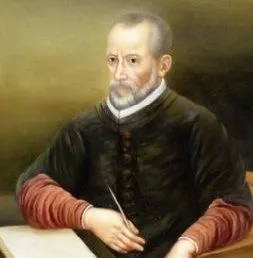
Giovanni Pierluigi da Palestrina 乔瓦尼·皮耶路易吉·达·帕莱斯特里纳
乔瓦尼·皮耶路易吉·达·帕莱斯特里纳
G·Pierluigi da Palestrina / G·帕莱斯特里纳地區意大利
類型个人
職業作曲
藝人資料
Giovanni Pierluigi da Palestrina(c.1525 – 2 February 1594)was an ItalianRenaissancecomposer ofsacred musicand the best-known 16th-century representative of theRoman Schoolof musical composition.He had a lasting influence on the development of church music, and his work is considered as the culmination of Renaissancepolyphony.
Biography
Palestrina was born in the town ofPalestrina,nearRome, then part of thePapal States. Documents suggest that he first visited Rome in 1537, when he is listed as a chorister at theSanta Maria Maggiorebasilica. He studied withRobin MallapertandFirmin Lebel. He spent most of his career in the city.
Palestrina came of age as a musician under the influence of the northern European style of polyphony, which owed its dominance in Italy primarily to two influentialNetherlandishcomposers,Guillaume DufayandJosquin des Prez, who had spent significant portions of their careers there. Italy itself had yet to produce anyone of comparable fame or skill in polyphony.
From 1544 to 1551, Palestrina was the organist of theCathedral of St. Agapito, the principal church of his native city. In 1551Pope Julius III(previously theBishop of Palestrina) appointed Palestrinamaestro di cappellaor musical director of theCappella Giulia,(Julian Chapel, in the sense of choir), the choir of the chapter of canons atSt. Peter's Basilica. Palestrina dedicated to Julius III his first published compositions (1554), a book ofMasses. It was the first book of Masses by a native composer, since in the Italian states of Palestrina's day, most composers of sacred music were from theLow Countries, France, Portugal,Italy,or Spain. In fact the book was modeled on one byCristóbal de Morales: the woodcut in the front is almost an exact copy of the one from the book by the Spanish composer.
Facade ofSt John Lateran, Rome, where Palestrina was musical director
During the next decade, Palestrina held positions similar to his Julian Chapel appointment at other chapels and churches in Rome, notablySt. John Lateran(1555–1560, a post previously held byLassus), and St Mary Major (1561–1566). In 1571 he returned to the Julian Chapel and remained at St Peter's for the rest of his life. The decade of the 1570s was difficult for him personally: he lost his brother, two of his sons, and his wife in three separate outbreaks of the plague (1572, 1575, and 1580, respectively). He seems to have considered becoming a priest at this time, but instead he remarried, this time to a wealthy widow. This finally gave him financial independence (he was not well paid as choirmaster) and he was able to compose prolifically until his death.
He died in Rome ofpleurisyin 1594. As was usual, Palestrina was buried on the same day he died, in a plain coffin with a lead plate on which was inscribedLibera meDomine. A five-part psalm for three choirs was sung at the funeral.Palestrina's funeral was held at St. Peter's, and he was buried beneath the floor of the basilica. His tomb was later covered by new construction and attempts to locate the site have been unsuccessful.